Category Archives: Public Choice

Regulation of the Day 91: Horse Floaters

As horses age, their teeth often wear down into points. This can cause the animals great pain if they bite into their tongue or cheeks. Chewing can also become problematic. A horse floater’s job is to keep that from happening. They are a kind of equine dental specialist. Floaters anesthetize the animal then grind its teeth into smoother shapes.

But regulators are clamping down on horse floaters. Many states want to require them to be licensed veterinarians. This would throw a lot of floaters out of business. Most of them specialize in horse teeth and have no need for full veterinary training. That’s why few have bothered to get it, since it takes years of school and thousands of dollars.

Horse floater Carl Mitz told a reporter, ‘Saying only veterinarians can do this profession … if they’re successful, it eliminates me. After 25 years, I’ll no longer have a job.’

Mr. Mitz is fighting back in court. But he shouldn’t have to. He has a right to make an honest living. And he has been for at least 25 years. Regulators should respect that right.

Financial Fiasco

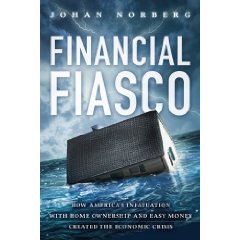
I recently finished reading Swedish economist Johan Norberg‘s book about the financial crisis, aptly titled Financial Fiasco. It’s both short and informative. Six chapters and 155 pages, all of them worth reading.

The first two chapters are about the two big regulatory causes of the recession. One, monetary policy that was too easy for too long. The price system works. When the Fed messes with that price system, prices send out the wrong signals. People behave accordingly. Two, a decades-long drive to raise homeownership rates caused a lot of people to take out loans they couldn’t afford. It was only a matter of time before the consequences would come to bear.

Chapters 3 and 4 are about how the private sector reacted to the incentives regulators gave them. Let’s just say they acted badly. If people can game the system, they often will. Norberg’s criticism of overly-complicated securitized mortgage packages is both shocking and infuriating.

Chapter 5 is about how the government and private sector reacted to the crisis once the housing bubble popped. The $700 billion bailout program to reward bad behavior comes under fire.

Norberg is in top form in Chapter 6. Having looked at the causes and consequences of the crisis, now he offers a way out. One lesson is that politicians will always behave badly. “Politicians who distribute pork they cannot afford are reelected; butcher shops that sell pork they cannot afford go bankrupt. (p. 150)” Politicians are just like you and me. They go wherever their incentives lead them. We need to approach them accordingly.

The way to a full recovery is not bailouts. It is letting bad companies fail. And just as important, letting good ones prosper. “Government support for companies is thus not a way to save jobs, as politicians try to make us believe. It is a way to move jobs from good companies to bad companies.” (p. 151) In the long run, bailouts keep the economy down by keeping jobs and resources away from where they would do the most good.

Financial Fiasco has echoes of Tocqueville; a foreigner is trying to figure out how America works. Norberg, like Alexis de Tocqueville, is uncommonly perceptive. His experience living under an economy more thoroughly mixed than America’s allows him to see things that have escaped American commentators. This is extremely valuable. The fact that his book is concise, well written, and accessible to those of us who don’t have economics Ph.Ds makes it even moreso.

In-Flight Rent-Seeking

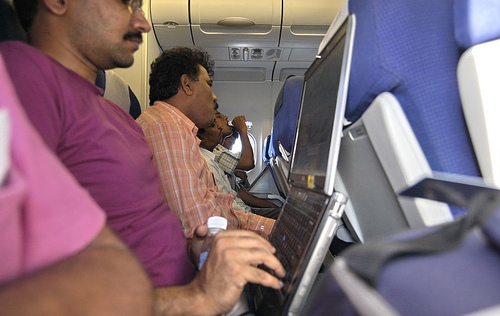
An article in this month’s Info Tech & Telecom News quotes me about proposed stimulus funding for an in-flight broadband provider.

My take: it’s corporate welfare.

Regulation of the Day 79: Auctioneers in Alabama

It is illegal to conduct an auction without a license in Alabama. Unlicensed auctioneers can be punished with fines of up to $500.

Applicants must pay nearly a thousand dollars for 85 hours of coursework. 8 additional hours are required every two years to keep the license.

It’s worth asking: Does this benefit anyone besides the people teaching the courses and the auctioneers who get to limit the amount of competition they have to face?

Unfunded Mandates

money_blowing_away001

Today’s American Spectator Online has a piece by CEI VP Wayne Crews and I on curbing Congressional abuse of  unfunded mandates. If the term is new to you, unfunded mandates are basically an accounting gimmick that lets government understate how much it costs taxpayers:

rather than fund a new federal job training program through a Department of Labor appropriation, Congress could mandate that all Fortune 500 firms provide, and pay for, such training. The first appears on the federal budget, the second does not. For politicians, it’s the perfect scheme. The government can spend — or, rather, force other people to spend — as much as it wants without adding to the deficit.

Decency demands this trickery stop; a bill from Rep. Virginia Foxx looks like it would do some good on that front.

Regulation of the Day 68: Ironing Tables

ironing table

Regulation begets rent-seeking. When government assumes the power to regulate imports, domestic firms will lobby to use that fact to their advantage.

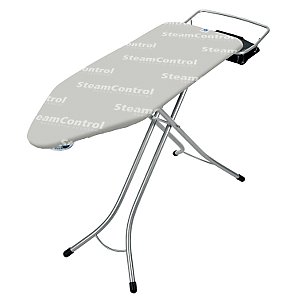
Case in point: Home Products International (HPI), an American company, makes ironing tables. So does Hardware, a Chinese company. I personally have no idea which firm makes the better ironing table. That’s for consumers to decide.

Or at least it should be for consumers to decide. But it doesn’t always work that way in practice. HPI seems to have already made that decision for us.

At HPI’s request, the International Trade Administration will continue to add anti-dumping duties to the price of the Chinese-made ironing tables. That way HPI doesn’t have to worry as much about competing. Sorry, consumers.

Is this fair? Of course not. But all too often, it is how regulation works.

Happy 90th Birthday to Nobel Laureate James Buchanan

buchanan

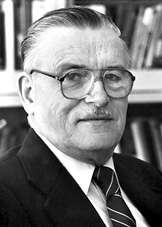
James Buchanan was one of the founding fathers of public choice theory, along with Gordon Tullock and some others (Bill Niskanen, Mancur Olson, et al). Public choice, despite the obscure name, is quite simple. It says that market behavior does not end where government begins. Politicians and other government actors are not angels. They are just as self-interested as you or I. Public choices are subject to the same incentives as private choices.

Buchanan’s simple, powerful insight won him the economics Nobel in 1986. Don Boudreaux made some brief remarks at Buchanan’s recent 90th birthday celebration. They’re worth reading, especially if you aren’t familiar with Buchanan and his very distinguished place in the history of economic thought. Also worth reading is his Nobel lecture.

Net Neutrality and Rent-Seeking

Here is a letter I sent recently to The Wall Street Journal:

September 22, 2009

Editor, The Wall Street Journal
200 Liberty Street
New York, NY 10281

To the Editor:

Your article “Bad News for Broadband” (editorial, Sept. 22) hints at, but does not make, a key point: net neutrality proposals are driving a wedge between service providers like AT&T and content providers like Google.

Strange, is it not? Their interests are actually closely aligned. If AT&T upgrades its network, Google benefits from the increased bandwidth. If Google improves its products, AT&T benefits from increased demand for broadband.

Net neutrality proposals give companies the incentive to seek rents at each other’s expense when they could be benefiting from each other’s innovations instead. This must be music to the ears of lobbyists, but how sad for consumers.

Ryan Young
Fellow in Regulatory Studies
Competitive Enterprise Institute
Washington, D.C.

Regulation of the Day 13: The Size of Your Carry-On Bags

The thirteenth in an occasional series that shines a bit of light on the regulatory state.

Today’s Regulation of the Day comes to us from Rep. Dan Lipinski (D-IL, 3rd term).

Rep. Lipinski has introduced the Securing Cabin Baggage Act, which would set a maximum size for carry-on bags.

In today’s American Spectator Online, I explain why the bill wouldn’t add to security, wouldn’t make flying more convenient, and may well be the result of rent-seeking.

Why Is Your Carry-On Baggage a Federal Matter?

In today’s American Spectator Online, I look at a bill to regulate the size of carry-on luggage. My take: the bill doesn’t add to security, doesn’t add to convenience, and may well be the result of rent-seeking.

Read the article here.