Category Archives: Economics

The Economics of Toilet Seats

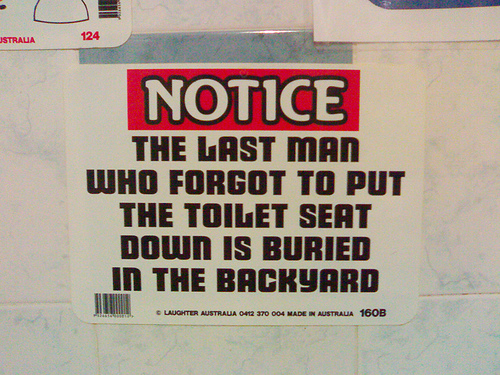
Up or down? The debate is as old as the toilet itself. An enterprising young economist named Jay Pil Choi wrote a working paper titled “Up or Down? A Male Economist’s Manifesto on the Toilet Seat Etiquette,” and it turns out the correct answer is neither.

If the seat is always left down, men incur an inconvenience cost of 2: 1 to lift the seat, and 1 to lower it. Women incur a cost of 0. This is hardly fair.

Leaving the seat up is no better. The costs are the same. They just switch gender. This isn’t fair for women, who must lower the seat and raise it every time they use the loo.

Choi’s paper suggests a third way: leave the seat as you left it. As he explains:

With either up or down rule, each member of one gender group has to incur the inconvenience costs two times with each usage… This inefficiency can be avoided by using the selfish rule since the inconvenience costs are incurred only when the consecutive users are from different genders.

Quite clever. The highest possible inconvenience cost is 1. And if consecutive users are of the same gender, inconvenience costs are 0.

Unfortunately, this blogger must continue to follow the down rule because his cats are too thirsty for their own good.


Barely Satire

Looks like one of the staff writers at The Onion may be an economist: Revamped WPA To Create 50,000 New Jobs By Disassembling, Reassembling Hoover Dam

This especially made me laugh:

Other public works projects currently underway include the bulldozing of libraries, the burning of national forests, and the defacing of public murals, which will be followed by a massive plan to rebuild libraries, revive national forests, and repaint public murals.

CEI Podcast for January 12, 2011: Public-Private Partnerships

Have a listen here.

Land-use and Transportation Policy Analyst Marc Scribner talks about his new CEI Issue Analysis, “The Limitations of Public-Private Partnerships.” Marc argues that PPPs are an improvement over the status quo in surface transportation because they introduce at least an element of competition into a sector where there is usually none. But PPPs are harmful in real estate developments because they tend to favor politicians’ preferences over those of consumers.

What “International Tax Harmonization” Means

“There is no art which one government sooner learns of another, than that of draining money from the pockets of the people.”

-Adam Smith, The Wealth of Nations, p. 929.

CEI Podcast for January 6, 2011: DC’s Plastic Bag Tax

Have a listen here.

Warren T. Brookes Journalism Fellow Kathryn Ciano talks about Washington, DC’s five-cent tax on plastic bags. While plastic bag use has dropped from about 87 million per year to 55 million per year, it has only raised a little more than half the expected revenue. The Anacostia River also remains as dirty as ever; the tax was put into place to fund cleanup efforts.

New Jersey Trying to Seize Unused Gift Card Balances

New Jersey residents with unused gift cards might want to make that trip to Target or Home Depot soon. The state legislature voted to seize the unused balances of all gift cards and traveler’s checks issued in the state before a certain date.

A judge struck down the law, but the state is appealing the ruling. By stealing the gift card balances from their owners, the state could raise up to $80 million.

That’s one way to fix a busted budget. Here’s another: spend less.

IRS Tax Help Would Hurt

I’m quoted in an article about the IRS’ proposal to do your taxes for you.

TSA’s High Failure Rate Is the Least of its Problems

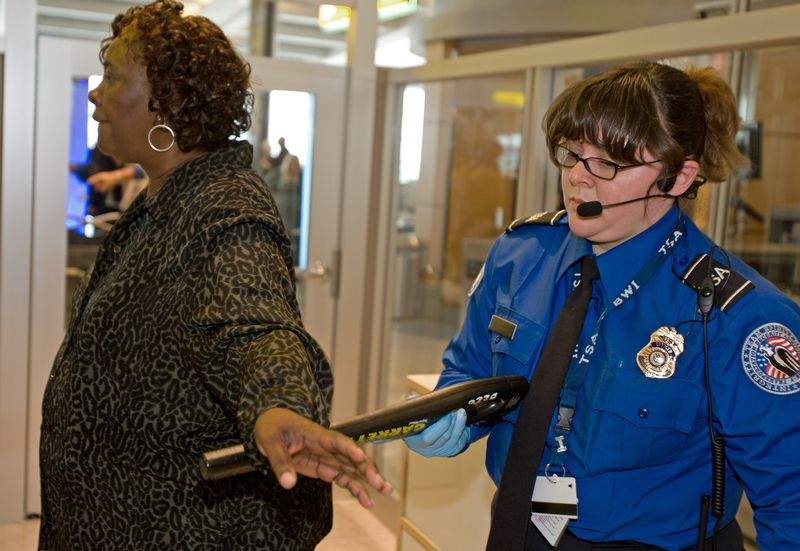
TSA scanners miss as many as 70 percent of banned items that passengers bring to security checkpoints, by some estimates.

The TSA’s PR staff is taking issue with the figures, but isn’t bothering to put out its own numbers.

The Economist points out:

Surely if TSA screeners were doing much better in covert testing, the agency would be eager to release the data. That hasn’t happened. You don’t have to be a cynic to think that the current, unreleased numbers might not be quite as impressive as the agency would like.

Also worth pointing out – there has not been a single successful terrorist attack even with all the contraband that makes it onto airplanes. This is because terrorism is rare. It just doesn’t cost very many lives compared to other threats.

These greater threats include automobile crashes (40,000 deaths per year), heart disease (616,067 deaths in 2009), and cancer (562,875 deaths in 2009). Terrorist attacks, on the other hand, are twenty times rarer than deaths by lightning strikes.

If policymakers were rational, they would give twenty times more attention to lightning strike prevention than to terrorism. But they aren’t, and they don’t. That means the TSA’s $8.1 billion budget, by using up resources that would save more lives elsewhere, will continue to cost more lives than it saves for the foreseeable future.

CEI Podcast — December 28, 2010: IRS as Tax Preparer?

Have a listen here.

Fellow in Regulatory Studies Ryan Young looks at the IRS’ proposal to save you time by doing your taxes for you. Because you would be liable for any of the IRS’ mistakes, you would still have to check over your return. This negates much of the time savings. It could also cost employers as much as $5 billion in increased reporting requirements. Then there is the conflict of interest between your collector also being your tax preparer.

Alfred E. Kahn, 1917-2010

The man who deregulated air travel passed away yesterday at age 93. That man, Alfred Kahn, was a Cornell economics professor who did far more than teach. He revolutionized the role of economics in regulatory policy. He also did important work on electricity deregulation in addition to his famous work on deregulating air travel.

Kahn’s most famous book was The Economics of Regulation, which pointed out that regulations often hinder competition, not help it. His use of the economic way of thinking was distinctly unfashionable at the time. One of his greatest legacies is righting that wrong.

As a lifelong partisan Democrat, Kahn had credibility in political circles at a time when regulatory skeptics were shooed away from the corridors of power. After chairing the New York Public Service Commission, President Carter appointed him to lead the Civil Aeronautics Board in 1977, which he dismantled.

Before Kahn, airlines had to get permission from the CAB to establish new routes or terminate old ones. The CAB set ticket prices, not the market. This prevented profitable or high-demand routes from being given adequate service, and kept money-losing, little-traveled routes open. It prevented airlines from keeping up with their customers’ ever-changing needs.

The CAB was also a wonderful device for keeping pesky startups from competing with established industry giants such as Pan American. Southwest Airlines, for example, would only fly routes inside the state of Texas to avoid CAB regulations.

Once the CAB was abolished, Southwest and other small airlines tried out new business models and offering lower fares. Some of them prospered; others did a poor job giving people what they wanted and ceased to be. Today, air travel may not have the amenities it used to, but it cheaper, more flexible, and more adaptable than it was under the CAB.

Washington could use more people like Alfred Kahn. He had his successes in a few choice sectors of the economy, but many more still have Civil Aeronautics Boards of their own stopping them from reaching their potential. Let us learn from his example of a life well lived; a good place to start is Thomas McCraw’s Prophets of Regulation.