Category Archives: Economics

How to Fix Immigration’s Black Market

Alex Nowrasteh and I have a piece in today’s Detroit News arguing that liberalization, not regulation, is the way to shrink immigration’s massive black market. Our main points:

-New rules that came into effect this month, such as raising the minimum wage for H-2A visa holders (that’s the visa for low-skilled agricultural workers) makes cheaper undocumented workers look more attractive for employers. They actually harm legal workers.

-Other new regulations, including background checks, workplace inspections, and mountains of paperwork, cost thousands of dollars per employee. These regulations also make black market workers look more attractive.

-The way to reduce illegal immigration is liberalization. For agricultural workers, that means making their H-2A visas inexpensive, easy to obtain, and keeping the bureaucracy to a minimum.

-When legal channels cost too much in time and money, people will turn to illegal channels every time. That’s how the world works. Getting rid of immigration’s black market begins with admitting that fact.

Four Ways to Spend Money on Health Care

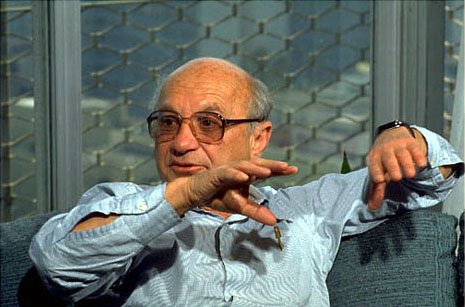
As the House gets ready to pass the health care bill today, I’m reminded of one of the first lessons in economics I ever learned. Milton Friedman put it best:

There are four ways in which you can spend money. You can spend your own money on yourself. When you do that, why then you really watch out what you’re doing, and you try to get the most for your money. Then you can spend your own money on somebody else. For example, I buy a birthday present for someone. Well, then I’m not so careful about the content of the present, but I’m very careful about the cost. Then, I can spend somebody else’s money on myself. And if I spend somebody else’s money on myself, then I’m sure going to have a good lunch! Finally, I can spend somebody else’s money on somebody else. And if I spend somebody else’s money on somebody else, I’m not concerned about how much it is, and I’m not concerned about what I get. And that’s government. And that’s close to 40% of our national income.

The biggest problem with health care today is that patients only pay 12 percent of costs out of pocket.  As far as each individual is concerned, it’s basically on sale for 88 percent off! No wonder we spend so much on health care.

Today’s bill consists almost entirely of spending other peoples’ money on other people. If it becomes law, that 12 percent figure will fall even further. This is no way to keep costs under control. However noble Congress’ intentions may be, its bill will not work as advertised. Human nature won’t allow it.

Will the Jobs Bill Create Any Jobs?

Over at the American Spectator, I explain why it won’t, but a deregulatory stimulus would. Main points:

-Anything that Washington giveth, it must first taketh away from somewhere else. The jobs bill is a zero-sum game.

-When government borrows more, less investment capital is left over for the productive sector.

-Taxes will have to be raised later to pay for today’s increased borrowing.

-Deregulation is a better approach. The biggest obstacles to job creation and economic growth are all in Washington.

Influential Books

Over at EconLog, George Mason economics professor Bryan Caplan lists the 15 books that have been his biggest intellectual influences. It’s worth a look. For you libertarian ideologues out there, pay attention to what he says about Rothbard and Mises. I love them both, and clearly so does Caplan; he assigned a fair amount of Rothbard when I took his graduate public finance class. But they’re not without their faults.

My own list would look pretty different. But I have to say, it would share a lot of common themes.

Does March Madness Really Hurt the Economy?

An annual study claims that the NCAA’s basketball championship tournament makes workers less productive. The illicit temptations of filling out brackets and watching games instead of working will cost the economy about $1.8 billion this year.  Over at the Daily Caller, I show why that’s (mostly) a myth.

The Economics of Romance

Tim Harford, Financial Times columnist and author of the underrated The Undercover Economist, takes some questions about economics and relationships with the New York Times’ Freakonomics blog.

The first question made me laugh, and also reminded me of my economist self a bit too much for comfort. And the part about engagement rings was enlightening — especially since I bought one not too long ago.

(Hat tip to my fiancee, who thankfully said yes.)

Senate Passes $18,000,000,000 Spending Bill: Will it Create Jobs?

The Senate just passed an $18 billion spending bill. Since the House already passed it, the legislation is now headed to President Obama’s desk to await his signature and become law.

The hope is that the spending will create jobs. If you’re reading this blog, then you probably know enough about economics to know that isn’t what will actually happen. Remember: anything that Washington giveth, it must first taketh away from somewhere else. It’s a zero-sum game. All those new jobs that politicians will be touting for the cameras will have come at the expense of other jobs elsewhere. On net, they’re not creating a thing.

Take the payroll tax break for small businesses that’s in the bill. Yes, those small businesses benefit. Maybe the money they save will even be used to hire more workers. That’s easy enough to see. But that money had to come from somewhere. That is harder to see. Too hard for the Senate to see, at the very least.

The reason is this: the government is foregoing some payroll tax revenue. But since it isn’t cutting spending to match, it has to borrow more. And there’s only so much investment capital to go around. Because Washington is borrowing more, less is left over for private investment opportunities. At the very least, companies will have to offer investors higher interest rates to lure them away from government bonds.

That makes getting loans more expensive. And when something gets more expensive, there tends to be less of it. Because of today’s bill, about $18 billion less capital will be available for the private sector to create jobs.

The legislation the Senate passed today is no jobs bill, at least on net. It is a spending bill. It doesn’t create jobs, it only redirects them.

The Wisdom of George Stigler

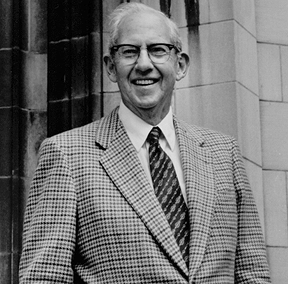
George Stigler won a Nobel Prize for his work on the economics of regulation. He wrote extensively about regulatory capture, and in fact coined the term. He was one of only a few sane souls who stubbornly insisted that regulations be judged by their actual results, not their intended results. Good intentions, however noble, are not enough. Here’s an example of Stigler at his finest:

Regulation and competition are rhetorical friends and deadly enemies: over the doorway of every regulatory agency save two should be carved: “Competition Not Admitted.” The Federal Trade Commission’s doorway should announce , “Competition Admitted in Rear,” and that of the Antitrust Division, “Monopoly Only by Appointment.”

-George Stigler, “Can Regulatory Agencies Protect the Consumer?”, from The Citizen and the State: Essays on Regulation (1975), p. 183.

Hayek’s Uneasy Relationship with Conservatives

Bill Easterly does a good job of sticking up for Hayek.

Hayek could be quite different than Hayekians. That distinction needs to be made in this era of tea parties and the dominant liberal-vs.-conservative false dichotomy.

I think it’s great that some conservatives are boosting Hayek (I wish progressives would, too; they’d find a lot to like). It just appears they aren’t reading him very closely. Do bear that in mind before associating Hayek with conservatism.

Worth reading: Hayek’s essay, “Why I Am Not a Conservative.” Print it out. Read it closely. Mark up the margins with your notes and reactions. Agree or disagree, this essay rewards deep and careful thought. I’ve read it several times over the years, and every time I pick it up again I learn something new.

The Hayekian Approach to Health Care

George Will has a good column today. He does a wonderful job contrasting Hayek’s philosophy of humility before complexity with the early 20th-century progressive mindset of planning and scientistic design. The framework applies surprisingly well to today’s health care debate, with President Obama playing the role of Woodrow Wilson. Very thought-provoking.