Monthly Archives: September 2010

One Way to Create High-Tech Jobs

My colleague Ryan Radia and I recently sent this letter to The New York Times:

Editor, New York Times:

Catherine Rampell’s September 7 article, “Once a Dynamo, the Tech Sector Is Slow to Hire,” mourns the recent decline in U.S. data processing jobs. She blames much of the decline on the automation of previously tedious tasks.

May we suggest one way to get those jobs back: No more automation. Ban the use of computers for data processing. Imagine how much information flows through today’s global economy in an average day. Computers handle most of the load. That costs millions of jobs.

The effects would reverberate far beyond the tech sector. The paper, pen, and pencil industries would also boom.

Companies are dead-set on doing more with less. True, that creates more jobs in the long run by freeing up resources — and employees — for new ventures. But if only they would consider doing less with more, they could create more data processing jobs.

Ryan Young and Ryan Radia
Competitive Enterprise Institute
Washington, D.C.

Shifting the Burden of Explanation

A lot of people get angry when somebody suggests privatizing some or other government service. For example, someone who opposes government-run schools is accused of opposing all education, period. Not a rigorous line of thought. But it’s common.

Why do some people propose privatization? It’s not because they’re against the service. It’s because they think the private sector will do a better job providing that service.

If anything, because theory and data usually side with privatizers, the burden of explanation actually lies on those who favor government provision of many services. Why support more expensive and less effective schools, or mail service, or health care, or rail travel?

Mises briefly touches on that disconnect in his short 1927 book Liberalism (that is, liberalism as the word originally meant):

If I am of the opinion that it is inexpedient to assign to the government the task of operating railroads, hotels, or mines, I am not an “enemy of the state” any more than I can be called an enemy of sulphuric acid because I am of the opinion that, useful though it may be for many purposes, it is not suitable either for drinking or for washing one’s hands.

-Ludwig von Mises, Liberalism: The Classical Tradition, p. 18.

Cops on Camera

The vast majority of police officers are good, honest men and women. But a few aren’t. That’s why people should be allowed to record their encounters with police. The camera is an objective witness when events get out of control. People with guns in hand and the legal authority to use them on other human beings should be held as accountable as possible.

Watch this video from the Cato Institute. Real people have been hurt. Without cameras, the perpetrators would never have been held accountable.

Study: Cash for Clunkers Didn’t Work

A new NBER working paper from Atif Mia and Amir Sufi finds that the Cash-for-Clunkers program didn’t work. Here’s part of the abstract:

We find that the program induced the purchase of an additional 360,000 cars in July and August of 2009. However, almost all of the additional purchases under the program were pulled forward from the very near future; the effect of the program on auto purchases is almost completely reversed by as early as March 2010 – only seven months after the program ended. The effect of the program on auto purchases was significantly more short-lived than previously suggested. We also find no evidence of an effect on employment, house prices, or household default rates in cities with higher exposure to the program.

In other words, cash for clunkers didn’t change how much people spent. It only changed when they spent. Sales were higher than normal during the program, and lower than normal after.

As the data come in, they are proving what theory predicts: fiscal stimulus doesn’t work. President George W. Bush tried Keynesian stimulus in 2001. It didn’t work. He tried again in 2003. It didn’t work then, either. President Obama’s stimulus programs aren’t faring any better. It’s time for a different approach.

Megan McArdle on DC Drivers

Well worth a read:

I could not have imagined, before I moved to DC, that I would find driving through New York City traffic soothing. But this is exactly how I do feel, when I drive back to New York. New York City drivers are extremely aggressive and numerous, but they are rational and predictable. I never feel like I don’t know what a cab driver is about to do; of course, he’s about to try to cut me off at around 35 miles per hour. But he isn’t about to pull over into the left lane of a major thoroughfare at 35 miles per hour, slam on the brakes, and back up traffic for fifteen minutes while he waits for an opening in opposing traffic so that he can pull into the hotel driveway across the street. Because even a New York City cab driver can recognize that that would be insane.

CEI Podcast: Alex Nowrasteh on Birthright Citizenship

In the latest CEI Podcast, I interview my colleague Alex Nowrasteh. He thinks the recent push to repeal birthright citizenship for undocumented immigrants is misguided.

Have a listen here. Length: 4:49.

Alex recently wrote an article on the issue for Fox News.

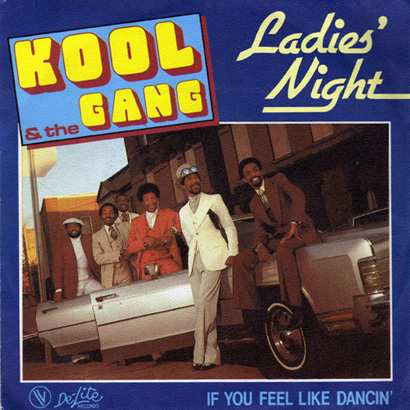
Regulation of the Day Update: Ladies’ Night Bar Specials

As noted previously, ladies’ night bar specials are illegal in Minnesota. The state’s Department of Human Rights says they are unfair gender discrimination. But they’re still legal in New York.

That upsets attorney Roy Den Hollander. He thinks ladies’ nights are unconstitutional. So he sued several New York bars. The Second Circuit Court of Appeals wisely threw out his case. Even more wisely, they chose not to take him seriously:

The court, with evident amusement, said it must rule against Den Hollander even though “without action on our part, (he) paints a picture of a bleak future, where ‘none other than what’s left of the Wall Street moguls’ will be able to afford to attend nightclubs.”

It’s not often that New Yorkers show more common sense than Midwesterners. Minnesota’s solons should take heed.

Economics Doesn’t Have to Be Boring

Economics is a genuinely exciting subject to study. But introductory economics classes are genuinely boring.

Maybe they’re designed that way to weed out the weak. But that means fewer people are learning the economic way of thinking. This is a mistake. Everyone should know at least the basics.

I’m not talking comparative statics or Edgeworth boxes, or any of that nonsense that scares off lay people. Leave that to the academics. I’m talking fundamentals. The stuff that everyday people can understand and use. Such as the fact that people respond to incentives, and by being aware of that, you can read a lot into why people behave the way they do.

Or the role that the price system plays in conveying information and affecting behavior. Or the fact that millions of Parisians and New Yorkers are fed each and every day, even though nobody is coordinating the process. Which really is a miracle if you think about it.

That’s why Bill Easterly is one of my favorite economists. Tasked with teaching Econ 1 this semester, he’s decided not to follow the usual (boring) pedagogy:

Sorry, I’m not all that concerned with “how individuals, blah, blah, optimal choices, blah, blah, scarcity, blah, blah…” I’m concerned why some people are so rich and other people are so poor. I want to understand why some economies work and others don’t, and why even the ones that work still don’t work for everyone. I want to understand how other Americans and I got 64 times richer than our ancestors.

I want to know why Robert Iger, the CEO of Disney, makes $140,000 a day, and why some rock-breakers I met in Ghana make $1 a day. I think a differential of 140,000 times is pretty important to understand…

Economics principles are a set of tools that have evolved to transcend scarcity into abundance. When students use these principles to solve problems in an Econ class, they are recreating the process of historical problem solving in which poor people discovered the principles to become rich people.

If there were more professors like Easterly, maybe economics would have a livelier reputation, not to mention more students. The subject matter is the very stuff of life. But the average lecturer’s performance is the very stuff of death. Or at least of sleep.


Why Freedom of Speech Matters

“Freedom of thought, in any valuable sense, includes freedom of speech.”

-J.B. Bury, A History of Freedom of Thought

Speaking Truth to Power Rarely Works

Telling the truth to one’s superiors is hard. Especially when the stakes are high. Christina Romer comes to mind. Brilliant economist. She’s done excellent work on the role of monetary policy during the Great Depression.

A partisan Democrat, she was summoned to Washington soon after President Obama’s election to advise him. All of a sudden she endorsed the Bush-Obama views on stimulus. This is a 180 degree turn from her previous views. Romer’s own academic research shows that fiscal stimulus’ effects are too small to do measurable good.

Romer the economist believes that most business cycles have monetary causes. Not fiscal. Monetary. Romer the economist had been very consistent in expressing that view. But that view changed as soon as she arrived in Washington and Romer the economist transformed into Romer the political advisor. Suspicious.

This is not a new phenomenon. Politicians from both parties have been using economists for as long as economists have let themselves be so used. Politicians love the air of legitimacy that pointy-headed academics can give to their proposals. And economists love the sudden rush of attention and name recognition — and the professional prestige that will long outlast the current administration. They are happy to sell out. Or is it buying in?

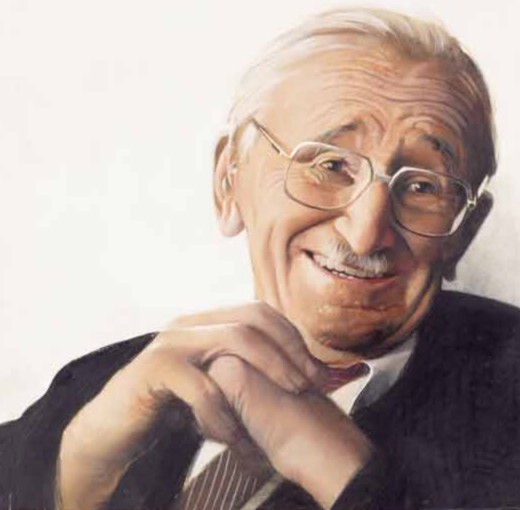
That thought was sparked by reading about F.A. Hayek mourning the death of some of his colleagues’ integrity back during the Reagan years:

“You can either be an economist or a policy advisor.

I have seen in some of my closest friends… how a few years in government corrupted them intellectually and made them unable to think straight.”

Cato Policy Report, Vol. 5, No. 2, February 1983.