Why We Don’t Know What We Don’t Know

Here’s one theory, courtesy of my recent Steven Landsburg kick:

Steven Pinker points out that understanding the origin of the universe is not a terribly useful skill; it confers no reproductive advantage, so there’s no reason we should have evolved brains capable of thinking about such a question. Nature is too good an economist to invest in such frivolities.

-Steven Landsburg, More Sex Is Safer Sex: The Unconventional Wisdom of Economics, p.190.

I think there’s something to it. Though our ignorance of the answer to the question probably has more to do with its sheer magnitude.

Regulation of the Day 68: Ironing Tables

ironing table

Regulation begets rent-seeking. When government assumes the power to regulate imports, domestic firms will lobby to use that fact to their advantage.

Case in point: Home Products International (HPI), an American company, makes ironing tables. So does Hardware, a Chinese company. I personally have no idea which firm makes the better ironing table. That’s for consumers to decide.

Or at least it should be for consumers to decide. But it doesn’t always work that way in practice. HPI seems to have already made that decision for us.

At HPI’s request, the International Trade Administration will continue to add anti-dumping duties to the price of the Chinese-made ironing tables. That way HPI doesn’t have to worry as much about competing. Sorry, consumers.

Is this fair? Of course not. But all too often, it is how regulation works.

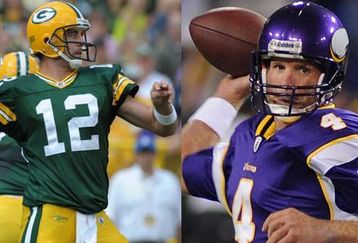
Breaking Down Brett Bowl II

rodgers vs favre

Today’s American Spectator Online contains my take on why Favre beating the Packers in Lambeau is a hard thing for Green Bay fans to take.

Lomborg Strikes Again

malaria_special

Some people want to cure malaria by reducing carbon emissions. Others want to cure it with mosquito nets, better health care and sanitation. Which is a more effective use of our limited resources? The answer is important; malaria kills about one million people every year. Getting it wrong costs lives.

According to Bjørn Lomborg, “For the money it takes to save one life with carbon cuts, smarter policies could save 78,000 lives. ”

Let’s pursue those smarter policies, then.

Taxes without Borders

stock_pile-of-coins

This month’s issue of Info Tech & Telecom News contains an article by yours truly on certain states’ attempts to collect sales taxes from out-of-state businesses. Key point:

Economists have known for a long time that when you tax something, you get less of it. Apparently some state legislators want less commerce in their states.

Brett Bowl II: Vikings 36, Packers 28

I love my team. But the over-under on the time it takes me to get over a Packer loss is usually about ten minutes. I refuse to let a loss ruin my day. This game feels a little different.

Part of it is that the loss was avoidable. A dumb penalty by defensive tackle Johnny Jolly after a key third down stop in the red zone directly allowed a Viking touchdown instead of a field goal. That’s four points right there — half the margin of defeat — on one penalty.

And while I’m generally not one to second-guess football professionals who know far more about the game and its players then I do, I’ll go ahead and question Green Bay defensive coordinator Dom Capers’ game planning.

The best way to force poor throws out of a quarterback is to apply pressure. Doesn’t matter how tough someone is, he’ll get scared if 300-pound men are in his face on every play. That means you blitz hard, and blitz often. The standout Packer secondary allows Capers to blitz with little loss in coverage ability.

I also saw some offensive issues. The Vikings have an excellent defensive line. That means you give your quarterback extra protection against them. The Minnesota secondary is that team’s liability, especially with its best player, Antoine Winfield, out due to to injury.

That means that keeping an extra player in to block, who could otherwise be an open receiver, comes at a small price. The Packers did little to max-protect, and little to pick on a depleted secondary.

The lack of protection meant Aaron Rodgers was limping by the end of the game. That could hurt the team well beyond this game.

But these things happen all the time, even to good teams. Why does this one still sting?

Chalk it up to cognitive dissonance. I still can’t forget how much Brett Favre has done for the Packers. It still outweighs how much he’s done to the Packers in the two times he’s beaten them. His contributions to Green Bay go well beyond his hall-of-fame statistics and durability. Those would be quite enough on their own.

His presence made the rest of the team better. Having Brett Favre at quarterback was what allowed the Packers to convince marquee free agents like Reggie White to put on the green and gold.

The team was a mediocrity from the end of the Lombardi/Starr era until Favre ambled in. That’s more than two decades. An entire generation.  Nobody wanted to play there. The weather is enough of a turn-off for most people. But if the team is perpetually bad, why bother signing with them? Players play to win, not to lose and be cold.

Then along came Brett. All of a sudden playoff appearances became a regularity. In Brett’s 16 years in Green Bay, the team only had one losing season. That’s unheard of. People like Reggie White and Charles Woodson came to to Green Bay of their own free will. The team was competitive every year. What a treat for Packer fans resigned to seeing loss after loss.

Brett Favre made Green Bay relevant again. How many players can do that for a team? That’s the real reason why Brett was so loved by his fans. Yes, he has a colorful personality and a compelling life story. If he wasn’t a winner, nobody would care.

That’s why it’s not the loss that bothers me so much. It’s been more than ten minutes by now. Heck, I’m a Brewer fan. I learned at an early age to let losses roll off my back like so much water off a duck’s back.

No, this one hurts because the person who brought my favorite team out of the NFL’s basement was working his hardest to throw it back down there. And without him, the Packers may well have never left it. How do you root against someone who did that for you? Cognitive dissonance at its finest.


Washington and Wall Street: Best Kept Separate

Russ Roberts’ testimony in front of the House Committee on Oversight and Government Reform is superb. Read it (it’s short). Wall Street deserves plenty of blame for the financial crisis. But Washington deserves more:

When your teenager drives drunk and wrecks the car, and you keep giving him a do-over—
repairing the car and handing him back the keys—he’s going to keep driving
drunk. Washington keeps giving the bad banks and Wall Street firms a do-over. Here are
the keys. Keep driving. The story always ends with a crash.

I’m mad at Wall Street. But I’m a lot madder at the people who gave them the keys to
drive our economy off the cliff.

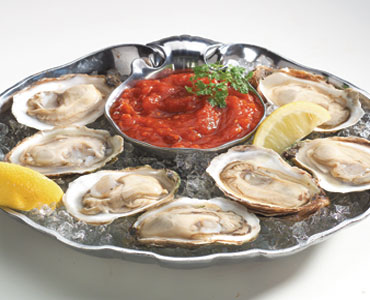
Regulation of the Day 67: Oysters

oysters

My colleague Richard Morrison brought to my attention a new FDA rule that requires oysters harvested between April and October to be sterilized before they are eaten. The goal is to prevent a rare – and sometimes fatal – bacteria from harming anyone.

An unintended consequence is that the state of Louisiana is up in arms. The sterilization rule essentially bans raw oysters, a local delicacy, for seven months every year. Sterilization also affects the flavor of cooked oysters, a common ingredient in Cajun cooking.

Restaurateurs are livid. One describes the rule as “ludicrous.”Another calls it “a nuclear bomb” for the oyster industry. State officials are also upset, and have issued strongly worded statements opposing the rule.

Regulation of the Day 66: Trick or Treating

Trick or Treating

“Supervisors in Dunkard Township say they are taking the steps for safety reasons,” reads a recent news article describing a new regulation. Regulators often cite safety to explain their latest doings. But it might be a bit of a stretch for justifying what Dunkard Township is doing: banning trick-or-treating.

That’s right. Regulators have banned a staple of childhood. Trick-or-treating is dangerous. Far too dangerous for children. Yet some parents were going to let their kids go anyway. Officials were left with no choice.

The government will hold a four-hour Halloween party to make up for it.

Food: Mankind’s Doom

vegetable

In Sweden, food and menu labeling has started to include the estimated carbon footprint of each item.

Don’t read too much into the labels, though. The New York Times notes that “the emissions impact of, say, a carrot, can vary by a factor of 10, depending how and where it is grown.”

With that much imprecision built in, if the labels change consumer behavior as much as supporters hope, it’s entirely possible that eco-concsious diets could result in more carbon emissions, not less. A classic case of leaping before you look.

This new religion is a piece of work. It comes complete with a deity (Gaia), clergy (activists), indulgences (carbon credits), and now, dietary restrictions.