Light Blogging Ahead

I will be away visiting family and friends for the rest of the week, which means I’ll have better things to do than blog. I might chime in if something juicy hits the news, but more likely not.

I have, however, scheduled a series of posts in advance, mostly quotes from books I’ve read recently. One or two will pop up per day, so check in regularly.

Regular blogging will resume on Monday.

Regulation of the Day 200: Flying Food

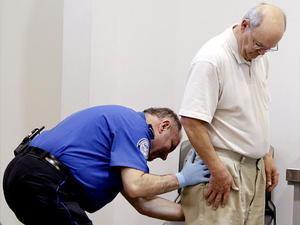
Millions of Americans are taking to the skies to spend time with their families over Thanksgiving. Many of them will be carrying leftovers on their return trips. Fortunately, the TSA is fully prepared to defend the airways against terrorist turkeys and rogue desserts. Here is a list of food and other holiday-themed items that run afoul of the TSA’s 3-1-1 rule:

Cranberry sauce, creamy dips and spreads (cheeses, peanut butter, etc.), gift baskets with food items (salsa, jams and salad dressings), gravy, jams, jellies, maple syrup, oils and vinegars, salad dressing, salsa, sauces, soups, wine, liquor and beer.

That means you’ll have to put them in checked baggage if you have a decent amount. They are far too dangerous to bring on the plane in a carry-on.

There are also specific guidelines for pies and cakes:

Note: You can bring pies and cakes through the security checkpoint, but please be advised that they are subject to additional screening.

I feel safer already.

CEI Podcast for November 23, 2011: The Most Expensive Regulation of All Time?

Have a listen here.

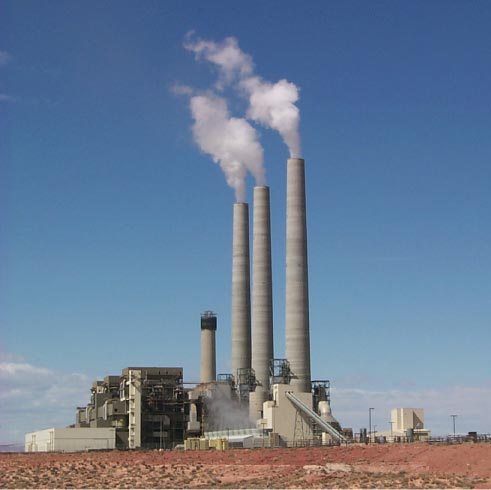
What is the single most expensive regulation of all time? Energy Policy Analyst William Yeatman has one candidate: the EPA’s proposal to regulate mercury emissions from coal-powered plants. If it passes, the regulation would cost at least ten billion dollars per year to benefit a very small group of people: pregnant women who have subsistence-level income, and eat mostly large fish caught in inland freshwater bodies.

Should Matt Kemp Have Won the MVP?

Ryan Braun won the NL MVP even thought Matt Kemp put up better numbers. Over at The American Spectator, I explain why Braun was the more valuable player. The economist’s habit of thinking at the margin shows why:

Kemp clearly had a better 2011. But at the margin, Braun was far more valuable. Without Kemp, the Dodgers would have won 72 games. With him, they won 82. That’s not a big difference at the margin. It’s nice to finish above .500, but there’s no real difference between a 72-win season and an 82-win season. You miss the playoffs either way.

Braun took the Brewers from 88 wins to 96 wins. There is a world of difference between 88 wins and 96 wins. It’s the difference between missing the playoffs and winning the division. Every single win that Braun created was absolutely crucial to the Brewers playing in the postseason instead of watching it from home.

So even though Braun created fewer wins, each of them was extremely valuable. That’s why he’s the MVP.

Read the whole thing here.

Ryan Braun Wins NL MVP

The crime scene above that Braun’s teamates put together recreates the time he tripped and fell rounding third, but he is still a deserving winner. Braun earned 20 of 32 possible first-place votes, and is Milwaukee’s first MVP since Robin Yount in 1989. Congratulations, sir.

Fellow Brewer Prince Fielder came in third place.

What Decline and Fall?

Roger Cohen’s column in today’s New York Times is titled “Decline and Fall.” Channeling Gibbon, he compares America in 2011 to Rome in 475 A.D., says “the West is shot,” commits the broken window fallacy, and generally paints a picture of doom and gloom.

Classical references aside, Cohen seems to be innocent of historical knowledge. The graph below shows real GDP since 1929 (source). The wee little dip at the end is the cause of Cohen’s histrionics.

Yes, economic growth is weak. Far, far too many people are out of work. And it will probably be a few years before boom times return. But context, please.

Fear Bathtubs, Not Terrorists

Your odds of drowning in a bathtub? About one in a million. Your odds of dying in a terrorist attack? About one in 3.5 million. If you’re not scared of taking a bath — and you shouldn’t be — then you shouldn’t be scared of terrorists. The Department of Homeland Security’s post-9/11 buildup is the result of literally irrational fear.

John Mueller and Mark G. Stewart make that point crystal clear in this video. Click here if the embedded video doesn’t work.

Regulation of the Day 199: How to Catch a Tuna

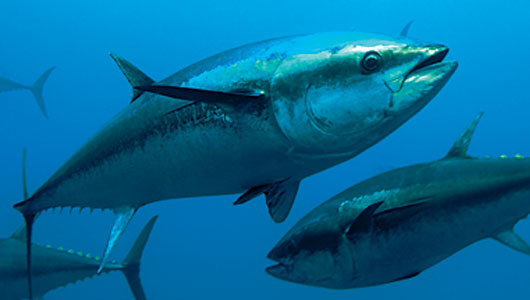
Carlos Rafael owns over 40 fishing boats that work the waters off of New Bedford, Connecticut. One his boats recently caught an 881-pound bluefin tuna — one of the biggest catches ever made (the record is 1,496 pounds). Authorities quickly confiscated the fish.

Fishing is a heavily regulated industry, and Rafael took every precaution to make sure his giant catch was within the rules:

Rafael, who in the last four years purchased 15 tuna permits for his groundfish boats to cover just such an eventuality, imme­diately called a bluefin tuna hot line maintained by fishery regu­lators to report the catch.

When the weather offshore deteriorated, the Apollo decided to seek shelter in Provincetown Harbor on Nov. 12. Rafael imme­diately set off in a truck to meet the boat…

However, when Rafael rolled down the dock in Provincetown there was an unexpected and unwelcome development. The authorities were waiting.

So he had a permit, he let authorities know right away, let them know it was an accidental catch, and they still took it away. Why?

Because Rafael’s men caught it with a net. Bluefin tuna are only allowed to be caught with fishing rods.

A dejected Rafael told the Cape Cod Times, “We didn’t try to hide anything. We did everything by the book. Nobody ever told me we couldn’t catch it with a net.”

At this point, it appears that Rafael will not be charged with a crime. The government, however, will sell his fish and keep the money. Most people would call this stealing; the government calls it asset forfeiture.

Why Is Immigration Illegal Anyway?

Art Carden and Ben Powell ask that fundamental question, and answer it brilliantly:

American immigration restrictions have a long history, but they have never been a good idea. Economist Thomas Leonard documents how even some Progressive Era economists supported immigration restrictions and minimum wages because they wanted to shut members of what they called “low-wage races” out of the American labor market…

Fears that immigrants will wreck our economy are probably the biggest reason substantial barriers to legal immigration remain on the books. But immigrants don’t take our jobs, lower our wages or depress the American economy.

Virtually all economists who study immigration find that it provides a small but positive impact on the economy. It should be obvious that immigrants don’t steal jobs from the native-born. Since 1950, the labor force has more than doubled but long-run unemployment is essentially unchanged. As we’ve added more workers, we’ve added more jobs.

Read the whole thing here.

Regulation of the Day 198: Talking about Water

In a ruling so dumb that only a panel of intellectuals could have written it, the EU has decided that companies may not claim that water cures dehydration. Dehydration occurs when there is not enough water in the body.

This decision was not reached lightly:

The ruling, announced after a conference of 21 EU-appointed scientists in Parma and which means that bottled water companies cannot claim their product stops people’s bodies drying out, was given final approval this week by European Commission President Jose Manuel Barroso.

Not everyone is on board, though:
UKIP MEP Paul Nuttall said: ‘I had to read this four or five times before I  believed it.

‘It is a perfect example of what Brussels does best. Spend three years, with 20 separate pieces of correspondence before summoning 21 professors to Parma, where they decide with great solemnity that drinking water cannot be sold as a  way to combat dehydration.’

He added: ‘Then they make this judgment law and make it clear that if  anybody dares sell water claiming that it is effective against dehydration they  could get into serious legal bother.

‘This makes the bendy banana law look positively sane.’

You heard him right. The EU regulates the curvature of bananas.

I’d write more about the water ruling’s free speech implications and how indicative it is of Brussels’ attitude towards commerce, but there’s really no need to. This regulation is its own reductio ad absurdum.