Slow News Day

Katy+Perry+performs+live+2010
Politico
: Obama tweets at Katy Perry

CEI’s Battered Business Bureau: The Week in Regulation

elmer-fudd-daffy-duck-300x181
This week in the world of regulation:

  • Last week, 80 new final regulations were published in the Federal Register. There were 71 new final rules the previous week.
  • That’s the equivalent of a new regulation every 2 hours and 6 minutes — 24 hours a day, seven days a week.
  • All in all, 2,394 final rules have been published in the Federal Register this year.
  • If this keeps up, the total tally for 2013 will be 3,718 new final rules.
  • Last week, 2,364 new pages were added to the 2013 Federal Register, for a total of 52,494 pages.
  • At its current pace, the 2013 Federal Register will run 80,022 pages, which would be good for third all time. The current record is 81,405 pages, set in 2010.
  • Rules are called “economically significant” if they have costs of $100 million or more in a given year. One such rule was published last week, for a total of 23 so far in 2013.
  • The total estimated compliance costs of this year’s economically significant regulations ranges from $5.78 billion to $10.39 billion.
  • So far, 210 final rules that meet the broader definition of “significant” have been published in 2013.
  • So far this year, 449 final rules affect small business; 58 of them are significant rules.

Highlights from final rules published last week:

For more data, go to TenThousandCommandments.com.

Great Insults from History

edward coke
Francis Bacon and Edward Coke were intellectual rivals. Bacon was a father of the scientific method, and a hero to top-down engineering types. Coke was more from the bottom-up evolutionary common law tradition. When Bacon presented a copy of his New Organon to Coke, Coke inscribed this couplet on the title page:

It deserveth no to be read in Schooles
But to be freighted in the ship of Fooles

(F.A. Hayek, The Trend of Economic Thinking, 72.)

Slow News Day

sunny and boPolitico: Obama: Sunny is ‘friskier’ than Bo

CEI Podcast for August 22, 2013: Germany Legalizes Bitcoin

bitcoins
Have a listen here.

Vice President for Strategy Iain Murray discusses Germany’s decision to legalize Bitcoin, a controversial digital currency. With the euro’s future up in the air, competing currencies are one way to ensure monetary stability in case the worst happens.

What Causes Rent-Seeking?

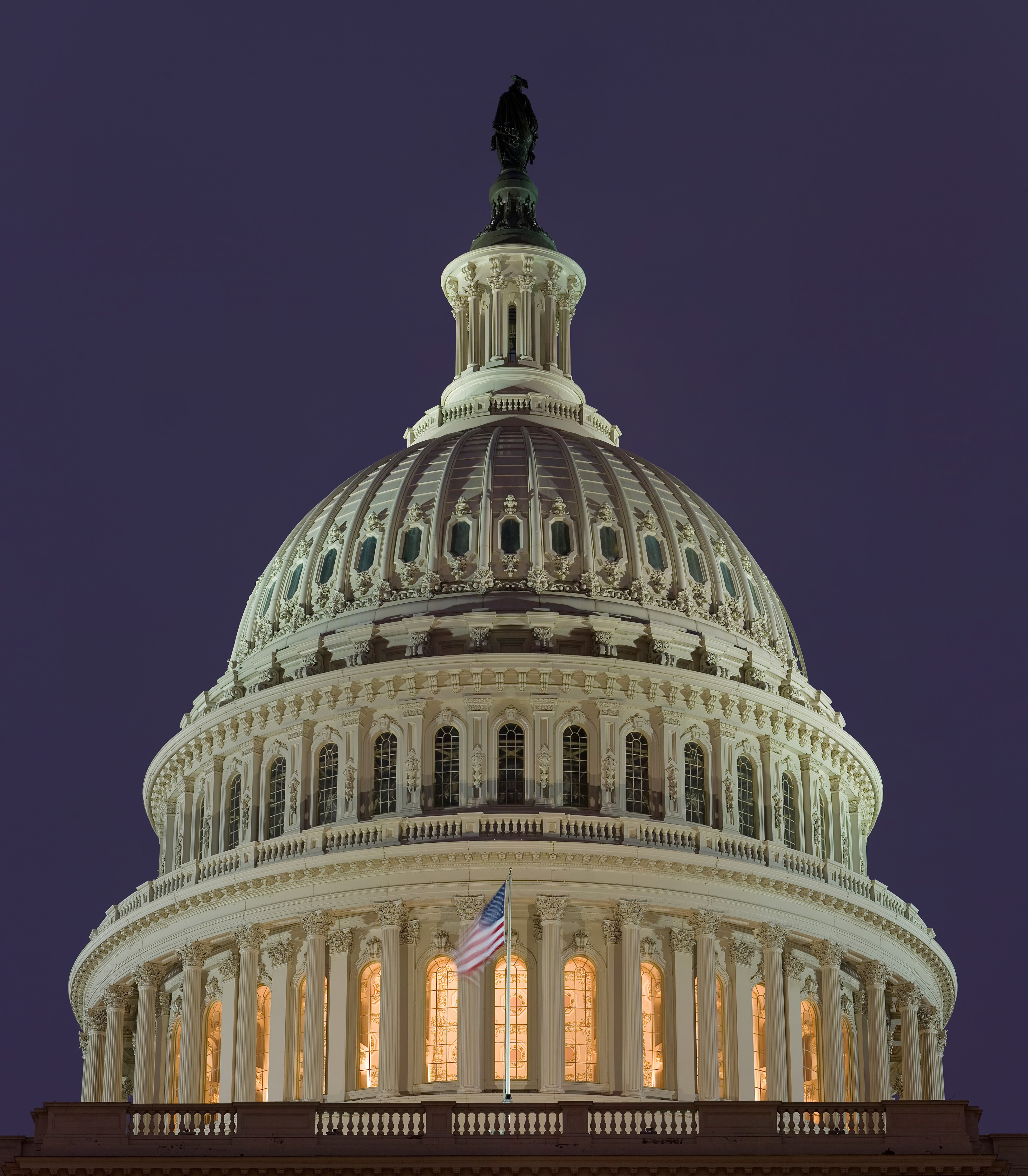
us capitol dome
A bit of pith, courtesy of James Buchanan in his excellent rent-seeking primer, “Rent Seeking and Profit Seeking,” which can be found in pages 103-115 of the first volume of his collected works, The Logical Foundations of Constitutional Liberty (the quote is on p. 109):

Rent-seeking activity is directly related to the scope and range of governmental activity in the economy, to the relative size of the public sector.

Or, as the bank robber Willie Sutton supposedly put it even more pithily, “that’s where the money is.”

CEI’s Battered Business Bureau: The Week in Regulation

d-day normandy
This week in the world of regulation:

  • Last week, 71 new final regulations were published in the Federal Register. There were 83 new final rules the previous week.
  • That’s the equivalent of a new regulation every 2 hours and 22 minutes — 24 hours a day, seven days a week.
  • All in all, 2,314 final rules have been published in the Federal Register this year.
  • If this keeps up, the total tally for 2013 will be 3,704 new final rules.
  • Last week, 1,414 new pages were added to the 2013 Federal Register, for a total of 50,130 pages.
  • At its current pace, the 2013 Federal Register will run 78,821 pages, which would be good for fifth all time. The current record is 81,405 pages, set in 2010.
  • Rules are called “economically significant” if they have costs of $100 million or more in a given year. No such rules were published last week, for a total of 22 so far in 2013.
  • The total estimated compliance costs of this year’s economically significant regulations ranges from $5.78 billion to $10.39 billion.
  • So far, 203 final rules that meet the broader definition of “significant” have been published in 2013.
  • So far this year, 432 final rules affect small business; 55 of them are significant rules.

Highlights from final rules published last week:

For more data, go to TenThousandCommandments.com.

How to Shut Off a Great Debate

Aaron Ross Powell has an excellent, thought-provoking  post over at libertarianism.org on how many of classical liberalism’s opponents tend to argue against libertarian caricatures that have very little to do with the real thing. This talking past one’s target instead of to it hurts both sides. Progressive and conservative thinkers would benefit from testing their ideas against quality opponents. And libertarians/classical liberals are unfairly tarred. Ad hominem attacks are getting in the way of what could be an enlightening intellectual discussion for everyone involved.

Aaron held his fire to one common attack fallacy, that state equals society. But there are more. One of them has been around for at least 80 years, when Hayek made his first public lectures in the 1930s at the London School of Economics. One of those lectures later became the title chapter of volume 3 of his collected works, The Trend of Economic Thinking. His familiar lament appears on pp. 14-15 of that book:

 No serious attempt has ever been made to show that the great liberal economists were any less concerned with the welfare of the poorer classes of society than were their successors. And I do not think that any such attempt could possibly be successful.

Instead, (classical) liberal apathy towards the poor is simply assumed. The argument can be summarized as follows:

  1. The primary concern of many progressives is helping the poor.
  2. Libertarians tend to favor different economic policies than progressives.
  3. Therefore, libertarians do not care about the poor. QED.

This is not a rigorous argument. Steps 1 and 2 are mostly true. But an Olympic-caliber long jumper couldn’t make the leap to step 3. It denies the possibility that the two sides simply prefer different means to similar ends.

This is a shame. There is a wonderful debate just waiting to be had on a number of fronts. Are the poor better served by letting economic processes emerge from the bottom up, or by expertly managing the economy from the top down? Which focus is more important to bettering the lot of the poor, absolute poverty or relative poverty? Is it better to approach the economy as a biologist, seeking merely to understand evolving market processes, or is it better to be an engineer, with an aim to tinker, fix, and improve specific outcomes?

Classical liberals tend to prefer the first answer to each of those questions; progressives tend to favor the second answer to each. But to the extent that the two sides engage each other at all, it tends to be of roughly the same tenor and quality as the “they don’t care about the poor” argument outlined above. An honest debate requires the end of such reflexive ad hominem attacks.

Adam Smith himself, painted by people who haven’t read him as the ultimate atomist individualist, based his whole defense of free markets on his belief that they would bring the masses out of poverty and into prosperity. This was his highest priority. His belief in the deep interconnectedness of people across the world, brought together by our shared natural tendency to truck, barter, and exchange, is also why economics is inherently a social science.

But reading Adam Smith can be a chore, which is why few people bother. Let’s look instead at the raw data, as provided by Jim Gwartney and many others in the annual Economic Freedom of the World report. They find that, in absolute terms, poor people are far less poor in relatively free-market countries than in more controlled economies.

This opens up an entirely new area for honest intellectual debate. Nothing close to a pure free-market economy exists on Earth. So is this free-market prosperity due to the free-market elements that do exist, or is it due to the mixed economy’s more constructivist elements? To my knowledge, this debate has not happened. This is largely because of thought-closing fallacies such as Powell takes on in his post, and the ones I discuss here and elsewhere.

Unintended Consequences of High Minimum Wages

McDonald’s Replaces Cashiers with Touch-Screens

Employers use capital instead of labor.

Innovation Is Cool

Google is preparing screenless computers — imagine simply asking the wall or your lapel what you want to know and getting an instant answer.