Category Archives: Uncategorized

Best Books of 2018: Clashing over Commerce

Re-posted from cei.org.

Review of Clashing over Commerce: A History of U.S. Trade Policy by Douglas Irwin (University of Chicago Press, 2017).

Douglas Irwin’s magnum opus, published at the end of 2017, is already a classic. Given the prominent role trade is playing in politics right now, it is also very timely. At almost 700 pages, “Clashing over Commerce” looks intimidating. But once you start reading, it isn’t. Irwin tells a coherent story that spans generations, showcasing the prominent personalities in the great trade debate, their larger philosophical and economic arguments, and the legislation and policies they fought over. It hits on all levels.

At the same time, Irwin’s chronological structure also makes it easy to focus on one area of interest. So readers, take advantage of the index and the table of contents if you don’t care to read the whole thing.

Interested in how tariffs contributed to the Civil War? Turn to chapter 4. Interested in the Depression-era Smoot-Hawley tariff?  Go to chapter 8 (Irwin also wrote a whole book, “Peddling Protectionism,” on Smoot-Hawley). The World Trade Organization and the bi- and multi-lateral trade agreements in today’s controversies get their due in later chapters.

One of Irwin’s biggest takeaways is that the trade debate’s basic arguments haven’t changed much over the years. President Thomas Jefferson embargoed British trade for both economic and national security reasons, and the policy was a failure. The current administration can learn from the precedent in its ongoing scrap with China.

The industrializing North’s advocacy for tariff protection against foreign competition was one of the 19th century’s biggest rent-seeking stories, and added to North-South tensions both before and after the Civil War. There are important lessons here for tamping back today’s corporate welfare and cultural divisions. The period also spawned the wonderfully-named 1828 Tariff of Abominations.

“Infant industry” protection arguments were as wrong for the 1890s tinplate industry as they are for today’s technology and green-energy industries.

Franklin Roosevelt’s Secretary of State, Cordell Hull, argued that if goods do not cross borders, soldiers will. His words are as wise today as they were when World War II broke out. Cordell’s sentiments also guided a postwar trading system that emphasized peace as much as growth. That system sharply reduced tariffs worldwide until last year. It is an important reason why absolute poverty is now below ten percent of world population for the first time, and war and other forms of violence are continuing their long-run decline.

Irwin identifies another larger theme that applies to issues far beyond trade and tariffs: mission creep. Tariffs were originally intended only to raise revenue. Protective tariffs were strictly forbidden. Of course, a tariff is a tariff, no matter the reason. Alexander Hamilton was one of the first advocates of a national government-directed industrial policy, and tariffs played a major role in his vision.

His proposals were mostly shot down, but as the years went by, more and more people followed Hamilton’s lead. Some were rent-seeking opportunists using Hamilton’s arguments as fig leaves. But other protectionists were sincere, espousing everything from nationalism, anti-foreign sentiment, and economic imperialism to arguments about economic efficiency and saving on transportation costs.

The process continued even after the 16th Amendment passed in 1913, and the new income tax displaced tariffs as the primary federal revenue source. Today, even after Trump’s doubling of tariffs, they raise less than one half of one percent of federal revenue. Tariffs are now strictly for tilting the economic playing field.

Today, the mission creep has gone global. Tariffs have become a brinksmanship tactic—I won’t lower my tariffs unless you lower yours first. This is folly, of course. As the economist Joan Robinson said, if your trading partner dumps rocks in his harbor, the solution is not to dump rocks in yours.

Trade agreements have also become a negotiating tool, and have creeped beyond just tariffs. It is now standard procedure to add trade-unrelated provisions to trade agreements, such as labor, environmental, and regulatory policies. Activists and rent-seekers both find fertile ground here.

In a classic Baptist-and-bootlegger dynamic, labor activists advocate adding expensive labor regulations to trade agreements to hobble foreign competition, though they publicly cite the need to improve foreign working conditions. Environmental activists are often willingly played by rent-seeking green energy producers to advocate for windfall environmental standards and other lucrative non-trade clauses. Steel and other manufacturing industries play to peoples’ nostalgia and patriotism to get their own special favors added to agreements.

All this is a far cry from the original neutral-revenue tariff. This continuing development is why Irwin divides his book into three main eras—revenue, restriction, and reciprocity. Revenue raising became protectionism, and now tariffs are a reciprocal weapon in international negotiations. When the Trump trade war cools down, Irwin will need to add an especially eventful chapter to an updated edition. Hopefully future years will inspire a fourth era—one of openness, peace, and free trade.

Previous posts in the Best Books of 2018 series:

This Week in Ridiculous Regulations

In an eventful week that included criminal justice reform, shutdown drama, and cabinet drama, this year’s new regulations exceeded 2017’s total with more than a week to spare. Rulemaking agencies issued regulations ranging from satellite royalties to tax preparer penalties.

On to the data:

  • Last week, 82 new final regulations were published in the Federal Register, after 76 the previous week.
  • That’s the equivalent of a new regulation every two hours and 3 minutes.
  • Federal agencies have issued 3,266 final regulations in 2018. At that pace, there will be 3,333 new final regulations. Last year’s total was 3,236 regulations.
  • Last week, 1,641 new pages were added to the Federal Register, after 1,050 pages the previous week.
  • The 2018 Federal Register totals 66,075 pages. It is on pace for 67,424 pages. The all-time record adjusted page count (which subtracts skips, jumps, and blank pages) is 96,994, set in 2016.
  • Rules are called “economically significant” if they have costs of $100 million or more in a given year. Six such rules have been published this year, one in the last week—the first since June 12.
  • The running compliance cost tally for 2018’s economically significant regulations ranges from $220.1 million to $2.54 billion. Until last week, the net costs were actually net savings.
  • Agencies have published 108 final rules meeting the broader definition of “significant” so far this year.
  • So far in 2018, 638 new rules affect small businesses; 29 of them are classified as significant.

Highlights from selected final rules published last week:

For more data, see Ten Thousand Commandments and follow @10KC and @RegoftheDay on Twitter.

Best Books of 2018: Suicide of the West & Enlightenment Now

Re-posted from cei.org.

Review of Suicide of the West: How the Rebirth of Tribalism, Populism, Nationalism, and Identity Politics Is Destroying American Democracy (Crown Forum, 2018) by Jonah Goldberg and Enlightenment Now: The Case for Reason, Science, Humanism, and Progress (Viking, 2018) by Steven Pinker.

Goldberg’s “Suicide of the West” is a literate, snappily written, and often humorous defense of Enlightenment values and a broadside against populism. Steven Pinker’s “Enlightenment Now” has a similar theme, backed by an astounding collection of empirical data.

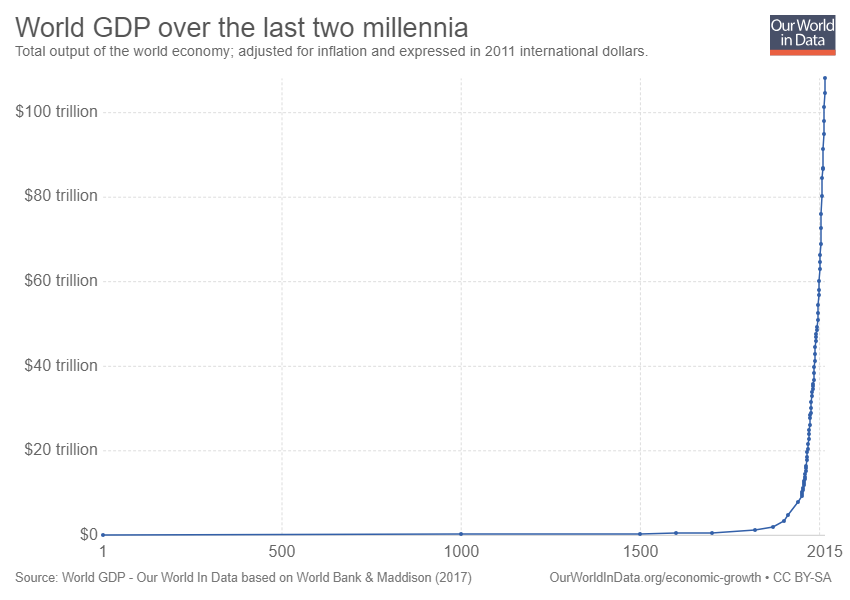
The cooperative social norms that make mass prosperity possible are completely unnatural, Goldberg argues. They are also the best thing that ever happened to humanity, as both argue. The current populist trend is a primal yawp from our baser instincts. It is also the biggest danger the Miracle faces, as Goldberg terms the post-1800 wealth explosion. The average person has gone from three dollars a day to more than 100 dollars a day, at least in countries that more or less adopted Enlightenment values and institutions.

If you doubt the degree of human betterment that has happened over the last two centuries, and how tightly intertwined they are with liberal values and institutions (liberal in the correct, classical sense), even a cursory skim of the first 345 pages of Pinker will show you in great detail. It really is a Miracle, and the most important development in human history since the invention of fire.

Readers who focus on the authors’ criticisms of President Trump are missing the bigger picture. The populist mindset, or rather emotion-set, and not this or that politician, is the biggest threat facing the modern Miracle. President Trump and his analogues in Italy, Mexico, Venezuela, Brazil, and elsewhere are temporary. But the gut-level impulses that make them electable are part of human nature. That is the concern here, not a president who will evanesce from the political scene after a term or two.

Populism is not a left or right phenomenon. It is an anti-Enlightenment worldview based on the immediate, the concrete, and the emotional. A lot of people feel that living standards are declining, and that people aren’t getting a fair shake. The data say otherwise, but a lot of people just feel that way, and form their beliefs accordingly. As Goldberg puts it:

Populist movements do tend to be coalitions of losers. I do not mean that in a perjorative sense but an analytical one. Populist movements almost by definition don’t spring up among people who think everything is going great and they’re getting a fair shake. (p.367)

For many people, their reptile brains override the more analytical parts. If you want to see populist emoting in action, a typical political argument on Twitter, Facebook, or cable news will do. Confirmation bias is rampant, contrary evidence is dismissed, language gets strident, and sometimes things get personal. The flames are as hot as they are shallow, whether they blow from the left or the right. But people still get sucked right in. We’re wired to behave that way.

Populism is having a moment right now, just as it did during the Progressive Era in the early twentieth century, and in the German romanticist movement in the century before that (though that movement was redeemed by some beautiful art and literature). Populism will have more moments in the future. The question is if its latest yawp is merely a blip, or a longer-run rejection of the ideas that make progress and modernity possible.

Like populism, Enlightenment thought works outside of a left-right framework. But unlike populism, it operates on a longer, more cool-headed time horizon. This type of liberalism—again, in the correct sense of the word—is more concerned with abstract cultural values and long-term institutional structures. Having the right long-term process matters more than immediately getting the right immediate results.

Pinker and Goldberg both argue that this patient, abstract approach also explains classical liberalism’s limited appeal. Even when our heads often know better, our hearts are still in hunter-gatherer mode.

It is hard to write news stories about the long-term trends the Enlightenment approach emphasizes. A struggling hometown business with a dozen employees is more emotionally compelling than the fact that worldwide, 137,000 people climbed out of absolute poverty today. One of these stories is rather more important than the other. But it doesn’t fire up people’s reptile brains, so it flies under the radar. Pinker illustrates this phenomenon with graph after graph on a relentless array of policy issues, and Goldberg shows how this affects the quality of both political debate and the politicians in that debate.

Goldberg and Pinker are not alone. Matt Ridley’s The Rational Optimist and Michael Shermer’s The Moral Arc are other quality entries in the genre. Both authors, especially Goldberg, acknowledge the influence of CEI Julian Simon Award winner Deirdre N. McCloskey and her Bourgeois trilogy.

Readers interested in primary sources will find some of the best Enlightenment thought in Adam SmithDavid HumeThomas JeffersonF.A. Hayek, and James Buchanan. Populists, knowingly or not, draw from sources ranging from Jean-Jacques RousseauGoethe, and Nietzsche up to twentieth century progressives such as Louis Brandeis and Ralph Nader, as well as right-wing populists such as Pat Buchanan and Steve Bannon. Pinker argues that President Trump’s world view is, probably unknowingly, eerily similarly to Nietzsche and Rousseau. Understanding them imparts a better understanding of what makes the current administration tick.

If you don’t have the time to read both books, Reason’s Nick Gillespie had an enlightening conversation with Goldberg in June, and Pinker gave a lecture at the Cato Institute in March. There is some overlap between the two books, but they are far from redundant. The authors’ different personalities and different emphases make for two different, complementary, and important works.

This Week in Ridiculous Regulations

A partial federal shutdown looks more likely than it did a week ago, the federal deficit will likely top $1 trillion next year, and Theresa May survived a confidence vote in the UK over Brexit. The 2018 Federal Register surpassed last year’s page count with two weeks to spare, and at its current pace could surpass last year’s final regulation count next week. Rulemaking agencies issued regulations ranging from forage seeding to Mexican bovine brands.

On to the data:

  • Last week, 76 new final regulations were published in the Federal Register, after 73 the previous week.
  • That’s the equivalent of a new regulation every two hours and 13 minutes.
  • Federal agencies have issued 3,184 final regulations in 2018. At that pace, there will be 3,317 new final regulations. Last year’s total was 3,236 regulations.
  • Last week, 1,050 new pages were added to the Federal Register, after 1,140 pages the previous week.
  • The 2018 Federal Register totals 64,432 pages. It is on pace for 67,117 pages. The all-time record adjusted page count (which subtracts skips, jumps, and blank pages) is 96,994, set in 2016.
  • Rules are called “economically significant” if they have costs of $100 million or more in a given year. Five such rules have been published this year, none in the last week.
  • The running compliance cost tally for 2018’s economically significant regulations is a net savings ranging from $348.9 million to $560.9 million.
  • Agencies have published 102 final rules meeting the broader definition of “significant” so far this year.
  • So far in 2018, 623 new rules affect small businesses; 25 of them are classified as significant.

Highlights from selected final rules published last week:

For more data, see Ten Thousand Commandments and follow @10KC and @RegoftheDay on Twitter.

An Antitrust Analogy

One of the biggest problems with antitrust regulation is that the statutes are so vague it can be difficult to tell what is legal and what isn’t. From p. 28 of Robert Bork’s 1978 book The Antitrust Paradox: A Policy at War with Itself:

To put the matter roughly, lawyers forming a partnership could lawfully agree on fields of exclusive specialization (which is market division) and the fees each should charge (price fixing), while the same lawyers, if they were not in a partnership, could not do these things lawfully.

The same logic applies to anything a company does in-house. Hiring an in-house accountant instead of using an outside firm is a form of vertical merger. So is hiring cleaning or cafeteria staff instead of using contractors. More than a century of case law has not settled the matter, at least for companies above a certain size (which also hasn’t been defined). The uncertainty can make companies hesitant to make efficiency-enhancing decisions that might benefit consumers.

Unemployment, Taxes, and Spending

Alongside Charles W. Baird, whose writing I have enjoyed since my high school and college days in FEE’s The Freeman magazine (then called Ideas on Liberty), I am quoted in a Heartland Institute piece on unemployment and how to keep it low.

A Quick Note to WordPress

This website is powered by WordPress, which has provided an excellent hosting service for many years. This is a note I sent their customer service regarding an upcoming change to their editing interface. 

Please do not force migration to the new editor. The blocks system is non-intuitive and has no obvious reason for existence, because paragraphs.

Blocks are prone to accidental unwanted formatting changes at the click of a mouse, with no intuitive way to undo them. This has caused me to delete entire draft posts and have to start again from scratch.

The pop-up menus for each and every new paragraph/block are not only unnecessary, they obstruct other text in the post. This is more than a little annoying.

The new editor also works poorly with copy-and-pastes from Microsoft Word, requiring time-consuming re-editing for spacing issues–a special kind of tedium for longer posts.

Do not want. Please terminate the individual who came up with blocks and set fire to their home.

OPIC Citations

A paper from the Congressional Research Service, Congress’ non-partisan in-house think tank, was kind enough to cite my 2015 paper about OPIC, the Overseas Private Investment Corporation. The CRS paper is here. It was also cited in a Heritage Foundation study here.

Unfortunately, OPIC is in the process of being renamed and doubled in size. I wrote on that development here.

This Week in Ridiculous Regulations

It was another short work week due to Thanksgiving, while Black Friday’s ritual tramplings put a damper on that day’s productivity. Last week agencies published more than 2,000 Federal Register pages, pushing this year’s total over 60,000. The number of this year’s new regulations will likely surpass 3,000 next week. New regulations from the last week range from passenger trains to Zodiac seats.

On to the data:

  • Last week, 50 new final regulations were published in the Federal Register, after 40 the previous week.
  • That’s the equivalent of a new regulation every three hours and 22 minutes.
  • Federal agencies have issued 2,976 final regulations in 2018. At that pace, there will be 3,293 new final regulations. Last year’s total was 3,236 regulations.
  • Last week, 2,157 new pages were added to the Federal Register, after 1,619 pages the previous week.
  • The 2018 Federal Register totals 60,332 pages. It is on pace for 66,739 pages. The all-time record adjusted page count (which subtracts skips, jumps, and blank pages) is 96,994, set in 2016.
  • Rules are called “economically significant” if they have costs of $100 million or more in a given year. Five such rules have been published this year, none in the last week.
  • The running compliance cost tally for 2018’s economically significant regulations is a net savings ranging from $348.9 million to $560.9 million.
  • Agencies have published 98 final rules meeting the broader definition of “significant” so far this year.
  • So far in 2018, 572 new rules affect small businesses; 24 of them are classified as significant. 

Highlights from selected final rules published last week:

For more data, see Ten Thousand Commandments and follow @10KC and @RegoftheDay on Twitter.

Free Trade and Elections

Over at the American Institute for Economic Research, Max Gulker has a perceptive take on why support for free trade doesn’t much matter for winning or losing elections. As he points out, tariffs “were only a hot campaign topic in select states and congressional districts. When candidates did discuss trade, they presented it as an issue of gamesmanship rather than economics.”

In other words, politics and policy are different things.

Gulker is also kind enough to cite something I wrote a while back about public choice and trade. Aside from that, he makes a valuable contribution to the debate.