Category Archives: The New Religion

School Choice: Mankind’s Doom

Caleb Brown points to a study that finds a novel reason to oppose school choice: global warming. In a competitive educational marketplace, it is likely that fewer children would attend schools in their own neighborhood. That would mean less busing, and more driving in cars to get children to school. School choice, then, would contribute to global warming.

The study does not appear to be satire.

Bin Laden Admonishes U.S. on Global Warming

The old religion meets the new religion:

Osama bin Laden’s latest reason to condemn the United States has to do with climate change.

The al Qaeda leader in a new audio message published by al Jazeera, bin Laden verbally attacks the U.S. and other industrialized nations for polluting the planet.

Regulation of the Day 106: Clotheslines

Some homeowners’ associations ban clotheslines. For people who would like to use clotheslines and aren’t allowed to, this presents a problem. Luckily, there are three solutions:

  1. Convince the homeowners’ association that their ban is unreasonable. Get it repealed. Or compromise. Maybe restrict clotheslines to backyards so they stay out of sight.
  2. Move somewhere else. Clotheslines are allowed in most places.
  3. Get regulators involved. Pass a law overriding any homeowners’ association clothesline bans.

Guess which option is being considered in Massachusetts? Hint: it’s not either of the first two.

(Hat tip: Amanda France)

Regulation of the Day 94: Plastic Shopping Bags

Retailers have traditionally provided free shopping bags to their customers as a courtesy. Washington, DC’s city government – known for being less than courteous – is now requiring stores to charge customers five cents for each plastic bag they use at checkout.

The tax is environmentally motivated. Since the city is acting so urgently on shopping bags, that implies that they must be the most urgent environmental threat facing DC. If that’s the case, then DC must be a veritable ecological paradise, or else its priorities are misplaced. One or the other must be true.

There were 84 unsolved murders in DC in 2009, by the way.

In lieu of plastic bags, the city is urging people to buy reusable cloth bags. But those have an environmental footprint nearly 100 times larger than a plastic bag, according to Sierra Club data. They have to be used many, many times before they cause any savings. They are also a haven for bacteria if not regularly washed. And washing them adds to their footprint.

Washington, DC has a lot of problems. Expensive but inferior schools, crime, violence, high taxes and spending – the list is long. The epidemic of plastic bags littering the streets is right at the bottom of that list. It should be prioritized accordingly. The regressive plastic bag tax should be repealed.

For the Birds

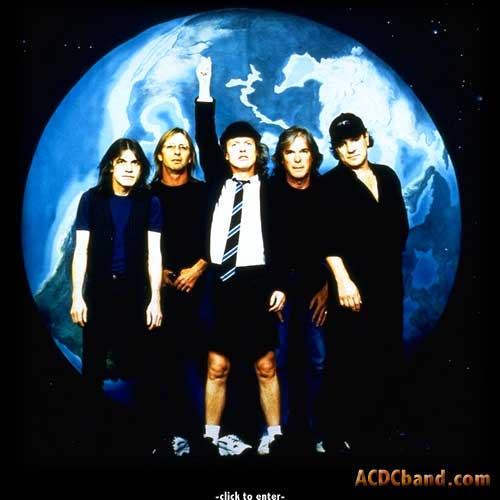
An environmental group is suing to cancel an upcoming AC/DC concert in Austria because they think loud music poses a threat to birds.

No further comment is necessary, or will be offered.

On the Nature of Change: Calm Down!

One of history’s great debates is whether we will die in fire or ice. The proportion of the populace crying each variety of wolf varies according to the fashion of the time.

Vikings newly introduced to Christianity, taking note of their surroundings, sided with ice. They conceived of hell as a cold place, filled with blue devils.

A few centuries later, Dante wrote his Divine Comedy. Its famous first canticle, Inferno, had a very different, much hotter picture of hell.

Fast forward to our time. In the 1970s, ice was the fashion once again. Grant-seeking scientists and credulous journalists warned of imminently fatal global cooling. A new ice age was dawning.

In this decade, fire is all the rage again. Many of those same grant-seeking scientists and credulous journalists have changed their minds. Now global warming will cause catastrophe. And these 690 other things (!).

The particular charges change from generation to generation. But the verdict is always the same: apocalypse. A common thread runs from the Book of Revelations to Nostradamus to Rachel Carson to James Hansen. That threat is imminent doom. As one doomsayer after another is proven wrong, the litany gets quite tiresome.

The Earth has cooled over the last decade; we will die in ice.

But it’s gotten warmer over the last century. Fire, then.

But it’s cooler than it was in the High Medieval period. Ice.

But warmer than during the Dark Ages. Fire.

And so on.

Global temperatures will continue to change, ebb, and flow, whether or not we emit a given amount of CO2, and whether or not we care. Yet many people view climate change as a horror. It must be stopped at any cost.

There is a reason why global warming alarmists don’t like to use the phrase “global warming.” They prefer “climate change.” The prospect of a world two degrees warmer than the one we live in now isn’t very scary. But the notion of climate change does scare people. Framing it that way has been devastatingly effective in getting publicity and funding. It’s good for business.

Today’s dominant mindset that any climate change at all is bad is puzzling. It implicitly assumes that today’s climate is the best of all possible climates. Maybe that’s true. But maybe it isn’t. The trouble is that few climate activists seem to have had that thought. The idea of change is so scary that nobody has the presence of mind to ask if that’s a problem or not.

I give them the counsel of Marcus Aurelius, who lived during the (rather warm) second century AD: “To be in the process of change is not an evil, any more than to be the product of change is a good.”*

No, change simply is. It is a part of life. Let us observe, adapt, and live in peace with each other and the world that we all call home. I’m not scared. You shouldn’t be, either.

*Meditations, IV.42; trans. Maxwell Staniforth.

Regulation of the Day 78: Green Energy Subsidies

Today’s New York Times has a classic dog-bites-man story. The green energy sector is shedding jobs, despite being given billions of taxpayers’ dollars by Presidents Bush and Obama.

As so often happens, regulators’ efforts to change people’s behaviors aren’t working as hoped.

To paraphrase Jerry Taylor and Peter Van Doren’s work on ethanol subsidies: if it’s commercially viable, then it doesn’t need any subsidies. If it isn’t, no amount of subsidy will make it so.

Lomborg Strikes Again

malaria_special

Some people want to cure malaria by reducing carbon emissions. Others want to cure it with mosquito nets, better health care and sanitation. Which is a more effective use of our limited resources? The answer is important; malaria kills about one million people every year. Getting it wrong costs lives.

According to Bjørn Lomborg, “For the money it takes to save one life with carbon cuts, smarter policies could save 78,000 lives. ”

Let’s pursue those smarter policies, then.

Food: Mankind’s Doom

vegetable

In Sweden, food and menu labeling has started to include the estimated carbon footprint of each item.

Don’t read too much into the labels, though. The New York Times notes that “the emissions impact of, say, a carrot, can vary by a factor of 10, depending how and where it is grown.”

With that much imprecision built in, if the labels change consumer behavior as much as supporters hope, it’s entirely possible that eco-concsious diets could result in more carbon emissions, not less. A classic case of leaping before you look.

This new religion is a piece of work. It comes complete with a deity (Gaia), clergy (activists), indulgences (carbon credits), and now, dietary restrictions.

Keeping Priorities Straight

vanuatu
Bjørn Lomborg, head of the Copenhagen Consensus, brings some much-needed common sense to the global warming debate. Reporting from Vanuatu, he finds that many of the locals haven’t even heard of global warming.

Torethy Frank is one of them. She has other priorities, such as escaping crushing poverty: “Torethy and her family of six live in a small house made of concrete and brick with no running water. As a toilet, they use a hole dug in the ground. They have no shower and there is no fixed electricity supply.”

You can see why the two degrees of projected warming over the next century are not at the top of her “problems to solve” list. I would argue that ending global poverty should be a little higher on ours. Certainly higher than global warming.