Category Archives: Regulation of the Day

Regulation of the Day 215: TacoCopter

Correction: According to Wired, TacoCopter turns out to have been a prank. It says a lot about the advancing state of technology that the concept was believable. So worry not, delivery drivers. Your jobs are safe. For now.

Whatever one’s feelings about unmanned attack drones, a group of Silicon Valley entrepreneurs have found a peaceful use for them that almost everyone can support: delivering food to hungry people.

It works like this: place an order from their taco shop using a smartphone with GPS. The restaurant cooks up your order, loads it into an unmanned drone, and the TacoCopter flies to your location and delivers it to you right where you stand.

It’s a pretty cool idea. But even though TacoCopter has been around for almost a year, they have yet to get off the ground – figuratively or literally. FAA regulations don’t allow unmanned drones to be used for commercial purposes. Maybe TacoCopter should re-charter as a non-profit?

TacoCopter co-founder Star Simpson told the Huffington Post, “Honestly I think it’s not totally unreasonable to regulate something as potentially dangerous as having flying robots slinging tacos over people’s heads … [O]n the other hand, it’s a little bit ironic that that’s the case in a country where you can be killed by drone with no judicial review.”

Non-FAA critics argue that TacoCopter-style automation would put delivery drivers out of work. If TacoCopter becomes a success, it almost certainly would eliminate some delivery jobs. But those critics haven’t proven that this would be a bad thing.

There was a time when about 90 percent of Americans were farmers. Automation has reduced that to about two percent today. Despite all those lost jobs, the main reason unemployment is over 8 percent isn’t new technology. It’s a recession. Something about anti-automation arguments doesn’t compute – they forget that economies are filled with change and dynamism. Technology marches on, yet most people still find work.

If a machine takes away a man’s job, that man is now free to pursue another opportunity. Remember, opportunity is not a zero-sum game. Economic prosperity requires creating more wealth with less labor. Reducing the amount of labor used on food delivery frees that labor for other, higher-valued uses.

The FAA should reconsider its ban-first-ask-questions-later approach. And latter-day Luddites need not fear for the deliveryman’s future.

Regulation of the Day 214: Flipping the Bird


Steven Pogue, 64, was cited by police for flipping the bird while driving in Ballwin, Missouri. He was exonerated on free speech grounds, and the city is now moving to repeal the law.

Such impolite behavior is par for the course in New York City, among other places. Should such rude people find themselves in a certain part of eastern Missouri, they now have nothing to fear.

The ordinance in question prohibits motorists from extending body parts outside vehicle windows. It was intended more to prevent people from sticking their legs out of windows than to discourage profanity, though at least one officer thought the ordinance also applied to middle fingers.

Your mild-mannered correspondent has also, admittedly, been known to let loose now and then. Usually it’s while in pain, though the DC area’s spectacularly inept drivers do occasionally draw my ire. But should linguistic decorum be a matter of law? In this case, discretion should be the better part of valor.

A local ACLU spokeswoman comments that “Repealing the law fits within our nation’s finest traditions of allowing free expressions without fear of arrest.” Right on.

Similar cases have been successfully fought in Philadelphia, and with less success in Milwaukee.

Regulation of the Day 213: Dying


Falciano del Massico, a small town in Italy, has banned its 4,000 residents from dying because the local cemetery is completely full. Mayor Giulio Cesare Fava’s ordinance reads, in part, “It is forbidden for residents to go beyond the boundaries of earthly life, and go into the afterlife.”

An ongoing feud with a neighboring town has made it difficult to fix the problem.

Interviewed by the BBC, Mayor Fava pleaded with a straight face: “Citizens, while we await the construction of the new cemetery, I order you not to die, so we don’t have any problems.”

While this writer is often skeptical of the power of regulation, I sincerely hope that Mayor Fava’s death ban succeeds. If it does, Falciano del Massico might be just the place for my wife and I to spend our retirement years.

Regulation of the Day 212: Locating Your Newsstand


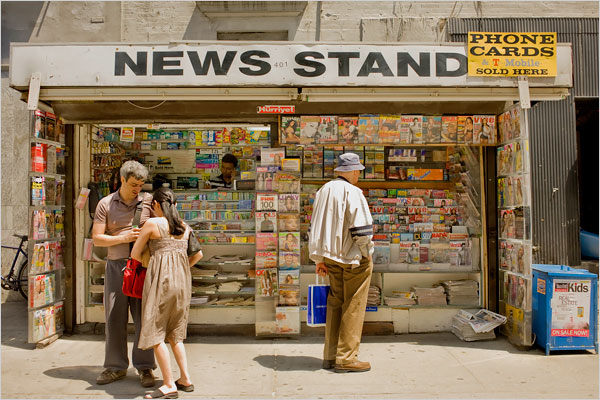
New York City’s Administrative Code requires all of the city’s 330 newsstands to be located at least 9 feet, 6 inches away from buildings. That way pedestrians will have a clear path to walk by. Marilyn Louie has run a newsstand in Chinatown since 1982. Before that, her father ran it. All in all, her newsstand has sat in the same spot for 35 years – precisely 9 feet, 3 inches away from the nearest building. It took inspectors a few decades to get around to measuring, but now they want Louie to tear down her newsstand, citing the three-inch shortfall. Louie’s newsstand is also 4 inches closer to the curb than regulations allow.

There have been no pedestrian complaints.

Politics may play a role here. A Spanish company named Cemusa must have friends in high places, because the city government is in the process of requiring all newsstand owners to tear down their existing structures and replace with them with new ones – made by Cemusa. The New York Post reports that the new newsstands are “prone to leaks and break-ins,” so Louie’s reluctance to go along with the plan is understandable.

Cemusa is also installing new bus stop shelters and public bathrooms throughout New York City.

The city government has offered to let Louie move her business to one of several other spots by the end of the month. Louie, who struggles to make $40,000 per year despite working 7-day weeks, scouted out the proposed locations. They either lack foot traffic, or there are already numerous competitors already there selling similar merchandise.

Football is often called a game of inches. When it comes to regulation and the right to make a living, so is the game of life. What a shame that Marilyn Louie is finding this out the hard way.

Regulation of the Day 211: The Color of Buildings


Officials in Calcutta, India definitely have a favorite color: sky blue. The BBC reports that they are requiring many buildings throughout the city to be painted sky blue:

Government buildings, flyovers, roadside railings, and taxis should be painted a shade of light blue, a minister in the ruling Trinamul Congress government said.

Owners of private buildings will be also be requested to paint them in the same colour, the minister said.

Private building owners will be on the hook for their new look. Other cities in India and around the world have similar rules favoring certain colors. Seville, Spain famously emphasizes yellow and ochre in its buildings. The city is famous for bullfighting, and the colors symbolize the sand and blood of the arena. In Calcutta, sky blue represents a new government slogan: “The sky is the limit.”

India has made massive progress in poverty reduction since it half-embraced markets in recent years, but there is still a ways to go. These painting regulations certainly aren’t fatal to that noble project. But they do require diverting resources from other, more productive sectors to pay for all that painting. So it will be a little bit longer before Calcutta reaches that sky. But until then, at least it will look nice.

Regulation of the Day 210: Transgendered Air Travelers

Canada is cracking down on the latest terrorist threat to innocent people everywhere: transgendered people. A July 2011 provision added to the Canadian Aeronautics Act’s Identity Screening Regulations says, “An air carrier shall not transport a passenger… who does not appear to be of the gender indicated on the identification he or she presents.”

Suppose someone was born female but lives life as a male. If his valid government-issued photo ID still identifies him as female, he may not board an airplane. It can take years of filling out forms and enduring hearings to convince courts to legally recognize that someone has crossed genders, as the economist Deirdre McCloskey (formerly Donald) movingly writes in her autobiography, Crossing. The result is a de facto ban on flying for most transgendered Canadians.

Dennis Lebel is Canada’s Transportation Minister. He supports the ban. He believes it increases passenger safety.

It doesn’t, actually. Here’s why. A passenger is a threat if he carries weapons or explosives on board. If he doesn’t, he’s not. This is true whether or not his appearance matches his ID, or whether it says “M” or “F.” This is true even if the passenger uses a fake ID, or none at all. Can this person bring down a plane? That is the question.

In other words, showing ID has precisely nothing to do with passenger safety. It’s all for show. The point is if you have weapons and explosives or not.

Lebel and the Canadian security screeners who work for him should keep this in mind. The nasty little provision may or may not be specifically targeted at gender crossers. But in practice it is discrimination, and it does not make air travelers any safer. If anything, by distracting screeners from searching for weapons and explosives, it makes passengers a little less safe. This is bad policy all around. It should be repealed immediately.

Regulation of the Day 209: Playing on the Beach


When President Obama and his family took a recent vacation to Hawaii, paparazzi snapped some pictures of the big guy playing a game of pickup football on the beach. It’s a good thing he wasn’t in Los Angeles, or he might have been fined. A recent ordinance made it illegal to throw balls and even Frisbees on the city’s beaches.

After the public raised a hue and cry, the city’s Board of Supervisors liberalized the ordinance. Kind of. Now Angelenos are allowed to play a game of catch on the beach – if they ask the lifeguard first, or get a permit. And if they don’t follow orders, they can still be fined. This lighter touch is still awfully heavy.

You can read the entire 37-page ordinance here.

Other highlights:

  • “No person shall dig a hole deeper than eighteen inches (18”) into the sand… except at Director’s discretion, in consultation with Fire Chief, for film and/or television production purposes only.” (p. 16)
  • “[A] person shall not camp on or use for overnight sleeping purposes any beach[.]” (p. 20; Oregon has a similar law)
  • “No person shall operate any model airplane, boat, helicopter, or similar craft… except in an area that may be established and/or designated for such use by the Director, and subject to all rules and regulations pertaining to such area.” (p. 28)
  • “A person shall not use, possess, or operate in the Pacific Ocean opposite any beach regulated by this Part 3 a fishing pole, spear, sling, or other spear fishing equipment… within 100 feet of any person[.]” (p.34. Worth asking: is the “opposite any beach” clause sending a message to spear fishers in Japan, China, and other countries on the opposite side of the Pacific?)

Regulation of the Day 208: Re-Booking Flights

Four of air travelers’ five biggest complaints are about the TSA. Right up there on the list with everyone’s favorite sexy-searchers has to be airlines’ habit of nickel-and-diming customers for checked baggage, blankets and pillows, and most anything else that isn’t bolted to the cabin floor.

This business practice, called unbundling, does help keep ticket prices low, as I’ve previously explained. But it’s still annoying; people are transaction-averse.

The Department of Transportation, knowing a good PR opportunity when it sees one, recently passed a rule forbidding one type of extra charge. Airlines may no longer charge re-booking fees if passengers re-book their flights within 24 hours of first purchasing them. Many passengers will no doubt welcome the change. The trouble, which the DOT does not acknowledge, is that it isn’t free. CNN’s Aaron Cooper explains:

The airline says the regulation forces them to hold the seat for someone who may or may not want to fly. As a consequence, someone who really does want to fly wouldn’t be able to buy that seat because the airline is holding it for someone who might or might not end up taking it.

In other words, there will be more empty seats, which costs the airline potential revenue. Passengers will also have a harder time finding a seat on nearly-full flights. That’s why Spirit Airlines, a low-fare airline that practices an extreme form of unbundling, is adding a $2 “Department of Transportation Unintended Consequences Fee”. Re-bookers’ gains come at everyone else’s loss.

It isn’t often that businesses stand up to regulators. More and more, they can be seen holding hands and gazing into each others’ eyes while dreams of increased budgets and decreased competition dance through their heads. That’s why Spirit’s pointed sense of humor here is refreshing. The DOT isn’t taking too kindly to Spirit’s Economics 101 lesson, but then again, they’re the ones who forgot about tradeoffs. They’re everywhere.

Regulation of the Day 207: Cold Medicine

First drain cleaner, now cold medicine. These are lousy times for Illinoisians with sluggish drains and runny noses. Just as they are now required to present valid ID when buying drain cleaner, the people of Illinois have had to do the same thing since 2009 when buying cold medicine. But according to a new bill signed into law Friday, “Now stores will transmit those records electronically to state police. The information sent to authorities will include the customer’s name and address.”

No person may buy “more than 7.5 grams of pseudoephedrine in 30 days – or more than a month’s supply of 24-hour Claritin-D for a single person.” Stores must refuse such sales.

Everyone catches a cold now and then. Which means almost everyone buys cold medicine now and then. Which means this database will basically have Illinois’ entire 13-million strong population within a year or two. This is a rather wide net.

The goal is to put a damper on methamphetamine production. The regulation is easy to evade, though. Instead of one person buying large amounts of medicine, several people can buy smaller amounts. Or our drug-addled friends can take a short drive to Indiana, Wisconsin, or another border state. Or they could make meth from different ingredients. Or they could switch to a different drug entirely. The total net impact on drug production and consumption is likely to be almost precisely zero. The legislature clearly didn’t think this one through; prohibition doesn’t work.

This regulation is something else besides ineffective. It also reveals an ugly attitude that no state should have towards its people, that everyone is a suspect. Talk about adding insult to illness.

Regulation of the Day 206: Buying Drain Cleaner

If you have a sluggish drain and you live in Illinois, the government wants to keep track of you. As one of the 40,000 new laws across the country that took effect on January 1, the state of Illinois now requires consumers to show valid ID to buy drain cleaner. That’s not all:

Merchants must then log the buyer’s name, address, date and time of the purchase, the product and the product’s brand and net weight.

The bill was passed in response to a Taliban-style acid attack on two Chicago women. It is also an anti-drug law; drain cleaner can be used to make methamphetamine. It is unclear how showing ID and putting pen to paper would physically prevent either acid attacks or drug use.