Category Archives: Regulation of the Day

Regulation of the Day 65: Weighing Animals

weighing_calves

If you sell poultry or livestock, it’s a good idea to weigh them first. Makes it easier for buyer and seller to agree on a fair price.

For some reason, seven sections of the Code of Federal Regulations (see here, here, here, here, here, here, and here) deal with the use and maintenance of the scales used to weigh the animals, the people operating them, proper procedure, and finally, weighing the animals again.

Is this really a federal matter? If so, what isn’t?

Regulation of the Day 64: Starting a Business in Sacramento, California

assembly-line
Sit back and think for a minute about what man has the potential to create. Think about the magnitude of our achievements in just the last century. Life expectancy has doubled. Population has sextupled. For the first time in history, famine is primarily a political phenomenon, not a natural one. The human mind is capable of creating limitless, endless wealth.

Unfortunately, the human mind is nearly as adept at preventing that wealth from being created. Sacramento, California is home to some of the experts.

Katy Grimes researched what it would take to open a small factory there. “By the time I discovered that 22 government agencies would be involved in permitting and licensing, I realized that Sacramento is not an easy place to do business,” she writes.

She’s right. And when doing business is difficult, there is less of it. That means less wealth is created. Opportunities vanish into thin air. One of the tragedies of over-regulation is the amount of wealth, opportunity, and prosperity that never come to pass. Think of how many plants are never opened because of over-regulation. How many jobs are never created. How many products are never invented.

Supporters of strict business regulations say the rules keep people safe. Maybe that’s true. Maybe it isn’t. But they do keep us poorer.


Regulation of the Day 63: Sports Agents in New Hampshire

alg_arod-boras1
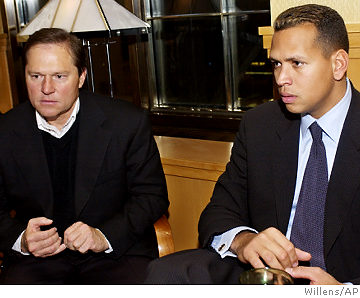
It is illegal to be a sports agent in New Hampshire without a Secretary of State-issued certificate (see page 14). Don’t forget your biennial renewal!

Regulation of the Day 62: Government Employees and Texting while Driving

distracted-driving-texting
Many, if not all, people depend on government employees to be positive role models for their children. They can give kids something to which to aspire; to show what they can be if they only work hard and stay in school. To give us all a walking, talking example of a life well lived.

It is in that spirit that Executive Order No. 13513 prohibits federal employees and contractors from texting while driving while on duty.

As the Order reminds us, “With nearly 3 million civilian employees, the Federal Government can and should demonstrate leadership in reducing the dangers of text messaging while driving.” The texting-while driving ban will “set an example for State and local governments, private employers, and individual drivers.”

Regulation of the Day 61: Big Screen TVs – Mankind’s Doom!

bi screen tv

On November 4, California regulators may vote to ban big-screen televisions. The large sets use more energy than they would prefer.

Commissioner Julia Levin claims the ban “will actually save consumers money and help the California economy grow and create new clean, sustainable jobs.”

It is easy to imagine the ban costing tv manufacturing jobs; less so the jobs that would take their place.

Fortunately, the ban isn’t terribly enforceable. Consumers can just drive to Arizona, Nevada, or Oregon to get the kind of tv they want.

A final point on semantics: what does “sustainable” even mean, anyway? It is a meaningless buzz term, right up there with “synergy” and “paradigm.” This decade’s equivalent of “social justice.”

If anything, use of the word “sustainable” signals that a person knows not of what they speak. If you’re unable to defend a proposal on the merits, just use fashionable buzz words that poll well.

Regulation of the Day 60: Hybrid Car Noise

hybrid-3
One advantage of hybrid cars is that they are quiet. Too quiet, some would say. Blind pedestrians may not hear a hybrid coming around the corner until it’s too late.

Car companies are responding to the concern by voluntarily outfitting their hybrid models with fake digital vrooms so pedestrians can hear them as well as conventional cars. There’s a reason car companies were so quick to respond to their customer’s wishes: it’s good for business. One more safety feature is one more selling point to entice potential customers.

Regulators, behind the curve as usual, have introduced the Pedestrian Safety Enhancement Act of 2009. If passed, it would make fake vrooms a federal matter. This policy of making mandatory what companies are doing anyway probably originated with the Department of Redundancy Department.

Regulation of the Day 59: Pharmacy Interns in Colorado

pharmacist
It is illegal to intern for a pharmacist in Colorado without a license. You can apply for one here.

Regulation of the Day 58: Banning Children from Playgrounds

A new regulation in Kensington, Maryland bans children over five years old from using a local playground between 9:00 am and 4:00 pm.

Officials are upset that children from a nearby private school were using the public playground during recess.

(Hat tip: Drudge)

Regulation of the Day 57: Minimum Price Agreements

A new Maryland law makes it illegal for manufacturers to set a minimum retail price for their products in sales contracts. The law is meant to increase competition. Unfortunately, it will have the opposite effect.

As Wayne Crews and I explain in the The American Spectator, it could prevent retailers from competing with each other on non-price grounds, such as customer service, product demonstrations, and advertising.

Some products, such as televisions or cars, have high information costs. Customers want to know a lot about these products before they commit to a purchase. They want to know what they’re getting. Try before they buy.

By forcing retailers to compete against each other to give customers more and better information and service, minimum price agreements can help consumers get what they want and boost sales at the same time.

Regulation of the Day 56: Kahlua in Ohio

Kahlua contains 20% alcohol in 49 states. But in Ohio, it is 21.5%. Weird, huh?

Turns out regulations are the reason. My friend Jacob Grier pointed me to an article showing that Ohio groups alcoholic beverages into two categories: wine/beer and spirits. Any beverage below 20% alcohol is in the wine/beer category and can be sold in grocery stores. Anything above 20% is classed as a spirit and can only be sold in state-run liquor stores.

Drinkers often mix Kahlua with spirits such as vodka. So the company actually changed its recipe in Ohio to ensure that Kahlua would appear in stores next to its complementary products. The benefit to consumers from this regulatory scheme is unclear.