Category Archives: Philosophy

Locke’s Labor Theory of Value

One of Adam Smith’s few deficiencies as a thinker was that he held a labor theory of value. It was the better part of a century after Smith that Carl Menger and others popularized the subjective theory of value that economists use today. As it turns out, John Locke also held to a labor theory of value.

In his discussion of the origin of property rights in chapter 5 of his Second Treatise, Locke argues that land becomes your property when you labor upon it by tilling the soil or otherwise improving it. But then, in section 40 , he goes one step further:

For it is labour indeed that puts the difference of value on every thing; and let any one consider what the difference is between an acre of land planted with tobacco or sugar, sown with wheat or barley, and an acre of the same land lying in common, without any husbandry up on it, and he will find, that the improvement of labour makes the far greater part of the value.

I disagree. Under the subjective theory of value, the whole reason crop-producing labor creates value isn’t because of the labor. It’s because people value the crops, expressed by their willingness to pay for them. This willingness varies from person to person; that is why value is subjective. There is no objective standard.

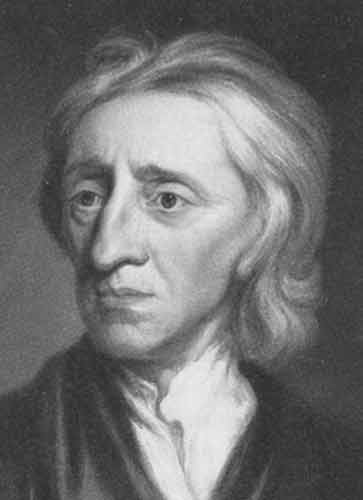
John Locke, Angry Internet Commenter

john-locke
It isn’t just crazy Internet people who use all-caps to emphasize their points, apparently. John Locke, writing well before the Internet age in 1690, writes early in his Second Treatise of Government (at the end of section 8):

EVERY MAN HATH A RIGHT TO PUNISH THE OFFENDER, AND BE EXECUTIONER OF THE LAW OF NATURE.

At least it’s all-caps in my Kindle edition. The Cambridge edition uses mere italics. Either way, do not mess with this man.

Different Visions of Honesty

David Hume was the exemplar of Enlightenment thought. In one of philosophy’s oddest couples, he was good friends for a time with Jean-Jacques Rousseau, who did much to inspire the Romantic movement that arose in reaction against the Enlightenment. Here is one way in which they differed:

Rousseau and Hume were, at one time, the best of friends. But they had a falling out that made waves throughout Europe. The way both men reacted was indicative of their very different philosophical systems:

While both writers invoked the claim of honesty, the word meant very different things to the opposing camps. For Suard and, of course, for Hume, honesty entailed scientific and empirical method – above all, a rigorous fidelity to texts and contexts. On the other hand, Rousseau measured honesty by inward feeling and the subjective criterion of sentiment. The distance between the Enlightenment and the Counter-Enlightenment can be measured in this confrontation of methods.

-Robert Zaresky and John T. Scott, The Philosophers’ Quarrel: Rousseau, Hume, and the Limits of Human Understanding, location 2756 in the Kindle edition.

Understanding Spontaneous Order

Spontaneous order is one of the most important concepts in the social sciences, and also one of the most maligned. It’s most closely associated with Hayek, but it has roots going back to at least the 18th century English and Scottish Enlightenments. Thinkers like Bernard Mandeville, Edmund Burke, Adam Smith, and David Hume all used some kind of spontaneous order framework. They knew that not every design requires a designer.

Nobody designed languages, for example. They emerge and continually evolve on their own, with nobody deliberately directing the process. The economy is also a spontaneous order, even though most people think it has to be be consciously directed. Nobody is in charge of food distribution for New York or Paris, and yet those great, farmless cities are still fed every day. It’s an everyday miracle if you think about it.

The reason that a lot of non-economists are skeptical or unaware of spontaneous order is that it’s a difficult concept for the human brain to comprehend. We’re not wired to.

Back in our hunter-gatherer days, the traits that evolutionary biologist Michael Shermer calls patternicity and agenticity had a great survival advantage. Find a pattern in everything, and know that some agent is probably behind it. There’s a rustle in the bush. A hungry tiger must be causing that rustle. Run. Hide. Survive.

Even if most rustles are false alarms, people with strong patternicity and agenticity tended to outlive their fellows who didn’t. We are their descendants, and our brains haven’t changed to match our new surroundings.We think that there are patterns and agents behind everything, even though there aren’t, really. We’re still looking for that tiger, but he isn’t there anymore.

To this day, a lot of people think the president runs the economy. His policies do have some effect, but literally he runs very little. The global economy has so many variables, so many nooks and crannies of specialized, dispersed local knowledge, that even if a president were to try and take charge of the economy, he simply couldn’t. The result is that presidents, like quarterbacks, get far too much credit when times are good, and far too much blame when times are bad. Patternicity and agenticity strike again.

Hayek has a well-deserved reputation as a poor prose stylist. But he did come up with a very clear way to explain how spontaneous orders can emerge in everyday life:

The way in which footpaths are formed is such an instance. At first everyone will seek for himself what seems to him the best path.  But the fact that such a path has been used once is likely to make it easier to traverse and therefore more likely to be used again; and thus gradually more and more clearly defined tracks arise and come to be used to the exclusion of other possible ways. Human movements through the region come to conform to a definite pattern which, although the result of deliberate decisions of many people, has yet not been concsiously designed by anyone.

-F.A. Hayek, The Counter-Revolution of Science: Studies on the Abuse of Reason, pp. 70-71.

And when a regulator comes along and tries to design a straighter, more orderly path, the results will rarely be what he intends. In a way, you can blame his hubris on tigers.

Twenty Years without Hayek


F.A. Hayek died twenty years ago today. In his long career – his first book was published in 1929, his last in 1988 – he made important contributions to economics, philosophy, and even psychology. He even won a Nobel Prize along the way.

If there is a unifying theme to Hayek’s diverse body of work, it is an emphasis on intellectual humility. He was a dogged opponent of capital-C Certainty, and was always quick to remind would-be social engineers that there are limits to their knowledge. The unintended consequences of their grand plans are somewhat less limited.

Hayek’s grandfather was a professor of natural science, and his father was a doctor who moonlighted in botany. As happens to many boys growing up in scientifically-minded households, the young Hayek was fascinated with evolution. This would profoundly influence his economic thought when he grew up, especially his concept of spontaneous order.

Human language, Wikipedia, and the economy are all examples of spontaneous order. Designs, even complicated ones, don’t always require a designer. Just as the process of natural selection allows species to adapt to their environment over time without someone planning it all, nobody invented the English language. Nobody directed its evolution from Shakespeare to text messages. Jimmy Wales, partially inspired by Hayek, created the Wikipedia website. But he certainly didn’t direct its army of contributors beyond a few basic ground rules, which themselves spontaneously evolved.

And as the 20th century showed, nobody can plan a national economy without severe unintended consequences.

That’s why one of Hayek’s most famous quotes is, “The curious task of economics is to demonstrate to men how little they really know about what they imagine they can design.” It’s a fancy of way of telling his fellow economists to please be humble.

Hayek first gained fame for his business cycle theories. He joined the London School of Economics in 1931, just as Keynes was rocketing to fame. The men became close friends, but their ideas were rather different. Keynes thought the way out of the Great Depression was investment. Since the private sector wasn’t investing enough to grow the economy, the solution was an expertly designed policy of inflation, lower interest rates, and public investment projects – stimulus.

Hayek counseled humility instead. Economies are so complicated, and so dynamic, that no expert on earth can accurately foresee unintended consequences. When experts tinker with interest rates, they change peoples’ behavior. They’ll invest in one thing instead of another, and nobody can quite predict how. When prices are distorted, peoples’ decision-making is distorted with it.

When people can’t accurately determine the highest-valued uses for their resources, the result is malinvestment. Too much investment in housing leads to too little investment in other areas that create more value. This does much to explain why the housing crisis is doing so much damage today.

Their friendly debate was the talk of the profession. Politicians almost universally sided with Keynes because he counseled them to do things they already wanted to do anyway; politics is not a humble profession. Most economists did, too. The discipline was becoming ever more quantitative, and economists were becoming more and more confident in their ability to precisely direct an economy. They were falling for the fatal conceit.

Hayek’s most popular book, The Road to Serfdom, was written in a barn in England during World War II. The London School of Economics temporarily moved out of London to avoid the blitz. Hayek’s new office was less than glamorous, but at least it was safe. The basic message is that economic intervention doesn’t work, and the usual political reaction to these failures is more intervention. Travel down this road long enough, and the result is a total state, or something close to it. The people will wake up one day to find that they have lost their freedom.

Hayek’s critics, and even many of his supporters, forget that Hayek thought that the road to serfdom is a two-way street. An intervention here and there does not, therefore, mean the end of civilization. But people must be eternally vigilant to make sure interventions don’t metastasize.

In the 1950s, Hayek turned his attention elsewhere. Seeing economists’ still-growing scientific pretensions, he published a book on methodology, The Counter-Revolution of Science, in 1952. In it, he calls this new science-fetish “scientism,” and once again counsels humility. Economics has scientific aspects, but it is not a pure science the way that physics or chemistry is. Economists forget this at our peril.

Economies, and the millions of humans who participate in them, are so complex, so fickle, and so unpredictable, that even the most rigorous multivariate regression analysis is unlikely to actually reflect real world conditions. Economists work with models, which are necessarily simplifications. They can’t account for every relevant factor. What’s more, economic plans based on flawed data are likely to be flawed themselves. There’s a knowledge problem here.

Hayek also published The Sensory Order in 1952, which remains widely cited in the psychological literature – an impressive feat, considering that psychology departments tend not to be bastions of free-market Hayekians. Drawing on his belief that human cognitive capabilities are less than perfect, the book outlines Hayek’s theory of how the mind processes and filters information that the senses send to it.

Whereas The Road to Serfdom was mainly negative in outlook, Hayek spent his later years writing more positive works. If Serfdom is about what should not be, 1960’s The Constitution of Liberty is about what should be. Think of it as Hayek’s answer to Plato’s Republic or Thomas More’s Utopia. It also contains his famous essay “Why I Am Not a Conservative,” which you can read online here.

In the 1970s, he would expand on this vision in the three-volume Law, Legislation, and Liberty. Hayek saw a world of difference between law and legislation. People often use the words interchangeably, but they are not the same. To avoid confusion, Hayek turned to Greek and borrowed the words metis and legis.

Metis is essentially social custom. It evolves as a spontaneous order, and adapts over time to changing circumstances; natural selection operates in the social sphere, not just in nature. Examples of metis include what is considered rude or polite, how one does business, and how a society is structured. The point is that they evolve bottom-up, and are deeply ingrained in society’s fabric.

Legis is where we get the English word legislation. These are top-down edicts from legislators. When they mesh well with already-existing metis – as with property rights protections – legis tends to work quite well, and can even enhance metis. But when it oversteps its bounds, as often happens in the hands of experts who believe they know better than the rest of us, the result is failure. Law is stronger than any piece of legislation.

Hayek capped his career with what is probably his most approachable book, The Fatal Conceit. It’s as good a summation of his life’s work as one will find. Given spontaneous order, the importance of metis over legis, and the knowledge problem, people who still arrogantly believe their grand plans will work without unintended consequences have fallen for the fatal conceit.

As always, the underlying theme is humility. Twenty years after Hayek’s death at age 92, that message is as important as ever.

Popularization Matters

Academic scientists often look down on Carl Sagan because he spent so much time on popular-level projects, like the Cosmos television series. The man even wrote a novel. Heaven forbid.

Ask many of those same scientists who got them interested in the subject in the first place. What sparked their fascination? Who is ultimately responsible for giving them the gall to advance scientific frontiers? They’ll probably say it was Carl Sagan, or someone like him.

This tension between academics and popularizers goes back centuries. I’m on a Voltaire kick at the moment, so do indulge. Referring to Diderot’s massive, expensive Encyclopedie (to which Voltaire contributed), he wrote:

“Twenty folio volumes will never start a revolution; it’s the pocket books at thirty sous that represent the real threat. If the Gospels had cost 1,200 [Roman] sestertia, the Christian religion would never have established itself.”

Roger Pearson, Voltaire Almighty: A Life in Pursuit of Freedom, p. 298.

Not a bad point. Ideas originate with academics, and they’ll play with them for some time in the journals. But popularizers usually find a way to sneak ideas down to the masses eventually; Sagan and Bastiat and all that. Think of it as division of labor. Some create, others disperse.

The process works much faster in the Internet age. The primary obstacle now is IQ, not access. But it still holds. The point is that there is a role for both ivory tower academics and popularizers.

Given the disdain that each side holds for the other, it’s probably best that they be kept separate. But as someone who straddles the line between the two, I humbly propose that both sides find a way to get along. After all, when it comes to the pursuit of knowledge and a better life for all, we’re all friends. Let’s act like it.

The Arts: Voltaire vs. Rousseau

Voltaire 1, Rousseau 0:

As the history of ancient China, Greece and Rome testifies, by bringing people together in the shared enjoyment of the ‘pure pleasures of the mind’ public theatre renders human beings more sociable in their dealings, more moderate in their behaviour, and keener in their judgement. Those nations that are without it cannot be ‘included in the ranks of civilized countries’. Well, at least the pastors of Geneva now knew where they stood. And Rousseau too. ‘Reading your book,’ Voltaire told him, ‘fills one with the desire to walk on all fours.’

Roger Pearson, Voltaire Almighty: A Life in Pursuit of Freedom, p. 248.

The Geneva slur refers to Calvinism, an art-hostile religious doctrine that dominated Geneva during Voltaire and Rousseau’s lifetimes.

Worth noting: Both men were artists at heart. Voltaire first gained fame as a playwright and a poet, and later as a historian and a satirist. Rousseau was a talented musician and composer who later made his name in philosophy.

Strangely, Rousseau was openly hostile to the arts. They are evidence of civilization, a project he largely opposed without any sense of irony.

It Gets Better All the Time

One of the larger themes that I hope regular readers see in this blog is that people need to cooperate if they are to prosper. And when they do, wonderful things happen. Here is an example of just that, from a really good book that I’m currently enjoying:

A horse can lug two hundred pounds more than thirty miles in a day, but a C-130 carries forty-two thousand pounds over eight thousand miles during those same twenty-four hours. This makes for a 56,000-fold improvement in our ability to cooperate with one another.

Steven Kotler and Peter Diamandis, Abundance: The Future Is Better Than You Think, Kindle locations 1504-1506.

Diamandis runs the X Prize Foundation. He is midwifing the birth of commercial space travel, among other things.The book’s thesis is that exponential improvements in the quality of human life are both taken for granted, and are just the beginning.

Life is good, and it’ll only get better — especially for the bottom billion who still live in grinding poverty. What an amazing time to be alive.

How to Build a Democracy


It is the height of hubris to claim that one knows how to build a democracy from scratch. The U.S. has learned this from its attempts in Iraq, Afghanistan, and countless other countries. But there are a few common themes that can help. One lesson is that it has to come from within, not imposed by foreign countries. Another is that new institutions have to evolve out of old ones, and have to suit local conditions and cultures.

Over at the Daily Caller, I trace out two other themes that emerging democracies should keep in mind: simpler is better, and rely on negative rights, not positive rights. Here’s a taste:

The Arab Spring is over a year old now. It’s too early to tell if that movement will bring liberal democracy to countries that badly need it. But if it does succeed, it will be right in line with a decades-long global trend. According to Freedom House, 41 percent of the world’s countries in 1989 were democracies. By 2011, 60 percent were democracies.

There are still a few monarchies here and there, and plenty of dictatorships. Cuba and North Korea are even keeping the last dying embers of communism alight. But more and more, democracy is seen as the way to go.

This is a wonderful development. But not all democracies succeed. Without the proper institutions, democracy can be very temporary, as Russia has found out.

Read the whole thing here.

Principles of Law: Simplicity Is Beautiful

Countries across the world have turned to democracy in recent decades. There are still a few monarchies here and there, and plenty of dictatorships. Cuba and North Korea are even keeping the last dying embers of communism alight. But more and more, democracy is seen as the way to go.

One of the first things a new democracy needs is a Constitution. One of a Constitution’s jobs is to establish the government’s structure – how the executive, legislative, and judicial branches are composed, what their powers are (and aren’t!), and a few rules of procedure.

The U.S. Constitution is a model of simplicity. You can read the whole thing in under a half hour. And that is the secret of its success. It doesn’t need to outline the specifics of agricultural or trade policy. That’s Congress’ job.

The EU’s de facto Constitution runs well over 200 pages. Where the U.S. Constitution paints with a broad brush, the European Union fills in every last detail. Most countries, including the U.S., are turning to this top-down model and rejecting the Constitution’s more bottom-up approach.

The thinking goes, “How can something so simple be effective when the modern world is such a complicated place? The 21st century is very different from the 18th century.”

Good question. The answer is that those extra layers of complexity are precisely why a bottom-up approach is more important than ever. Top-down governance is hard enough even in a simple agrarian economy. It is literally impossible in a world like ours. Too many variables. The more rules there are, the easier they are to subvert.

Transitioning democratic countries regularly used the U.S. Constitution as a model when drafting their own Constitutions. But that’s happening less and less, according to a thought-provoking Investor’s Business Daily editorial.

The reason is a shift in the intellectual climate. Negative rights are out of fashion now. Positive rights are all the rage. Negative rights are the kind that pervade the U.S. Constitution: don’t hit other people, don’t take their stuff, don’t break your contracts. Don’t, don’t don’t.

Positive rights are much less dour. And they are all over most new Constitutions. You have the right to health care, or a job with six weeks vacation, and so on. People think of new positive rights all the time, too. There is a push in some countries to give people the legal right to Internet access. Sounds great. Who could be against that?

I can. Positive rights do sound nice, but in practice they are profoundly illiberal. That is because positive rights often contradict each other. If I break a bone and my doctor has a legal right to be on vacation, one of us has to have our positive rights violated. That means someone has to decide. Someone with a lot of power. Life and death, in some cases. A government with the power to make those kinds of decisions is very powerful indeed. Positive rights systems require large, powerful governments. Rights violations are both frequent and arbitrary.

Negative rights have no such conflicts. That’s a big reason why the U.S. Constitution is so simply constructed. In fact, most of it isn’t even about granting this power or that to government. Most of that is contained in Article I, section 8. The majority of the document is about placing strict limits on those powers. When the people are left alone, they largely prosper. Let them build from the bottom up. The view from the top on down is too distant and blurry to catch the necessary details.

In the law, as in so many other areas, simplicity is beautiful. As democracy continues to march across the globe, newly forming governments should keep that in mind.