Category Archives: International

How to Build a Democracy


It is the height of hubris to claim that one knows how to build a democracy from scratch. The U.S. has learned this from its attempts in Iraq, Afghanistan, and countless other countries. But there are a few common themes that can help. One lesson is that it has to come from within, not imposed by foreign countries. Another is that new institutions have to evolve out of old ones, and have to suit local conditions and cultures.

Over at the Daily Caller, I trace out two other themes that emerging democracies should keep in mind: simpler is better, and rely on negative rights, not positive rights. Here’s a taste:

The Arab Spring is over a year old now. It’s too early to tell if that movement will bring liberal democracy to countries that badly need it. But if it does succeed, it will be right in line with a decades-long global trend. According to Freedom House, 41 percent of the world’s countries in 1989 were democracies. By 2011, 60 percent were democracies.

There are still a few monarchies here and there, and plenty of dictatorships. Cuba and North Korea are even keeping the last dying embers of communism alight. But more and more, democracy is seen as the way to go.

This is a wonderful development. But not all democracies succeed. Without the proper institutions, democracy can be very temporary, as Russia has found out.

Read the whole thing here.

CEI Podcast for January 12, 2012: Mistaken Deportations

Have a listen here.

Immigration Policy Analyst Alex Nowrasteh tells Jakadrien Turner‘s story and explains what it means for the immigration reform debate. Turner is a 14-year old girl from Texas who was mistakenly deported to Colombia. Turner is not Hispanic, does not speak Spanish, and has no connections to Colombia whatsoever. It took six months of pleading and legal maneuvering before authorities allowed her to return home. This was not an isolated incident. The way to prevent future cases like this, Nowrasteh argues, is radically simplifying our overly complex immigration and citizenship laws.

Christmas: Serious Business

Uriminzokkiri, the North Korean government’s official news website is threatening a real war on christmas:

“The enemy warmongers… should be aware that they should be held responsible entirely for any unexpected consequences that may be caused by their scheme,” it said.

“This issue… is not something to be ignored quietly,” it said.

Why such harsh words? Because in some years, South Korea places christmas lights within sight of its border with North Korea.

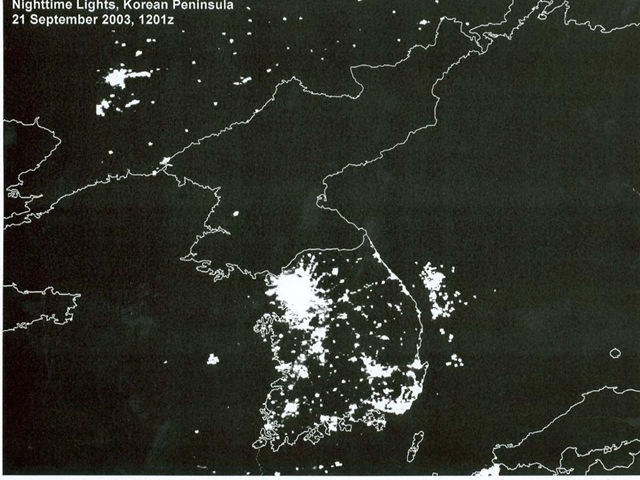
Leave aside the North’s official atheism; this doesn’t seem to be a religious issue. The lights send what is possibly a deliberate foreign policy message. Electricity is a rare thing in North Korea, especially outside of Pyongyang. The sight of bright electric lights shining from the hated South has to be bad for morale.

CEI Podcast for November 17, 2011: Conflict Guitars

Have a listen here.

Conflict minerals are goods that come from sources that use the revenues to fund civil wars and other atrocities. CEI Founder and President Fred Smith talks about why restricting conflict mineral trade can mean more violence, not less. He also discusses why the Gibson guitar company was unjustly raided by the federal government for importing wood that may or may not have been illegally harvested by its suppliers.

Tom Palmer on the Arab Spring

This video is well worth the few minutes it takes to watch. Click here if the embedded video below doesn’t work.

Tom also plugs a new book he edited, The Morality of Capitalism. I’m a little over half way through it right now, and it is excellent. You can buy a hard copy here, and download a free electronic version (PDF format) here.

The Gulag Lives

As many as 200,000 people are currently imprisoned in concentration camps in North Korea. That’s about one percent of the population.

May those poor souls find a way out, and soon.

Regulation of the Day 182: PowerPoint Presentations

A political party in Switzerland is seeking to ban Microsoft PowerPoint presentations in meetings. The Anti-PowerPoint Party (APPP), founded in May by Matthias Poehm, claims that wasted time from sitting through PowerPoint presentations costs the Swiss economy $2.5 billion per year. The party estimates Europe-wide costs to be $160 billion.

In Switzerland, 100,000 signatures is enough to trigger a referendum on almost any issue. The 245-member (and growing!) APPP is currently rounding up signatures for a referendum on PowerPoint presentations. Poehm, who founded the party to promote his new book, The PowerPoint Fallacy, urges public speakers to use flipcharts instead.

Poehm deserves credit for being a creative promoter. And I share many of his sentiments about PowerPoint. But PowerPoint policies are best set by individuals, not binding referenda. His book, now available in several languages, will hopefully persuade many individuals to spare their colleagues some tedium. But politicizing the issue, humorous though it is, might not be the best way to improve the quality of public speaking in Switzerland.

Time to End the War on Terror

Osama bin Laden is dead. What now? Gene Healy offers his usual dose of common sense:

We now have nearly 100,000 troops in-country chasing what President Obama’s CIA director admits are “50 to 100” al Qaeda operatives, “maybe less.”

Now is a good time to leave Afghanistan and Iraq. Libya, too. Better late than never.

Osama bin Laden Dies

I was going to write something about this. But Radley beat me to it, and he said it far better than I could: Osama bin Laden may be dead, but he still won. Read the whole thing.

Not only did he spawn two long-term wars between the U.S. and Muslim countries — and for some reason we’re now in a third — but the cost in lost civil liberties has been enormous.

May his victory be a temporary one.

Five Rules for Going to War

Chris Preble explains the five basic rules for going to war. Libya fails on at least four of them.