Category Archives: International

CEI Podcast for July 2, 2013: The True Story of European Austerity

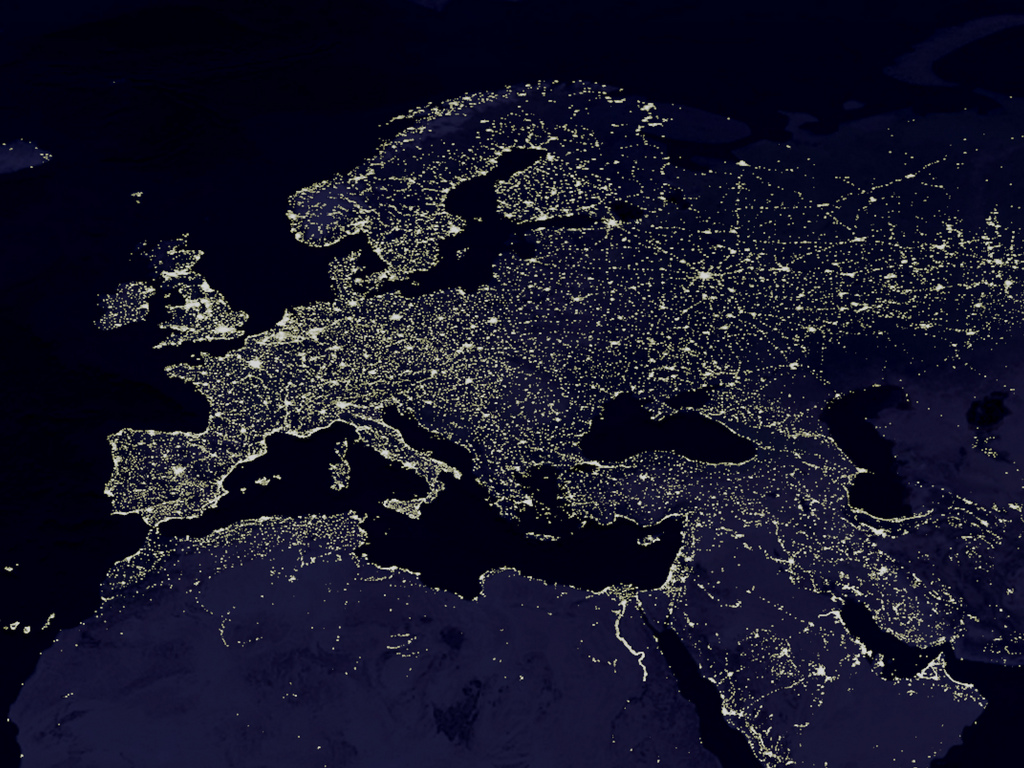
europe satellite night
Have a listen here.

Warren Brookes Fellow Matthew Melchiorre discusses his new study, which finds that, despite the prevailing narrative of severe austerity across Europe, only 4 countries out of 27 have actually cut taxes and spending.
A Decade in Iraq

It was ten years ago today that President Bush, from the oval office, announced the Iraq invasion. Formal hostilities have been over for a while now, but U.S. troops are still there. As with Germany, Korea, and other countries we fought against long ago, they will likely remain there indefinitely. Here’s Gene Healy’s take on this ghoulish anniversary:

In a recent article for the New Republic, “The Eve of Destruction,” TNR’s John B. Judis describes “what it was like to oppose the Iraq War in 2003.” Lonely: “within political Washington, it was difficult to find like-minded” opponents of the war. “Both of the major national dailies — The Washington Post and The New York Times (featuring Judith Miller’s reporting) — were beating the drums for war,” as were most of “Washington’s thinktank honchos.”

Not all of them, however. In a 2001 debate on Iraq with former CIA Director James Woolsey, my Cato Institute colleague, then-Chairman William Niskanen, argued that “an unnecessary war is an unjust war” and one we would come to regret having fought.

Niskanen was right. A new report from the Watson Institute for International Studies at Brown University tallies up the costs: nearly 4,500 U.S. troop fatalities, an eventual budgetary cost of some $3.9 trillion and more than 130,000 civilians as “collateral damage.”

Read the whole thing. Gene also points to evidence that, partly due to the Iraq quagmire, both politicians and the public are starting to come around on the whole nation-building conceit. This is good news, but what a price to pay.

CEI Podcast for February 28, 2013: Italy’s Troubling Election Results

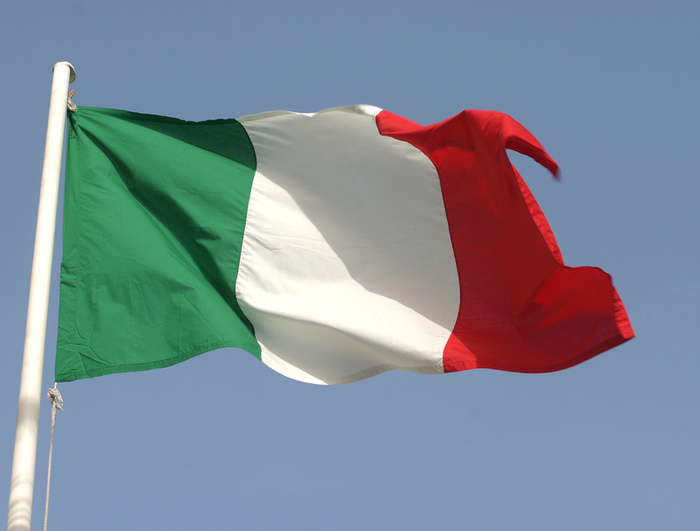
Italian-flag
Have a listen here.

The results of Italy’s general election were announced this week, setting markets on edge across the Eurozone. For all intents and purposes, Italy is without a government. There is no clear majority in the parliament’s upper house, and former comedian Beppe Grillo’s populist Five Star Movement captured a quarter of the vote. Warren Brookes Fellow Matthew Melchiorre finds the outcome surprising, as well as troubling.

CEI Podcast for November 13, 2012: The Fiscal Cliff at Home and Abroad


Have a listen here.

Phrases like “austerity” and “the fiscal cliff” are dominating news coverage not just here in the U.S., but in Europe as well. Warren Brookes Journalism Fellow Matthew Melchiorre explains what both sides of the Atlantic need to do to avoid fiscal catastrophe.

CEI Podcast for October 11, 2012: More Americans

Have a listen here.

Policy Analyst David Bier thinks the world could use more Americans. And an easy way make happen is through increasing legal immigration. America’s superior economic institutions give immigrants the ability to create more wealth and value than they could in their home countries. Expanding legal channels would also curb dangerous immigration black markets for labor and human smuggling.

Economic Freedom of the World

Non-economists tend to be much more skeptical about economic freedom than economists are. This in itself is a powerful case for free markets. But empirical data present a far richer and more compelling argument in favor of freedom. That’s why I look forward each year to the release of an updated edition of the Economic Freedom of the World report, jointly published by our friends at the Cato Institute and the Vancouver-based Fraser Institute, with help from more than 30 think tanks around the world.

The report is nothing if not thorough. James Gwartney, Robert Lawson, Joshua Hall, and a small army of contributors assemble data on 144 countries, ranging from regulatory burdens to property rights protections to the amount of corruption. In all, each country is measured on 42 variables. Then each country is given a score from 1 to 10. The freer the economy, the higher the score.

If economic freedom had no bearing on wealth creation, then plotting the scores against per capita GDP would show no distinct pattern. It would be a random blob. What the data actually show is anything but random. As it turns out, poor countries all have something in common: little economic freedom. Countries in the bottom quartile of economic freedom have an average per capita GDP of $5,188. They are clustered in the lower left hand side of our graph.

Rich countries all have something in common, too. They have high scores. Countries in the top quartile of economic freedom have an average per capita GDP of $37,691. That extra freedom results in a seven-fold increase in wealth. If you value human well-being, economic freedom is extremely important. People can only prosper if they’re allowed to.

If that seven-fold difference in living standards doesn’t move you at least a little bit at the margin in favor of free markets, you probably have a hard head, a cold heart, or both. It is the difference between modern sanitation and open sewers. It is the difference between having respectable medical care and not. It is the difference between subsistence farming and an industrial/service-based economy.

Gwartney, et al have been putting out Economic Freedom of the World reports since 1996, so by now they some good long-run data. The trends are encouraging on one front: worldwide, economic freedom has been on the rise for some time. In 1980, the global average score was 5.30. By 2010, it rose to 6.83. Eastern Europe, especially the Baltic region, and southeast Asia have been the biggest stars. The world’s two freest economies are Hong Kong (8.90) and Singapore (8.69).

China (6.16) and India (6.42) are slowly moving in the direction of economic freedom – neither is there yet – and as a result, hundreds of millions of people have already been lifted out of poverty. Liberalization is the most effective anti-poverty program the world has ever seen. More would be nice.

Domestically, the situation is less encouraging. Presidents Bush and Obama have sharply increased spending and regulation over the last decade, and have worsened the government’s already poor financial health. The result is that the world’s second freest economy in 2000 fell to 18th in 2010, the latest year for which data is available. America’s score has fallen from 8.65 in 2000 to 7.70 in 2010. It is the first time the U.S. has been outside of the top ten.

The Bush-Obama years have been very bad for economic freedom. There is a lot of regulatory excess to roll back, and a lot of debt to pay off. It will take time to undo all the damage, but it can be done. Perhaps the U.S. can look to the examples set by economically freer countries such as Canada, the UK, Finland, and, surprisingly, Qatar.

Regulation of the Day 223: Fred Flintstone Cars


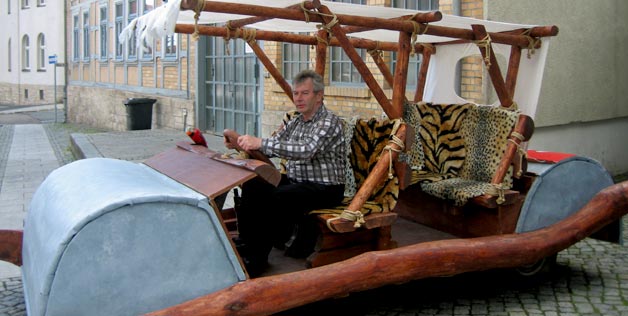
Sebastian Trager is an engineer in Germany who loves The Flintstones. He recently built a replica of Fred Flintstone’s car that looks almost exactly like the original. The only significant nod to modernity is that instead of being foot-powered, it has a 1.3 liter engine. Regulators, ever afraid that someone, somewhere might be having fun, quickly told Trager that he may not drive his car on German roads.

One reason is that German regulations require all cars to have windshield wipers. Trager didn’t think to install them, mainly because his Flintstone-mobile doesn’t have a windshield.

Other items are more substantive. Looking at pictures of the car, it also lacks side and rearview mirrors, and seatbelts. One imagines that it also lacks airbags. It also lacks turn signals, though Trager could use hand signals to alert fellow motorists when he’s about to turn.

After all the work Trager put into his creation, hopefully he’ll find a way to get at least some use out of it. It would be a shame to see this sparkling example of German engineering go to waste.

Or maybe he should have followed movie buff Paul Harborne’s example and created a replica Ghostbusters car instead.

North Korea Missile Launch Fails

Kim Il Sung’s 100th birthday would have been this week — April 15, officially. As part of the celebration, the current regime launched a rocket into space. Or, they attempted to. The three-stage rocket broke up into four pieces and fell into the ocean.

The buildup to the launch scared a lot of people. The rocket was supposed to put a satellite into orbit that could have been used to spy on North Korea’s enemies. Worse, North Korea’s two previous rocket launches were accompanied by nuclear tests shortly thereafter. That means the regime is likely trying to figure out a way to launch nuclear weapons across long distances to its enemies, with the U.S. high on the list. Scary stuff for us Americans. Despite the failure, a nuclear test is still entirely possible within the next moth or so.

It isn’t terribly surprising that the launch failed. But even if it succeeded, one shouldn’t be afraid. One reason is that North Korea is poor. They do have the world’s fourth largest army, at well over one million strong. But the country’s population, not taking into account recent famines and defections, is only 23 million.

More to the point, photographs of those one million-plus soldiers show them lacking such basic provisions as socks — this in a country with a climate similar to New England’s. And it’s not just socks that are lacking, but also food. A popular propaganda slogan reads, ‘Let’s eat two meals a day.” Many North Koreans are lucky to eat even that much. This is the potential enemy. Quake in the boots that they don’t have.

Should the worst happen, North Korea is not a formidable opponent. Better, there is little reason why conditions would ever come near to a breaking point.

The reason lies in public choice theory. Everyone knows that people behave in their own self interest. Public choice theorists say that governments do, too. It isn’t rocket science; pardon the expression.

Kim Jong-Un and the rest of North Korea’s elites know full well their technological and strategic disadvantages. And their primary goal isn’t to reunite the Korean peninsula, or to make foreign conquests. What they want is self-preservation.They have it pretty good with their cognac and movie screenings and their three meals a day, and they would like to keep it that way. That’s why they will not launch a nuclear attack.

Self-preservation is also the reason for their recent bellicosity. Kim Jong-Un is brand new to the world stage, and he needs to assert his authority. The best way for him to do that is make a big international display. But displaying is not the same as deployment. Like a peacock, the North Korean regime displays impressively, but it has no teeth.

Again, the regime’s first priority is self-preservation. To start a war — especially a nuclear war — is regime suicide. Its only ally is China, and they are reluctant at best. South Korea has three times the North’s population. Japan has five times as many people. Even if the U.S. doesn’t get involved, and it probably would, the North’s current regime would topple. And the North Korean regime knows that.

Lord knows who would replace the regime should it come to that. The replacements could well be even worse; liberalism is a foreign concept north of the 38th parallel. But the current elites live a relatively cushy life, and they will not endanger that. So don’t be scared. I’m not.

In the meantime, fear for the safety of North Korea’s rocket scientists. Something tells me they’ll end up in Camp 14. That’s North Korea’s equivalent of Kolyma, the harshest camp in the old Soviet gulag. I sincerely hope I’m wrong. But as many as 200,000 people are currently imprisoned in North Korea’s gulag — that’s about one percent of the country’s population.

Right now, as you read these words, scientists are probably being tortured. Please think of them. And don’t fear for your safety. Fear for theirs.

Pictures of North Korea

North Korea is allowing journalists into the country so they can document the celebration of Kim Il Sung’s centennial. The Atlantic posted a haunting collection of new photographs here.

In 37 pictures, about the only smiles to be seen are in portraits of Kim Il Sung and Kim Jong Il.

CEI Podcast for March 8, 2012: IRS Moves to Fund Foreign Dictators


Have a listen here.

A new IRS regulation hits the trifecta of enriching foreign dictators, helping them crush dissent, and would raise no revenue for the U.S. government. Vice President for Strategy Iain Murray explains. Unlike most other countries, the U.S. taxes income its citizens earn abroad. So, to encourage foreign banks to cooperate with the IRS, it is requiring U.S. banks to report to foreign countries, even dictatorships, on their citizens’ U.S. holdings. Governments can then use this information to find and punish dissenters.