Category Archives: Immigration

CEI Podcast for July 19, 2012: Congress Takes on High-Skilled Immigration Reform


Have a listen here.

Congress will soon vote on a package of reforms for holders of the H-1B visa for high-skilled immigrants. Policy Analyst David Bier unpacks the proposed reforms, and explains why allowing more high-skilled immigration would help spark economic growth, especially in the technology sector.

“America’s scorn for skills is extraordinary.”

The Economist aptly sums up America’s immigration policy.

Don Boudreaux, on page 32 of his wonderful new book, writes that “Free societies build bridges, not walls.”As on so many issues, one is better off siding with Don and The Economist than with nativists.

CEI Podcast for May 10, 2012: Freeing Our Farms


Have a listen here.

Immigration Policy Analyst David Bier explains how the Labor Department’s byzantine restrictions on immigrant agricultural workers hurt immigrants and native-born Americans alike. Current immigration policy keeps many immigrants in dangerous black markets, raises food prices for consumers, makes it difficult for farmers to hire workers and create jobs, and reduces the government’s tax revenues.

CEI Podcast for March 29, 2012: The History of American Immigration in Six Minutes


Have a listen here.

America’s first immigration law passed in 1790. A more-or-less open borders policy lasted until the 1920s, when immigration was severely restricted. Since then, policies have become more open in some ways, and more closed in others. Immigration Policy Analyst Alex Nowrasteh talks about the reasons behind the major historical shifts, and suggests reforms that would make today’s immigration system fairer and less cumbersome.

CEI Podcast for February 9, 2012: The Immigration Tariff

Have a listen here.

Immigration law is second in complexity only to the income tax. In a new CEI paper, Policy Analyst Alex Nowrasteh proposes scrapping the whole thing and replacing it with a tariff. This is a much more humane approach to immigration, and in many cases will be less expensive for immigrants than the lawyers and fees they currently have to pay while they live in legal limbo. A tariff would also reduce illegal immigration by eliminating black markets. Money that currently goes to illegal smugglers and human traffickers could instead go to the U.S. Treasury. The idea can appeal to both the left and the right.

CEI Podcast for January 26, 2012: Visa Reforms for Farm Workers

Have a listen here.

The state of Georgia recently passed strict new requirements for immigrant farm workers. Immigration Policy Analyst Alex Nowrasteh looks at the results of a new report released by the state. Workers are fleeing to other states, causing a labor shortage. Some farmers find they lose less money by actually letting their crops rot in the fields rather than comply with state and federal rules.

CEI Podcast for January 12, 2012: Mistaken Deportations

Have a listen here.

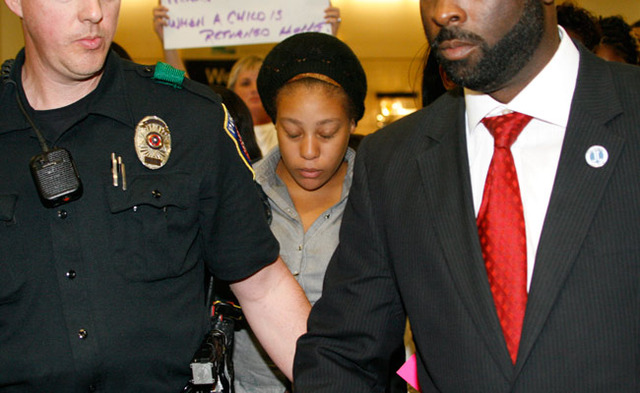
Immigration Policy Analyst Alex Nowrasteh tells Jakadrien Turner‘s story and explains what it means for the immigration reform debate. Turner is a 14-year old girl from Texas who was mistakenly deported to Colombia. Turner is not Hispanic, does not speak Spanish, and has no connections to Colombia whatsoever. It took six months of pleading and legal maneuvering before authorities allowed her to return home. This was not an isolated incident. The way to prevent future cases like this, Nowrasteh argues, is radically simplifying our overly complex immigration and citizenship laws.

Why Is Immigration Illegal Anyway?

Art Carden and Ben Powell ask that fundamental question, and answer it brilliantly:

American immigration restrictions have a long history, but they have never been a good idea. Economist Thomas Leonard documents how even some Progressive Era economists supported immigration restrictions and minimum wages because they wanted to shut members of what they called “low-wage races” out of the American labor market…

Fears that immigrants will wreck our economy are probably the biggest reason substantial barriers to legal immigration remain on the books. But immigrants don’t take our jobs, lower our wages or depress the American economy.

Virtually all economists who study immigration find that it provides a small but positive impact on the economy. It should be obvious that immigrants don’t steal jobs from the native-born. Since 1950, the labor force has more than doubled but long-run unemployment is essentially unchanged. As we’ve added more workers, we’ve added more jobs.

Read the whole thing here.

CEI Podcast for October 27, 2011: How Much Do Undocumented Immigrants Cost?

Have a listen here.

A widely cited study from the Federation for American Immigration Reform claims that undocumented immigrants cost taxpayers $113 billion per year. Policy Analyst Alex Nowrasteh, author of the new CEI Web Memo “A FAIR Criticism: A Critique of the Federation for American Immigration Reform’s ‘The Fiscal Burden of Illegal Immigration on United States Taxpayers.'” finds that the study counts costs but ignores benefits, uses shoddy data, and is harmful to the ongoing immigration debate.

Demagoguing Immigrants Wins No Votes

Today’s quote of the day from The Wall Street Journal‘s Political Diary newsletter is good stuff. Here it is in full:

“With Rick Perry suddenly pushing a flat tax and Herman Cain substantively revising his 9-9-9 revenue plan, GOP candidates may finally relinquish their feverish immigration obsession — one that’s destructive, distracting, demented, and downright dumb. Why spend a wildly disproportionate amount of energy exploring an issue that few voters consider a top priority, and where all Republican candidates fundamentally agree, rather than emphasizing real differences on the economic problems that will decide the election?

“Listening to the toxic trash talk at the Las Vegas debate, or watching attack ads that are already polluting the Internet, one might assume that the public viewed illegal immigration as the greatest challenge facing our civilization and believed the fate of the republic hinged on Mitt Romney’s past reliance on a lawn-service company that hired undocumented workers.

“Actually, no major poll of the last year — no, not one of them — showed robust public interest in immigration. This month, CBS News asked respondents to name ‘the most important problem facing this country today.’ Less than 2 percent came up with ‘illegal immigration,’ while a dozen other concerns, led by ‘the economy and jobs,’ of course, finished higher on the list. Over the summer, surveys from Bloomberg and Fox News found 3 percent and 2 percent, respectively, who identified immigration as a priority, with gas prices, the war in Afghanistan, health care, the deficit, education, and even nebulous concerns like ‘partisan politics’ and ‘moral values’ more frequently mentioned by the public” — syndicated columnist Michael Medved writing at thedailybeast.com on Oct. 24.

Republicans are even worse than Democrats on immigration issues. Medved is right. It would be nice if the GOP candidates would just stop talking about it. I don’t care if doing so would help them at the polls or not; I just think that economically illiterate anti-foreign bias is an ugly thing to behold.