
Category Archives: History

CEI Podcast for November 22, 2013: Daniel Hannan on Inventing Freedom

Have a listen here.

Daniel Hannan is a member of the European Parliament, representing South East England. He discusses his latest book, Inventing Freedom: How the English-Speaking Peoples Made the Modern World. He argues that “What raised the English-speaking peoples to greatness was not a magical property in their DNA, nor a special richness in their earth, nor yet an advantage in military technology, but their political and legal institutions.”
Markets in Everything: Rat Tails

During the Korean War, the Chinese government accused the U.S. of engaging in germ warfare–air-dropping canisters filled with germs and bacteria-infused insects and pests not just in Korea, but in China, too. The accusation sounds ridiculous now, but at the time, it sounded somewhat plausible. General MacArthur, after all, openly mused about using nuclear bombs in Korea, and nearby Japan used biological weapons just a few years earlier during World War II.

The propaganda campaign caused a nationwide scare, as well as major cleanup efforts. As historian Frank Dikötter explains on p. 148 of his new book, The Tragedy of Liberation: A History of the Chinese Revolution 1945-1957,
the campaign also caused a most unusual market to form:

From north to south, people were also required to kill the ‘five pests,’ namely flies, mosquitoes, fleas, bedbugs[,] and rats. In Beijing every person had to produce the tail of one rat every week. Those who greatly exceeded the quota were allowed to fly a red flag over the gate of their house, while those who failed had to raise a black flag. An underground market in tails rapidly developed.

Market orders emerge, even during some of history’s darkest hours.

The Founding Free Traders

Here’s a letter I sent to the Racine Journal Times, my hometown paper:

Alderman Dan Sharkozy’s July 11 op-ed argues that the founding fathers built trade protectionism into the Constitution. He is mistaken. The Constitution, by banning trade restrictions between the states, created what was at the time the world’s largest free trade zone. This was on purpose.

Imagine if the only outside products that Racine’s consumers were allowed to buy must come from Kenosha. Or if companies like S.C. Johnson were allowed to export to Kenosha, or nowhere at all. Even Pat Buchanan would have to admit that these trade barriers would be less than helpful to Racine’s economy. Our forebears were similarly forbidden from importing or exporting most goods from anywhere but Britain; hence a certain revolution we just celebrated on July 4.

Adam Smith, who unlike Pat Buchanan was an economist, wrote of our natural “tendency to truck, barter, and exchange one thing for another.” The desire to forcibly stop people from doing so because they speak different languages or look different from each other comes from a morality that one can only hope remains foreign.

Ryan Young

Fellow in Regulatory Studies, Competitive Enterprise Institute, Washington, D.C.

Racine native, Walden III alumnus

An Evolutionary Banquet

Chapter 5 of Brian Fagan’s excellent Cro-Magnon opens with the following quotation from the paleontologist Björn Kurtén:

“Imagine a dinner table set for a thousand guests, in which each man is sitting between his own father and his own son. At one end of the table might be a French Nobel laureate in a white tie and tails, and with the Legion of Honor on his breast, and at the other end a Cro-Magnon man dressed in animal skins and with a necklace of cave-bear teeth. Yet each one would be able to converse with his neighbors on his left and right, who would either be his father or his son. So the distance from then to now is not really great.”

It’s a similar conceit to the Evolution Stadium described by Richard Wrangham in Catching Fire: How Cooking Made Us Human, which remains one of the most thought-provoking books I’ve read.

The Dark Ages Weren’t so Dark, and Neither Is Modernity

I’m currently reading Barbarians to Angels by Peter Wells, which is a mostly successful attempt to rehabilitate the Dark Ages’ dismal reputation. The written sources are mostly from the Roman perspective, so one understands their rampant pessimism. Wells, an archaeologist, prefers a different historiographical method: archaeology. There is more to history than mere texts.

Roman inventions such as concrete were lost, and though literacy did not disappear, it wasn’t anywhere near where it was in Roman times; there was decline. But civilization did not die. International trade stayed alive, and with it the swirling exchange of ideas, customs, religions, and inventions that accompany commerce. Artifacts from as far away as India, Sri Lanka, and China have been found in Dark Age sites in Sweden and Ireland.

The visual arts remained vibrant, even if the written arts didn’t. Of course, illuminated manuscripts such as the Book of Kells provided their own vibrancy, even if in their illustrations and not in their actual text.

All in all, Wells has not persuaded me that early medieval Europe was the technological and cultural equal of the Roman Empire. But he has certainly vanquished the myth that the Dark Ages were as dark as the popular imagination believes.

Much as I love history, the real reason for this post is to point out just how well we moderns have it. In chapter 12, Wells writes the following about one of the 8th century’s greatest scholars:

The most prominent scholar of this period was Bede, a man of Anglo-Saxon origins who was born in northern England about 672 and died in 735. At the age of seven he entered the monastery that was based at the neighboring sites of Wearmouth and Jarrow, in Northumbria, just at the time that this monastic complex was reaching its apex of cultural achievement. The library at the monastery contained some five hundred books, making it on of the most extensive in Europe at the time.

Let’s put this in context. My Kindle e-reader, which fits in my hand, can hold more books than the finest library in all of 8th-century Europe had to offer. Just imagine what a mind of Bede’s caliber could accomplish with today’s intellectual resources.

That’s not all. Now think about today’s 7-billion-strong global population, and compare it to the fewer than one billion people alive in Bede’s time. There are at least an order of magnitude more people alive today with Bede-level intellects. And most of them have access to university libraries and the Internet. What will they accomplish?

We truly live in amazing times.

Globalization Has Been Happening for a Long Time

Apparently some Roman artifacts were found in a 5th-century A.D. Japanese tomb:

Researchers from Japan’s Nara National Research Institute for Cultural Properties announced Friday that three glass beads recovered from a Fifth Century burial site near Kyoto bear signs of Roman craftsmanship. This suggests that Roman influence reached as far as East Asia.

“They are one of the oldest multilayered glass products found in Japan, and very rare accessories that were believed to be made in the Roman Empire and sent to Japan,” researcher Tomomi Tamura told AFP.

Six thousand miles was a long way for goods to travel back then. Our innate tendency to truck and barter, as Adam Smith put it, is very strong indeed.

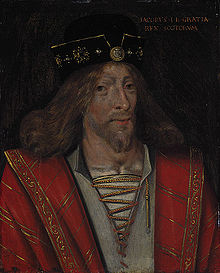
King James I and Sporting Regulations

Regulators usually use a light touch on the world of sport. There is the occasional grandstanding Congressional hearing about steroids, and the odd murmur of antitrust violations. But that’s usually the extent of it. Things were different in medieval Scotland:

James I legislated in 1428 in an attempt to stop people from playing football because it distracted them from archery practice[.]

-Allan Massie, The Royal Stuarts: A History of the Family that Shaped Britain location 281 of the Kindle edition.

Business before pleasure, gentlemen. Or else.

Worth noting: this is James I of Scotland, not the King James who commissioned the famous Bible translation. That man was King James I of England, and simultaneously King James VI of Scotland. Nearly two centuries separated them, though both were members of the Stuart royal family.

Evolution Stadium

How far removed are we from our proto-human ancestors? Not as much as one would think. Richard Wrangham has a creative way to illustrate that in the beginning of his book Catching Fire: How Cooking Made Us Human:

Although the australopithecines were far different from us, in the big scheme of things they lived not so long ago. Imagine going to a sporting event with sixty thousand seats around the stadium. You arrive early with your grandmother, and the two of you take the first seats. Next to your grandmother sits her grandmother, your great-great-grandmother. Next to her is your great-great-great-great-grandmother. The stadium fills with the ghosts of preceding grandmothers. An hour later the seat next to you is occupied by the last to sit down, the ancestor of you all. She nudges your elbow, and you turn to find a strange nonhuman face. Beneath a low forehead and big brow-ridge, bright dark eyes surmount a massive jaw. Her long, muscular arms and short legs intimate her gymnastic climbing ability. She is your ancestor and an australopithecine, hardly a companion your grandmother can be expected to enjoy. She grabs an overhead beam and swings away over the crowd to steal some peanuts from a vendor.

Evolution may happen at glacial pace from our perspective. But if you zoom out a bit, it happens incredibly fast. Interesting stuff.

The History of Liberty

Human history is a complicated tale. There are many ways to tell it. One is as a story of progress — from caves to huts to highrises. Another is regress — from harmony with nature to clanging, polluting machinery that destroys it.

Conflict is another common theme. Illiberals have spent the better part of the industrial era spinning tales of class struggle and racial or national conflict.

Competition is a less severe theme that many liberals like to stress. When church and state compete for power, the people are either left alone, or they can flee whichever is more oppressive. States that are numerous, small, and close have to have friendly, liberal policies, or else risk becoming little more than empty spaces.

Equality is still another. Many people think that rich and poor are less equal than before; look at income data. Others think that people are more equal than before. Slavery, monarchy, and titled nobility are largely things of the past. Status has (mostly) been replaced by contract.

History is much too complex for such simple conceits to explain everything. But all of them have at least some value for understanding where we came from, where we are now, and where we might be headed in the future.

There is one more aspect of history that has fascinated scholars from Thucydides to Lord Acton. That aspect is freedom. Like the others, it neither pretends to nor does explain everything.

But it does have one advantage. It ties together all the above narrative possibilities and more. Progress, regress, collective, individual, conflict, cooperation, more equality, less equality — they’re all there. And they all matter.

In my opinion, no living scholar synthesizes those disparate parts into a coherent whole better than Tom Palmer. The video below is a shortened version of a lecture that I have had the privilege of seeing a number of times over the years, with the added bonus of top-notch production values. This amateur history buff continues to learn from it to this day.

It’s 26 minutes long, which is about as long as an average sitcom. It is also far more rewarding, and at least as entertaining. If you have some spare time, it is well worth foregoing an episode of I Love Lucy to watch it. Click here if the embedded video doesn’t work. And do keep an eye out for part two.

Hard Times?

In the short run, absolutely. But — this matters — not in the long run, according to Michael Shermer, appearing on MSNBC’s Dylan Ratigan Show. Click here to watch.