Category Archives: Public Choice

This Gas Is Dow’s Gas

My colleague Marlo Lewis is a talented musician. I recently had the pleasure of helping Marlo record a parody of Woody Guthrie’s “This Land Is Your Land,” with the lyrics changed to poke fun at a bit of rent-seeking by Dow Chemical. The video is below (click here if the embed doesn’t work). Here is a blurb about the video in The Hill, and here is another in SNL.

What Causes Rent-Seeking?

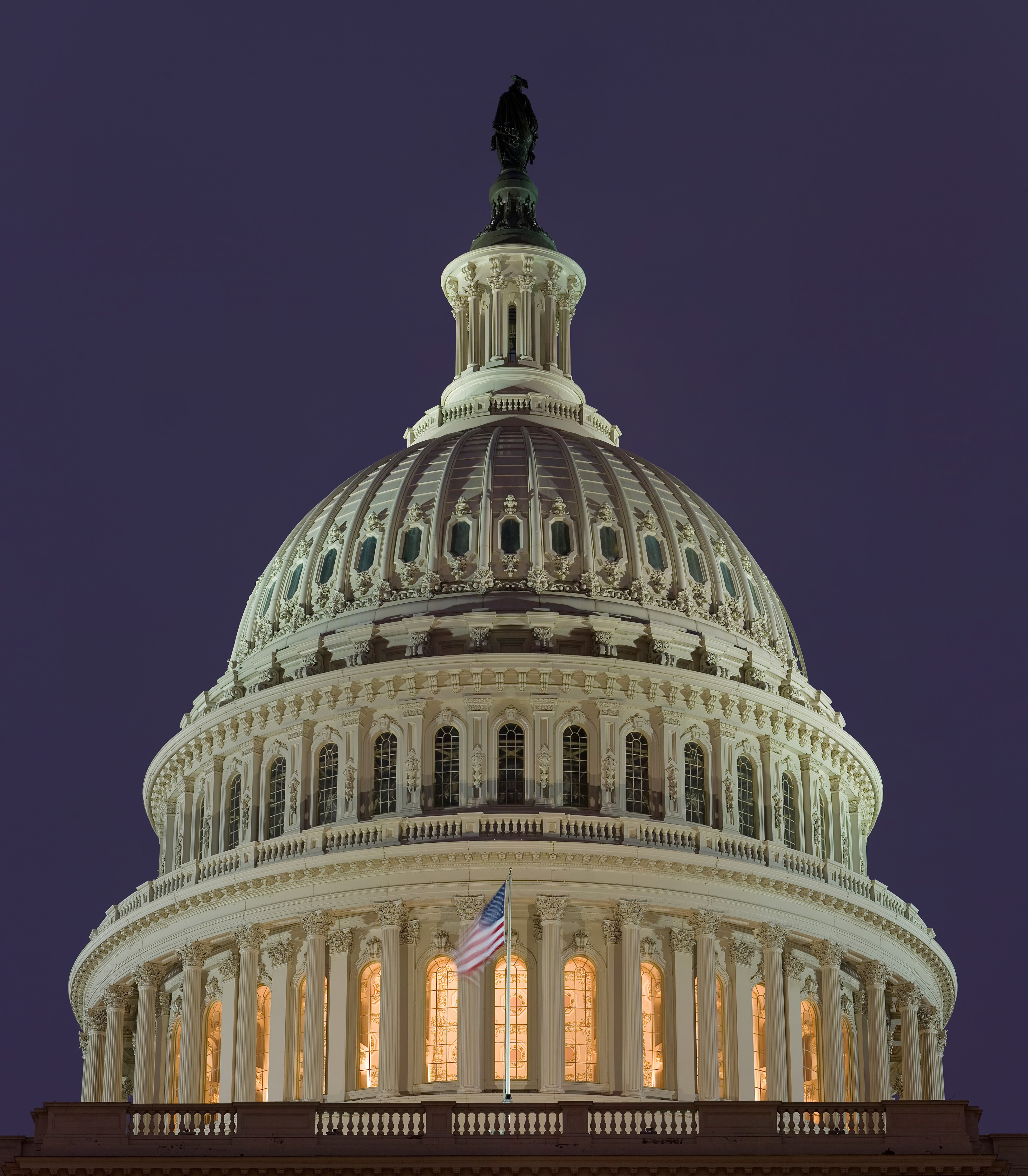
us capitol dome
A bit of pith, courtesy of James Buchanan in his excellent rent-seeking primer, “Rent Seeking and Profit Seeking,” which can be found in pages 103-115 of the first volume of his collected works, The Logical Foundations of Constitutional Liberty (the quote is on p. 109):

Rent-seeking activity is directly related to the scope and range of governmental activity in the economy, to the relative size of the public sector.

Or, as the bank robber Willie Sutton supposedly put it even more pithily, “that’s where the money is.”

Rent-Seeking Watch: Former Rep. Jason Altmire

Back when he was a congressman, Jason Altmire (D-PA) bucked his own party and voted against the Affordable Care Act. He left office earlier this year and now works for a health insurance company in Florida. Seeing as the law legally requires people to buy his employer’s product, he unsurprisingly now supports the law.

The Median Voter Theorem Explained

There is a good reason for the time-tested presidential election strategy of candidates taking relatively progressive or conservative positions during the primaries, and then moving to the center for the general election. It’s because the way to win an election is to appeal to the median voter. In a partisan primary, that median voter is relatively ideological. But in a general election, the median voter is centrist.

This is the median voter theorem, and it plays a key role in understanding how politicians behave during election season. It explains why the two parties can be so hard to tell apart — they’re chasing after the same voter. Utah State University economics professor Diana Thomas ably explains the median voter in this short Learn Liberty video (click here if the embed doesn’t work):

Regulation of the Day 231: Serving Olive Oil

olive-oil
When you sit down at a Mediterranean restaurant, your server will typically set down some bread on the table, then pour some olive oil into a saucer or small bowl for dipping. Many restaurants also keep small jugs of olive oil as part of their table setting for general use. It’s a delicious way to begin a meal.

New European Union regulations are set to change this centuries-long practice. Starting January 1, 2014, any olive oil served at table “must be in pre-packaged, factory bottles with a tamper-proof dispensing nozzle and labelling in line with tight EU standards.” That means no more saucers of oil for dipping, and no more refillable jugs at the table.

Most complaints about the rule have been directed at the EU’s micromanagemerial tendencies, and there is certainly something to it. But there is also a public choice angle that’s worth looking at.

Many restaurants buy their olive oil from small family farms that aren’t able to comply with the new labeling and sealing standards. Restaurants buy from them because many diners prefer their olive oil to the more homogenous product put out by larger firms. These larger firms are also precisely the people who will benefit from the new rules. A public choice theorist would point out that the big producers very likely had something to do with pushing for their passage, and their added business comes at the expense of smaller farms – and consumers’ palettes.

This kind of rent-seeking behavior is all too common. And the more regulations there are, the more rent-seeking one sees. These olive oil rules are only the latest example. Most supporters of the rule might be motivated by health and safety, but certain other supporters are more concerned with securing an artificial competitive advantage for themselves.

Not the Strongest Argument for Income Equality

From Gordon Tullock’s 1986 essay “Industrial Organization and Rent Seeking in Dictatorships,” in particular on p.124 of Vol. 5 of his collected works, The Rent-Seeking Society (footnote omitted):

I have currently been reading a series of articles in The Washington Post in which a communist official in Vietnam is quoted as saying that their society is stabler than other South East Asian countries’ because although it is extremely poor, the poverty is evenly spread. The reporter clearly thought this was a significant argument.

Odd though this thinking is, it is also common. I humbly submit that it is more humane to be concerned with how to better the lot of the poor, rather than the mathematical ratio between the poor and the wealthy. This is literally the difference between caring about people versus numbers.

The Transitional Gains Trap

Once a government policy is in place, it is almost impossible to repeal. As Gordon Tullock points out, this is especially true when a policy is the result of rent-seeking — a private company using government to secure ill-gotten gains. Tullock explains this “transitional gains trap” on p. 68 in volume 5 of his collected works, The Rent-Seeking Society:

The problem posed by the transitional gains trap is the ratchetlike nature of rent seeking. Once a rent has been successfully sought out through government lobbying, it is very difficult to remove even after it has ceased to produce positive benefits for its rent-seeking beneficiaries. Its elimination almost always implies losses for those who now exercise the privilege. To avoid such losses, they will rent-seek yet again to retain the privileges. Politicians are rightly reluctant to inflict direct losses on specific sections of the electorate — inevitably a losing strategy.

Once in place, always in place. Inertia wins.

The Origin of Interest Groups

It has always been fashionable to lament the decline of morals and decency. Every generation has had some variation of the “kids these days” trope. Applying this folk wisdom to modern century politics, the rise of special-interest groups during the 20th century must certainly have been a disturbing development to witness. Even today, it seems like pressure groups grow more powerful with every election cycle. What is happening to our democracy?

Whatever is going on, moral decay has little to do with it. On pp. 285-6 of their classic Calculus of Consent, James Buchanan and Gordon Tullock offer a much more realistic theory on why K Street is what it is:

A hypothesis explaining the increasing importance of the pressure group over the last half century need not rest on the presumption of a decline in the public morality. A far simpler and much more acceptable hypothesis is that interest-group activity, measured in terms of organizational costs, is a direct function of the “profits” expected from the political process by functional groups.

In other words, if the amount of money in politics disturbs you, then you should advocate for less politics. Just as bank robbers go where the money is, so do rent-seekers.

Lobbying Can Be a Great Investment

Health insurance companies spent tens of millions of dollars lobbying on the health care bill. In return for that investment, they convinced the government to require everyone in the country to buy their products, on pain of a fine. As it turns out, the law has done more than grow their customer base — the Washington Post reports today that those customers will soon be paying through the nose:

Some Americans could see their insurance bills double next year as the health care overhaul law expands coverage to millions of people.

The nation’s big health insurers say they expect premiums — or the cost for insurance coverage — to rise from 20 to 100 percent for millions of people due to changes that will occur when key provisions of the Affordable Care Act roll out in January 2014.

Rent-seeking can be a very lucrative investment. Imagine how many billions of dollars health insurer’s eight-figure million lobbying investment will yield in profit. With a rate of return like that, it’s a wonder that most businessmen are still honest.

Should Agencies Be Self-Funded?

cftc-logo

In Monday’s Politico, the Systemic Risk Council’s Brooksley Born and William Donaldson argue the Securities and Exchange Commission (SEC) and the Commodity Futures Trading Commission (CFTC) should be self-funded – that is, they should charge enough fees to the entities they regulate to cover their entire budgets.

Current fiscal uncertainty, headlined by the sequester, means these agencies’ missions are potentially at risk if they depend on uncertain Congressional appropriations. “It is both wrong and dangerous to impose funding cuts on these agencies,” they argue.

We will leave aside the fact sequestration means smaller spending increases and not actual cuts, where spending goes down. And I will leave it to my colleague John Berlau to analyze how effectively the SEC and CFTC were pursuing their missions before sequestration.

The point is self-funding is an interesting proposal – closer to the “user pays” principle than the current annual appropriations model. But ultimately, it is still a bad idea. The biggest reason is that it violates the separation of powers. If an agency is doing a poor job pursuing its mission, it needs to be held accountable; there is a reason Congress holds the power of the purse.

Given the amount of wealth in the investment sector, the SEC and CFTC are especially prone to regulatory capture. If those agencies are self-funded, it becomes much more difficult for Congress to discipline them for inevitable misbehavior. Similarly, if an agency engages in regulation without representation and issues regulations without authorizing legislation from Congress, it is much harder to take them to task. Self-funding removes a crucial disincentive to bad regulatory behavior. And as any economist, public choice or otherwise, will tell you, people respond to their incentives.

Born and Donaldson want the SEC and CFTC to become self-funding because the government’s fiscal troubles are putting the agencies at risk of being cut. I propose they treat the root problem of fiscal incontinence rather than its symptoms.

Both legislature and executive should look long and hard for places to cut back unnecessary or low-priority spending. Trillion-dollar budget deficits are simply unacceptable, especially when tax revenues are at record-setting levels. Not only has the Bush-Obama spending binge put future generations at risk, it is also putting some of the government’s highest-priority regulatory initiatives at risk, right now. And symptomatic relief won’t cut it.