Category Archives: Public Choice

Suing the IRS – And Winning

Proving that sometimes good guys can win, our friends at the Institute for Justice are celebrating a big win against the IRS. In a move supported by large, established tax preparation firms, the IRS tried to require all tax preparers to get licenses. The licenses, along with other requirements such as annual continuing education courses, would raise costs for smaller firms and put many individual preparers out of business entirely; one sees why large firms would welcome the extra burden. They would face less competition. IJ sued to put a stop to his perfidy and preserve a more open competitive process.

A few years ago, before IJ filed its lawsuit, now-CEI Adjunct Scholar Caleb Brown and I co-authored an op-ed warning why mandatory tax preparer licenses are a bad idea:

Since the IRS has the power to revoke registrations, tax preparers will have to be careful not to advocate too aggressively for their clients. Besides this chilling effect, mandatory registration reduces consumer choice.

There are at least 600,000 unregistered preparers. Many of them are retirees. Others have jobs, but prepare taxes on the side to help make ends meet. Still others are volunteers. They give their services for free to people who can’t afford a tax preparer. How many will give up, rather than jump through the proposed regulatory hoops?

The IRS estimates the total cost of the new regulations at $48.5 million, plus 1.71 million hours of paperwork and record-keeping burdens. That’s equivalent to 855 full-time jobs — and not the kind that will spark an economic recovery.

Read the whole piece here. Read more about IJ’s victory here, and see a short video they produced about the case here.


The Kronies

John Papola strikes again with a brilliant bit of satire. Click here if the embedded video below doesn’t work, and the full Kronies website is here.

Public Choice and the Mediocrity of the Social Sciences

One of the foundational principles of economics is that people respond to incentives. In his book The Organization of Inquiry, Gordon Tullock applies that lesson to the scientific process. On page 154, he shows why most social scientists are timid creatures who would rather affirm popular prejudices than make bold new discoveries:

We have already discussed the tendency of researchers in the social sciences to avoid dangerous issues, to confine their investigations to “safe” subjects and “safe” conclusions. The bulk of the money available for “inducing” such research comes either from essentially charitable endowments or from government organizations (universities, of course, partake of both) and is likely to become unavailable to a man who annoys people with his discoveries. As a result, the students in this field have a strong tendency to devote large amounts of effort to “confirming” popular opinions.

Schumpeter on Public Choice

Joseph Schumpeter is best known for his theory of creative destruction and his overarching emphasis on economic change and dynamism. But he also knew a bit about human nature. While the public choice movement didn’t get started until after his 1950 death, Schumpeter had enough common sense to prefigure its view of politics without romance. He shows this in the final footnote on page 433 of his posthumously published History of Economic Analysis:

[T]he state (government, politicians, and bureaucrats) is not something to philosophize on or to adore but something to be analyzed as realistically as we analyze, e.g., any industry.

This is a wise insight that more analysts would do well to take to heart.

CEI Podcast for January 9, 2013: Reining in Sue and Settle with the REDO Act

EPA_logo
Have a listen here.

Senior Fellow William Yeatman argues that the REDO Act, up for a House vote today, would limit a practice called sue and settle. Friendly activist groups sue allied agencies over missed deadlines, and the settlements typically include enactment of policies that the agencies and the groups both favor. Sue and settle is a form of regulation without representation, without input from Congress or voters.

CEI Podcast for December 5, 2013: Ending Corporate Welfare

corporate welfare
Have a listen here.

Stephen Slivinski, a senior economist at the Goldwater Institute, discusses solutions to the seemingly intractable problem of corporate welfare.

The Trouble with Federal Grants

Is summed up perfectly by Gordon Tullock:

In passing, I may note an amusing plaque which, at least some years ago, was set in the cement at the entrance to the Toledo, Ohio, airport. This plaque was a letter from President Eisenhower to the City of Toledo in which he congratulated the city on having built their airport entirely on their own without federal funds. He made it clear that he thought this was a highly meritorious, and even noble, act. In order not to raise any misunderstanding in other parts of the country, however, he then went on to say that, of course, those communities which could not provide their own airport must receive federal aid. I take it that the citizens of Toledo never again found it possible to build their own airport.”

-Gordon Tullock, “Competing for Aid,” Virginia Political Economy: Selected Works, Vol. 1, 205-6.

No Such Thing as Perfect Information

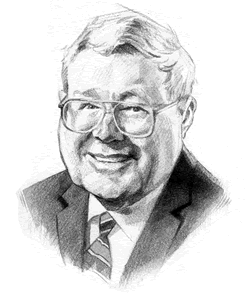
gordon tullockGordon Tullock has a reputation for being rather salty at times. But, more often than not, he is right. This quotation captures both qualities:

[N]o teacher with classroom experience can really believe that everyone is perfectly informed.
-Gordon Tullock,  “Rationality and Revolution,” Virginia Political Economy: Selected Works, Vol. 1, 341

CEI Podcast for October 10, 2013: CEI Files FOIA Requests Over Park Closures

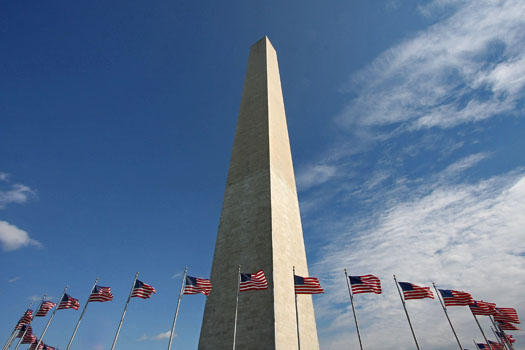
washington-monument-flags
Have a listen here.

During the government shutdown, the National Park Service has barricaded and even closed numerous open-air memorials and parks – including, in some cases, privately owned parks. CEI has filed a series of Freedom of Information Act requests to find out who made the decisions and why. Senior Attorney and Counsel for Special Projects Hans Bader discusses the case.

CEI Podcast for October 3, 2013: The Federal Shutdown

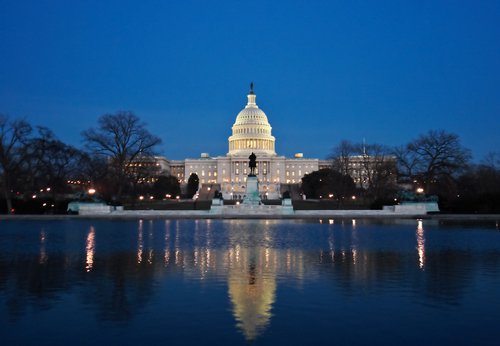
washington-united-states-capitol-washington-d-c-dc154
Have a listen here.

For the 17th time since 1976, the federal government has shut down over a partisan fiscal squabble. Vice President for Strategy Iain Murray gives his thoughts on how it happened, what the consequences will be, and what is at stake.