

Category Archives: Economics

CEI Podcast for March 8, 2012: IRS Moves to Fund Foreign Dictators


Have a listen here.

A new IRS regulation hits the trifecta of enriching foreign dictators, helping them crush dissent, and would raise no revenue for the U.S. government. Vice President for Strategy Iain Murray explains. Unlike most other countries, the U.S. taxes income its citizens earn abroad. So, to encourage foreign banks to cooperate with the IRS, it is requiring U.S. banks to report to foreign countries, even dictatorships, on their citizens’ U.S. holdings. Governments can then use this information to find and punish dissenters.
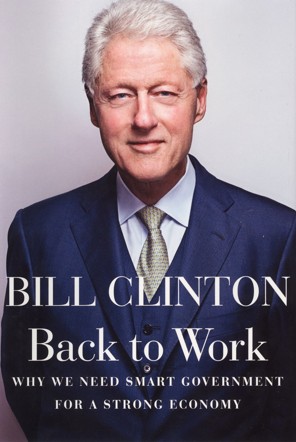
Back to Work


Over at RealClearPolicy, I review Bill Clinton’s latest book, Back to Work.

One of the book’s main themes is contrasting the philosophies of “you’re on your own” and “we’re all in this together.” This is, of course, a false dichotomy.

This immediately made me think back to that bible of “you’re on your own” free-market thought, Adam Smith’s The Wealth of Nations. It spends over 1,000 pages proving that if man were on his own, he would starve. People need to cooperate and exchange to prosper. Free trade, division of labor, and other Smithian concepts are inherently “we’re all in this together.” People can only achieve great things by working together. I have yet to see anyone actually argue “you’re on your own,” ever.

The review is mostly about the book’s philosophy and rhetoric. I have further thoughts about its suggested economic policies, which I will post about soon.

Corporate Welfare for Farmers

In a recent blog post, I describe the Agricultural Marketing Service’s (AMS) Beef Promotion and Research “checkoff” program as corporate welfare. The agency’s Public Affairs Director disagrees. In an email, he asked me to issue a correction. I would, but the facts won’t allow it. Still, some clarification would be helpful.

He claims that “Zero appropriations are used” in AMS’s research and promotion activities. Note the use of the word “appropriations” instead of “taxes.” This is a sneaky use of language. It doesn’t matter if Congress appropriates AMS money or not. The relevant question is whether AMS uses tax dollars to advertise for private businesses. It does.

Under federal law, farmers producing certain foods (beef, pork, milk, honey, various crops, etc.) are assessed fees. The AMS uses the revenue to promote those products. Those “Got Milk?” and “The other white meat” ads are prime examples.

The “Certified Angus Beef,” program, on the other hand, is a wholly private, voluntary marketing program supported by qualified producers of that particular cattle breed. But AMS’s beef checkoff assessment is mandatory (that is, a tax).

AMS argues that the entire industry benefits from collaborative promotion, though the Congressional Research Service explains that it’s not clear whether or to what extent this is true. What IS clear is that not all producers benefit to the same extent — those Certified Angus producers and others who sell branded products have to pay the tax to support advertising for their un-branded competitors.

And, though many beef producers love the program, many others would prefer not to participate at all. What’s more, farmers pass at least part of those fees on to consumers in the form of higher prices. We all get to share in the burden.

AMS’s rationale is that it’s difficult for farmers to advertise individually. Of course, trade associations already exist for beef, dairy, and other agricultural products. If farmers wish to advertise collectively, they can easily do so through their trade associations.

Checkoff program supporters will inevitably argue that purely voluntary collective action allows free riders to benefit from the efforts of others. But it’s pretty clear that the Certified Angus folks have found a way to prevent defection. There is no need for Washington to get involved. (Perhaps the AMS should rebrand itself as the Department of Redundancy Department?)

In the end, Washington is spending tax money on ads for private businesses in a way that benefits some at the expense of others. This is corporate welfare.

(Hat tip to my colleague Greg Conko for his helpful comments.)

Corporate Welfare Has Opportunity Costs

A recent Washington Times editorial quotes me saying as much:

“Washington spends about $92 billion each year on corporate welfare,” Ryan Young of the Competitive Enterprise Institute told The Washington Times. “Imagine if that money was left in the economy instead of squandered on companies that couldn’t make it in the marketplace.”

Read the whole thing here.


CEI Podcast for February 16, 2012: Washington’s Prescription Drug Shortage


Have a listen here.

Patients are suffering from a nationwide shortage of more than 260 different prescription drugs, many of them for different types of cancer. Senior Fellow Greg Conko explains why the biggest culprit for the drug shortage is Washington. DEA and FDA regulations make it difficult to ramp up supply, or to change prices to more accurately reflect demand.

Regulation, Jobs, and Creating Wealth

Here’s a letter I recently sent to Businessweek:

Editor, Businessweek:

Elizabeth Dwoskin and Mark Drajem’s February 9 article “Regulations Create Jobs, Too” points out that regulation doesn’t so much create jobs as redirect them somewhere else.

Lobbying, politicking, and special favors are part and parcel of the regulatory process. The result is that many regulation-created jobs are not created on the merits. If a job requires a regulation to be created, that usually means the job it replaced created more value for consumers. Regulations may not destroy jobs on net, but they do destroy wealth.

Markets respect no special interest; agencies like the EPA and SEC exist solely to cater to them. This is wonderful for politically connected companies like Breen Energy Solutions and Nol-Tec Systems, but the rest of us are poorer for it.

Ryan Young
Fellow in Regulatory Studies
Competitive Enterprise Institute
Washington, D.C.

Exports Good, Imports Bad?

Most people think that exports are good, and imports are bad. Exports create jobs, imports destroy them. Don Boudreaux, in one of his inimitable letters to the editor, quotes the economist Frank Knight on what this actually means:

“The man from Mars reading the typical pronouncements of our best financial writers or statesmen could hardly avoid the conclusion that a nation’s prosperity depends upon getting rid of the greatest possible amount of goods and avoiding the receipt of anything tangible in payment for them.”

Yes, people really do think that way. We call many of them politicians. Read Don’s entire letter here.

Halftime in America

A bit of bailout humor at Clint Eastwood’s expense. Click here if the embed doesn’t work.

Economic Optimism

Mark Mills and Julio Ottino argue that despite current troubles, our economic future is a bright one:

In January 1912, the United States emerged from a two-year recession. Nineteen more followed—along with a century of phenomenal economic growth. Americans in real terms are 700% wealthier today.

In hindsight it seems obvious that emerging technologies circa 1912—electrification, telephony, the dawn of the automobile age, the invention of stainless steel and the radio amplifier—would foster such growth. Yet even knowledgeable contemporary observers failed to grasp their transformational power.

In January 2012, we sit again on the cusp of three grand technological transformations with the potential to rival that of the past century. All find their epicenters in America: big data, smart manufacturing and the wireless revolution.

Read the whole thing.

The New Theories of Moral Sentiments

Dalibor Rohac profiles Deirdre McCloskey and her unconventional approach to economics in today’s Wall Street Journal:

Ms. McCloskey sees a problem in the way that economic models are dominated by a strange, sociopathic character—”Max U” as she calls him, referring to the standard economic problem of maximizing utility subject to various constraints. Her own scholarly work has become increasingly focused on bringing love, hope, faith, courage and other virtues back into economics…

[R]ecall that in 1759 Adam Smith earned his reputation by publishing “The Theory of Moral Sentiments,” in which he accounted for the emergence of sympathy and moral judgments. It was only in the 20th century that ethics disappeared from economics, partly as a result of the increased mathematization of the discipline. Ms. McCloskey says it was a fundamental error for economists to start making their arguments in terms of “Max U” alone. “In fact, ‘Max U’ would be a much more sensible person if he had gender change and became ‘Maxine U,'” she chuckles.

Read the whole thing.