
Category Archives: Economics

CEI Podcast for July 12, 2012: Who to Blame for DC’s Power Outage


Have a listen here.

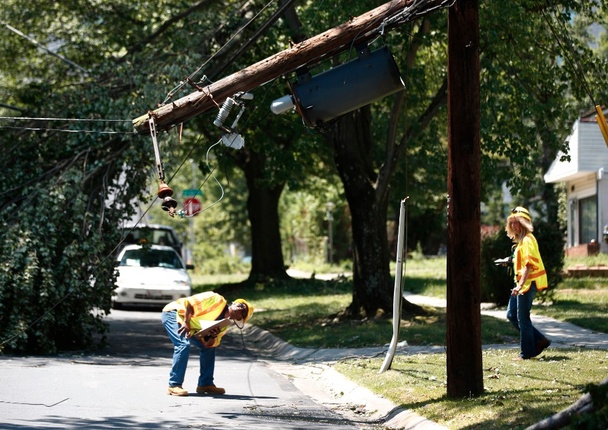
The Washington, D.C. area was recently hit by a rare derecho storm, which is essentially a land hurricane. Three million people were left without power, some for more than a week — during a record-breaking heatwave. Pepco, the electric utility that serves D.C. and parts of Maryland, quickly drew the public’s ire. Energy Policy Analyst William Yeatman thinks the jeering public should look in the mirror. A government-granted monopoly and rampant NIMBY-ism are not a recipe for success.
The Devil Test

One of my few regrets from my time at George Mason University is that I never took a class from Peter Boettke. To make up for it, I recently started reading his new book, Living Economics. His enthusiasm for economics and ideas is as contagious as ever. Even better, he shares many ways to teach those ideas; the book is for teachers as well as students.

One of those teaching ideas is the devil test. It is as good a way to explain the difference between positive and normative analysis as I’ve heard, which is why I’m sharing it here.

First, the positive-normative dichotomy. Positive is objective; normative is subjective. Positive is describing the world as it actually is; normative is describing how one would like the world to be. Think of it as the difference between is and should.

Now the devil test. As Boettke puts it on p. 28, “Using the example of minimum wage or rent control, I demonstrate to students that the analysis could be agreed upon by either an angel or a devil, but the angel and devil would differ on the normative implications.”

Clever. Now let’s put minimum wage laws to the devil test. The minimum wage gives some workers a raise, but it also prices other people out of the workplace entirely, especially younger workers. On net, minimum wage laws are a regressive wealth transfer. The absolutely poor give up their wages entirely so their slightly better-off fellows can get a raise. Those being the objective facts on the ground, angel and devil agree on the positive analysis.

But they part ways on the normative. The angel, who opposes regressive wealth transfers, opposes high minimum wage laws. The devil embraces them, and rejoices at every increase.

I’m not very far in to the book yet, but nuggets of wisdom like that abound.


Regulation of the Day 224: Competing with Taxis


A cool startup company called Uber operates in about half a dozen cities in the U.S. and Canada, and is growing fast. Think of them as an on-demand cab service. Using their smartphone application, you request a car, and a few minutes later a professional driver in a black Lincoln Town Car will pick you up where you stand and take you where you need to go. Their system even sends you a text message to let you know when your driver is about to arrive.

Customers who don’t like Town Cars can request an SUV instead. Since Uber keeps your credit card information on file, payment is both cashless and automatic, and you do not tip your driver.

It’s an innovative business model, and customers rave about the service. No wonder the local taxi industry in Washington, D.C. sees Uber as a threat. There are two ways they can deal with it. One is to compete. The other is to use regulation to drive it out of business. Guess which option they chose?

Back in January, a shady sting operation led by Taxi Commissioner Ron Linton nearly put Uber out of business in DC, even though it failed to find any rules violations.

Today, the D.C. City Council was set to vote on an amendment from Councilmember Mary Cheh that would make it illegal for Uber to charge less than five times the minimum cab fare in D.C., currently $15. This would put a stop to UberX, a cheaper service using less flashy cars. UberX is already available in New York, and the company is planning on bringing it to Washington.

The price for Uber X is a $5 base fee, plus $3.25 per mile, so any trip under 3 miles or so would be cheaper than what the rent-seeking amendment would require.

In other words, Cheh would rather her constituents to pay more for transportation instead of less. Even in a city as cynical as Washington, this is difficult to spin as pro-consumer.

After a heartening consumer uproar, Councilmember Mary Cheh withdrew her amendment. Another Councilmember, Jack Evans, said he received more than 5,000 emails encouraging him to oppose the rent-seeking amendment.

It may return as a separate bill in the fall, but for now, Uber has won and the rent-seekers have lost.

There is reason to be optimistic that future rent-seeking attempts will also fail. Most companies become invertebrates when government comes calling, but Uber seems to have a spine. Leading up to the day of the amendment’s scheduled vote, CEO Travis Kalanick said,”We won’t stand for a DC Council price floor that limits innovation and hurts consumers. Uber DC’s minimum fare is now dropped to $12 for the remainder of July in protest.”

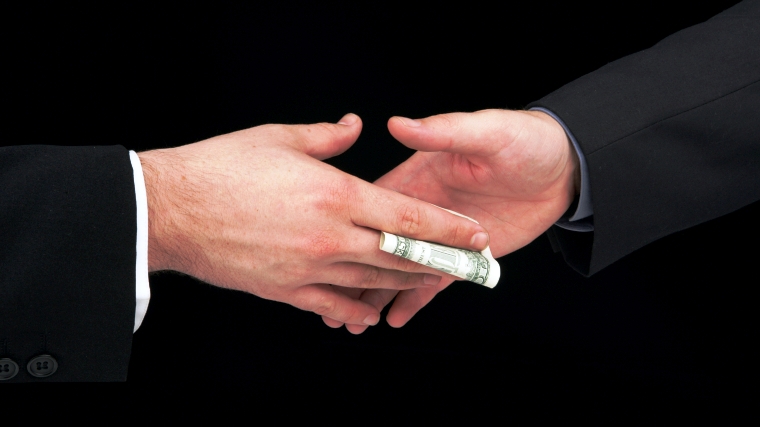
That’s the kind of attitude we like to see. D.C.’s taxi industry could learn a lot from Uber. Instead of purchasing corrupt politicians, they should offer a better service at a lower price. That way, everyone wins.

The State of American Manufacturing

Here’s a letter I recently sent to the New York Times:

Gregory Cowles’ June 29 “Inside the List” item on Dave Eggers’ new book contains a factual mistake. Mr. Eggers claims that American manufacturing is in decline; it isn’t. Output is actually near a record high.*

And that record wasn’t set in the 1950s or the 1970s. It was set in 2008. As the economy continues to slowly recover, America’s manufacturers will soon break their own record for sheer output. In other words, U.S. manufacturing is quite healthy.

It is also good news that it takes far fewer workers to produce this deluge of goods than it used to. Freed by machines from having to toil on a factory floor, today’s children can grow up to instead be almost anything they want. The state of American manufacturing today should warm the hearts of young parents everywhere –as well as Mr. Eggers.

Ryan Young
Fellow in Regulatory Studies
Competitive Enterprise Institute
Washington, D.C.

*Data available from the St. Louis Federal Reserve’s FRED database, http://research.stlouisfed.org/fred2/series/IPMAN?cid=3

The Environmental Impact of iPhones

One doesn’t usually think of electronic gadgets as being environmentally friendly. But Cato’s Marian Tupy makes a good point about the iPhone. By replacing legions of bigger, clunkier items like newspapers and magazines, alarm clocks, compasses, and even white noise machines, smart phones can drastically reduce the amount of raw materials people need to maintain a first world lifestyle.

It’s an underappreciated point about capitalism and the innovation it makes possible that should be made more often. Click here to read Marian’s post, which is accompanied by a cool graphic.

CEI Podcast: June 28, 2012: The Health Care Decision


Have a listen here.

General Counsel Sam Kazman shares his thoughts on the Supreme Court’s health care decision, the Commerce Clause, Congress’ taxation power, and more.

Quick Thoughts on the Health Care Ruling

The Supreme Court upheld the health care bill, as you’ve no doubt heard by now. Over at the Daily Caller, I add a few quick thoughts about how Randy Barnett’s Commerce Clause argument also applies to Congress’ taxation power, on the Court’s reluctance to check the other branches’ excesses, and how happy rent-seeking insurance companies must be right now.

Read the whole thing here.

The Good-Citizen Economist

Don Boudreaux’s latest column is about how economists can use their knowledge to make the world a better place. Worth a read.

Most people might think an economist’s greatest non-academic contribution could be advising policymakers, but that isn’t actually true. Any politician worth his salt will listen to the median voter, not to some pointy-headed academic telling him to do something unpopular.

No, an economist’s highest civic contribution is teaching that median voter. I wrote earlier that this person is a boob; he really, truly is. Familiarizing him with the basics of the economic way of thinking is a lifelong project. It is also a necessary one, even though it will almost certainly not pay immediate dividends the way that advising a president might.

But if the median voter were one day to learn how to spot, say, the broken window fallacy, then politicians will learn it, too. The resulting policy changes would make the world a better, richer, and more peaceful place. It’s a long game, but the only way to win it is to play.

“America’s scorn for skills is extraordinary.”

The Economist aptly sums up America’s immigration policy.

Don Boudreaux, on page 32 of his wonderful new book, writes that “Free societies build bridges, not walls.”As on so many issues, one is better off siding with Don and The Economist than with nativists.

Who Benefits from Paternalism?

One of the most neglected questions in the paternalism debate — largely unasked by both sides — is, who benefits? Harvard’s Ed Glaeser has an answer:

“Advocating soft paternalism is akin to advocating an increased role of the incumbent government as an agent of persuasion.”

-Edward L. Glaeser, “Paternalism and Psychology,” (Regulation vol. 29, no. 2, p. 38, 2006).

Paternalist policies have built-in public choice concerns that all but ensure  results very different from their intentions. Something Mayor Bloomberg and his fellow travelers should keep in mind.