Category Archives: Economics

Beware of Unaudited Benefit Analyses

One of the first things people learn when they move to Washington is that government agencies are just as self-interested as the rest of us. They have an eternal incentive to expand their missions and grow their budgets, and they behave accordingly. One consequence of this is that their cost-benefit analyses cannot be trusted. Because the analyses are done in-house instead of by an independent third party, you can bet that cost estimates will be understated, and benefit estimates will be overstated. Over at Investor’s Business Daily, Wayne Crews and I expand on that theme:

The biggest problem lies in the simple question: Benefits compared with what? Government is hardly the only regulator; governance doesn’t always require government. Competitive markets have disciplinary mechanisms — including reputation, loss, insurance, and liability — to punish bad actors. Consumers are harsh sovereigns. Private organizations like Underwriters Laboratory set high standards for its sought-after product certifications.

If a new government regulation codifies best practices for an industry, a common result is stasis. Technology and on-the-ground best practices evolve much more quickly than the Code of Federal Regulations does. When regulations hold back advances, they wipe out many potential benefits to consumers and producers alike.

Read the whole thing here. Also see Wayne’s new working paper, “Tip of the Costberg.”

Economic Freedom of the World

Non-economists tend to be much more skeptical about economic freedom than economists are. This in itself is a powerful case for free markets. But empirical data present a far richer and more compelling argument in favor of freedom. That’s why I look forward each year to the release of an updated edition of the Economic Freedom of the World report, jointly published by our friends at the Cato Institute and the Vancouver-based Fraser Institute, with help from more than 30 think tanks around the world.

The report is nothing if not thorough. James Gwartney, Robert Lawson, Joshua Hall, and a small army of contributors assemble data on 144 countries, ranging from regulatory burdens to property rights protections to the amount of corruption. In all, each country is measured on 42 variables. Then each country is given a score from 1 to 10. The freer the economy, the higher the score.

If economic freedom had no bearing on wealth creation, then plotting the scores against per capita GDP would show no distinct pattern. It would be a random blob. What the data actually show is anything but random. As it turns out, poor countries all have something in common: little economic freedom. Countries in the bottom quartile of economic freedom have an average per capita GDP of $5,188. They are clustered in the lower left hand side of our graph.

Rich countries all have something in common, too. They have high scores. Countries in the top quartile of economic freedom have an average per capita GDP of $37,691. That extra freedom results in a seven-fold increase in wealth. If you value human well-being, economic freedom is extremely important. People can only prosper if they’re allowed to.

If that seven-fold difference in living standards doesn’t move you at least a little bit at the margin in favor of free markets, you probably have a hard head, a cold heart, or both. It is the difference between modern sanitation and open sewers. It is the difference between having respectable medical care and not. It is the difference between subsistence farming and an industrial/service-based economy.

Gwartney, et al have been putting out Economic Freedom of the World reports since 1996, so by now they some good long-run data. The trends are encouraging on one front: worldwide, economic freedom has been on the rise for some time. In 1980, the global average score was 5.30. By 2010, it rose to 6.83. Eastern Europe, especially the Baltic region, and southeast Asia have been the biggest stars. The world’s two freest economies are Hong Kong (8.90) and Singapore (8.69).

China (6.16) and India (6.42) are slowly moving in the direction of economic freedom – neither is there yet – and as a result, hundreds of millions of people have already been lifted out of poverty. Liberalization is the most effective anti-poverty program the world has ever seen. More would be nice.

Domestically, the situation is less encouraging. Presidents Bush and Obama have sharply increased spending and regulation over the last decade, and have worsened the government’s already poor financial health. The result is that the world’s second freest economy in 2000 fell to 18th in 2010, the latest year for which data is available. America’s score has fallen from 8.65 in 2000 to 7.70 in 2010. It is the first time the U.S. has been outside of the top ten.

The Bush-Obama years have been very bad for economic freedom. There is a lot of regulatory excess to roll back, and a lot of debt to pay off. It will take time to undo all the damage, but it can be done. Perhaps the U.S. can look to the examples set by economically freer countries such as Canada, the UK, Finland, and, surprisingly, Qatar.

CEI Podcast for August 30, 2012: Delayed FDA Rules Should Be Scrapped


Have a listen here.

Major forthcoming rules from a variety of agencies have been delayed until after the November elections, possibly for political reasons. Among them are FDA food safety regulations with a $1.4 billion annual price tag. Senior Fellow Greg Conko argues that these rules should be scrapped altogether for two reasons: they will do little to improve food safety, and they will give large food corporations an unfair competitive advantage over smaller producers.

Congress Should Create a Repeal Committee

There are a lot of old, musty, unused, and obsolete laws on the books. Congress should repeal them as part of its basic hygiene, but members have little incentive to do so. A standing repeal committee could help. David Deerson and I look at how such a committee might work in a piece over at RealClearPolicy:

The job would be a big one. All in all, the Code of Federal Regulations (CFR) rambles on for 169,000 pages, many of which could be dispensed with and replaced with nothing. For example, one of the 50 titles in the CFR is dedicated entirely to the Panama Canal, which hasn’t been under United States jurisdiction since 1999. Elsewhere, an entire chapter consists of guidelines for dealing with the Y2K computer crisis that didn’t happen 12 years ago…

As old Washington hand Joseph Gibson points out in his book, A Better Congress, a repeal committee would almost certainly face strong opposition from members of other committees, who would see it as a threat to their own prerogatives. To soften this opposition, he suggests involving the committee with jurisdiction over the statute to be repealed through a secondary referral—subject to time limit to ensure that the committee cannot sit on a proposed repeal indefinitely.

Read the whole thing here.

The Opportunity Costs of War

“War costs more than its expense,” a wise writer has said; “it costs everything it stops from being earned.”

-Benjamin Constant, Principles of Politics Applicable to All Governments, p.281.

The wise writer in question is Jean-Baptiste Say, one the 19th century’s finest economists.

CEI Podcast for August 23, 2012: Bailouts as Corruption


Have a listen here.

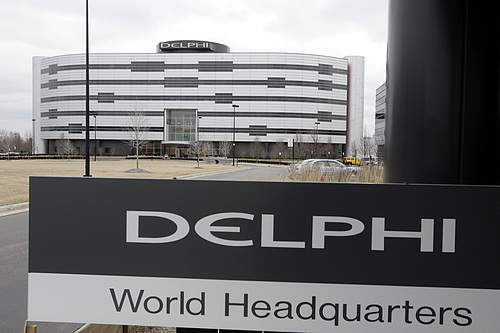
Senior Fellow Matt Patterson argues that when government is big and powerful enough to dispense favors like bailouts, special interests will flock to Washington to get a piece of the pie. Corruption is the inevitable result, as the GM/Delphi/UAW bailout showed. The only effective way to limit corruption, Patterson argues, is to limit government.

Regulation and the Green Bay Packers


In today’s Wall Street Journal, Kevin Clark offers a novel theory for the Green Bay Packers’ long run of success under GM Ted Thompson: a clone army.

Deep in the wilds of the Upper Midwest, Green Bay quietly has recruited a regiment of interchangeable players. The team’s novel idea is to find players—usually linebackers, tight ends or fullbacks—who can play in a variety of formations and situations because they’re virtually the exact same size and weight. The ideal specifications: 6 feet 2 and 250 pounds.

As Packers tight end D.J. Williams explained, only 46 players are allowed to dress for an NFL game. Every team has to cobble together its starters, reserves and special-teams players from those 46. “So if you can have one person doing what three people can do, it may only be 46 people dressed out there but it’s like having 60,” said Williams, who at 6 feet 2 and 245 pounds is roughly the magic size. “It’s a great advantage.”

It’s Moneyball adapted for football. Find a hole in the market — in this case, players who are a size that other teams shy away from — and mercilessly exploit it. Fellow regulatory scholar and (and fellow Packer fan?) Richard Belzer points out a lesson this teaches about regulation:

This is an excellent example of how market forces lead to efficient resource use, even under a stringent regulatory regime, so long as regulated parties are allowed to comply any way they see fit…

However, in other sports (e.g., stock car racing) performance standards give way to design standards that seek to prescribe every conceivable input into the production process. They inevitably fail for two reasons. First, there is always some production margin the regulators didn’t think of. Second, regulated parties invest extraordinary sums to search for and exploit loopholes.

In other words, regulation works better when it sets a standard without prescribing exactly how to meet that standard. The NFL has a 53-man roster limit, but it doesn’t prescribe how many linemen or quarterbacks the team must carry. That’s up to the GMs. Not only does this type of regulation open up another level of competition for fans to enjoy — front offices, not just players, trying to outmaneuver each other — but it prevents cheating. Lessons abound.

There Is Nothing Left to Cut


The city of Detroit’s water and sewerage department employs a horseshoer. He makes “$29,245 in salary and about $27,000 in benefits”.

The department does not use any horses.

The Economics of Spam

Timothy Taylor summarizes a fascinating new paper on the cat-and-mouse game between e-mail spammers and service providers:

For example, when many people label a message as “spam,” then it helps the anti-spam software to look for those words or URLs repeated in other messages, so that those messages can be filtered out. But then spammer responded with creative misspellings (like “VIagrA”) to trick the anti-spam filter, and used many different URLs that would all take the unwary to the same sales page.

In addition, the spammers use software to mark messages as “not spam,” thus trying to offset those who label them as spam. Rao and Reiley write: “In four months of 2009 Yahoo! Mail data, our Yahoo! colleagues found that (suspiciously) 63 percent of all “not spam” votes were cast by users who never cast a single “spam” vote.”

Talyor also kindly links a free download of the paper, published in the Journal of Economic Pespectives, which he edits.

CEI Podcast for August 16, 2012: Drought, Food Prices, and Ethanol


Have a listen here.

Severe drought in the Midwest has driven corn prices to record levels. Policy Analyst Brian McGraw argues that ending the federal government’s ethanol mandate could help families who are struggling to pay their heightened grocery bills. Under the mandate, nearly 40 percent of this year’s corn crop will be used for fuel instead of food.