Category Archives: Economics

Buchanan on the Nirvana Fallacy

Only the most naive of libertarians deny that market failures exist. Externalities, information asymmetries, and public goods problems, in their various combinations, regularly lead to outcomes that fall well short of the blackboard economist’s Pareto-optimal perfect competition model.

That’s all very well established. What isn’t is the leap in logic that most people make next: therefore, government. Well, maybe. But maybe not. If the goal is efficiency, it becomes an empirical question. But most economists treat government as a black box without its own desires, goals, and behavioral quirks. Government actors are people, too. This means that government is subject to the same failures as markets. Harold Demsetz called the common assumption of perfect government the Nirvana Fallacy.

Geoffrey Brennan and James Buchanan, without using its name, perfectly describe the Nirvana Fallacy on p. 130 of their 1985 book The Reason of Rules:

There is no necessary presumption that simply because markets are imperfect, political processes will work better. On the contrary, as public-choice theory reminds us, there are very good reasons for doubting the capacity of political processes to achieve Pareto optimality. The normatively relevant comparison is between two imperfect institutions.

In fact, built-in incentive problems ranging from concentrated benefits and diffused costs to higher discount rates and shorter time horizons mean that government is usually more imperfect than markets. People seeking to improve on market outcomes who do not factor this into their analysis are unlikely to succeed.

Bootleggers and Baptists

The great Bruce Yandle explains the theory of baptists and bootleggers in regulation in a new LearnLiberty video. Click here if the embedded video doesn’t work.

Prof. Yandle originally explained his theory in a famous article in Regulation magazine in 1983.

CEI Podcast for August 1, 2013: Is Washington the Next Detroit?

detroit_skyline
Have a listen here.

Fellow in Technology and Entrepreneurship Bill Frezza sees parallels between Detroit’s recent bankruptcy and the federal government’s own fiscal problems. Fortunately, he sees a way out.

Ronald Coase on Blackboard Economics

Supply-and-demand.svg
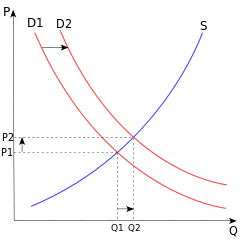
Anyone who has taken an introductory economics course has marveled at how easy it is to suss out the effects of different policies simply by manipulating the familiar intersecting Marshallian supply and demand curves. This geometric analysis is a useful tool for understanding how markets react to different types of changes. But using this approach to actually implement those changes in real life is another matter. Economics is a useful science, but it has its limits. This “blackboard economics,” as Ronald Coase calls it, exceeds those limits. In the introductory essay to his collection The Firm, the Market, and the Law, he explains (p. 19):

The policy under consideration is one which is implemented on the blackboard. All the information needed is assumed to be available and the teacher plays all the parts. He fixes prices, imposes taxes, and distributes subsidies (on the blackboard) to promote the general welfare. But there is no counterpart to the teacher within the real economic system.

Wise and humble words, often forgotten by economists who would rather be engineers.

The Million-Dollar Bus Stop Breaks

arlington super stop
Arlington, Virginia recently caused a national stir when it built a $1 million bus stop. The prototype “super stop” was intended to be a model for future stops along Columbia Pike. The road has been a target for multiple redevelopment efforts, including a possible 19th-century-style streetcar running along a fixed route.

While the super stop does have a heated concrete floor, it is only partially enclosed, so it doesn’t shelter riders from wind. Riders also quickly found out that its rakishly angled roof doesn’t keep rain out.

Today, the video screen that displays bus arrival times stopped working. The current heatwave proved too much for it to take. A new cooling fan should arrive in the next two weeks. Until then, the super stop will be a bus stop like any other, unless it rains, or is windy. Then it will be worse than other stops.

The Founding Free Traders

Here’s a letter I sent to the Racine Journal Times, my hometown paper:

Alderman Dan Sharkozy’s July 11 op-ed argues that the founding fathers built trade protectionism into the Constitution. He is mistaken. The Constitution, by banning trade restrictions between the states, created what was at the time the world’s largest free trade zone. This was on purpose.

Imagine if the only outside products that Racine’s consumers were allowed to buy must come from Kenosha. Or if companies like S.C. Johnson were allowed to export to Kenosha, or nowhere at all. Even Pat Buchanan would have to admit that these trade barriers would be less than helpful to Racine’s economy. Our forebears were similarly forbidden from importing or exporting most goods from anywhere but Britain; hence a certain revolution we just celebrated on July 4.

Adam Smith, who unlike Pat Buchanan was an economist, wrote of our natural “tendency to truck, barter, and exchange one thing for another.” The desire to forcibly stop people from doing so because they speak different languages or look different from each other comes from a morality that one can only hope remains foreign.

Ryan Young

Fellow in Regulatory Studies, Competitive Enterprise Institute, Washington, D.C.

Racine native, Walden III alumnus

The FTC’s Uneasy Relationship with Innovation

The Sherman and Clayton Acts form the backbone of U.S. antitrust policy. But another piece of legislation gives the government the power to regulate business practices on scales smaller than monopoly. In 1914, President Woodrow Wilson signed the Federal Trade Commission Act into law, which created the FTC. In particular, section 5 of the FTC Act  should give pause to America’s entrepreneurs. It states:

“Unfair methods of competition in or affecting commerce, and unfair or deceptive acts or practices… are hereby declared unlawful.”

Deceptive business practices should be, and are, illegal. Fraud has been against the law for a long time. The worrying part is the term “unfair methods of competition,” which the law never defines.

Congress could have enumerated which business practices were to be made illegal, but it chose not to. FTC Commissioner Joshua Wright, in a recent policy statement, cites (p.3) a Senate Committee Report on the 1914 FTC Act noting “that there were too many unfair practices to define, and after writing 20 of them into the law it would be quite possible to invent others.” So Congress delegated its lawmaking authority over to the new FTC.

Its primary reason for doing so was a then-fashionable Progressive Era emphasis on scientific, expert management. Congressmen, being generalists, lack the specialized knowledge that full-time agency employees have. Since the agencies know better, they should be given wide discretion as to defining what constitutes an unfair business practice.

A public choice theorist might add that delegation also allows Congress to shift blame away from itself when FTC actions prove unpopular. Delegation could also give members plausible deniability if the FTC decides to punish businesses for political or ideological reasons.

Commissioner Wright’s policy statement attempts to give more clarity to what business practices the FTC will and will not allow, and he even addresses some public choice concerns. Some of his major principles:

  • Consumer harm is the rationale for antitrust policies, not competitor harm.
  • Maintaining the competitive process is more important than maintaining certain individual competitors.
  • The FTC is not allowed to punish businesses to advance public policy goals. It may only intervene for economic reasons, such as when the competitive process is in danger.
  • An unfair business practice will have the effect of “increased prices, reduced output, diminished quality, or weakened incentives to innovate.” (p.7)

He goes on to provide several examples of business practices that are and are not allowed.

Wright also cites a wise quote from Ronald Coase, who won the economics Nobel in 1991. It neatly sums up the antitrust enterprise:

“[If] an economist finds something – a business practice of one sort or another – that he does not understand, he looks for a monopoly explanation. And as in this field we are very ignorant, the number of ununderstandable practices tends to be very large, and the reliance on a monopoly explanation, frequent.”

Coase’s observation has consequences for the tech sector, which relies heavily not just on new, continuously evolving technologies, but on new business practices that haven’t been tried before. Without a prior track record of how a practice works, it is difficult for the defendant to prove that it increases efficiency, or or for the plaintiff to prove it is anti-competitive. The result is a lot of legal uncertainty in a sector that already has more uncertainty than most.

Hopefully Wright’s efforts to clarify the FTC’s muddled enforcement criteria will bear some fruit. Until then, watch out, especially if you’re a tech company trying out new, untested business practice. As Coase has warned, It may come back to haunt you.

The Apple E-Book Ruling and Antitrust Absurdity

A recent ruling against Apple over its e-book pricing policies highlights the absurdity of antitrust laws, as I point out in the Daily Caller:

Under American anti-trust laws, there are three things no business should ever do. They are as follows: Charge higher prices than your competitors, charge lower prices than your competitors, and charge the same price as your competitors.

Higher prices mean that you have market power, and you are abusing it. Lower prices mean that you are trying to unfairly undercut your competition. And if you charge the same price as your competitors, that means you are colluding with them (although in economics, it can also be evidence of near-perfect competition).

It goes downhill from there. Read the whole thing here.

CEI Podcast for July 11, 2013: Farm Bill Controversy

farmland
Have a listen here.

Adjunct Fellow Fran Smith breaks down the controversy surrounding this year’s farm bill.

Regulation Causes Inflation

Over at the American Spectator, I show why an unintentional and unavoidable side effect of regulation is inflation:

In their book Democracy in Deficit, Nobel-winning economist James Buchanan and co-author Richard Wagner observed that government spending can create inflation “[t]o the extent that resources utilized by government are less productive than resources utilized by the private sector…” The same principle applies to regulation…

Imagine a simplified economy that consists of just two things: 100 dollars and 100 apples, with the price of an apple being one dollar each. If new regulations pass that make it harder to produce apples, the next year there are only 90 apples produced. Their price goes up from $1 to $1.11.

Read the whole thing here.