Category Archives: Economics

Donald J. Boudreaux – Globalization

Donald J. Boudreaux – Globalization

A 2008 book that greatly aided my work on trade during 2018. Highly recommended. Don hits a broad cross-section of trade issues, and plays both offense and defense with impressive skill. One takeaway that similar books don’t offer as clearly is that tradeoffs really are everywhere. Higher trade barriers might benefit some industries, but at the tradeoffs of consumer harm and slower growth. A lower trade deficit means less foreign investment, and less capital for domestic businesses. Don is relentless in consistently applying the economic way of thinking. An excellent example of rigor, clarity, and principle.

Best Books of 2018: Suicide of the West & Enlightenment Now

Re-posted from cei.org.

Review of Suicide of the West: How the Rebirth of Tribalism, Populism, Nationalism, and Identity Politics Is Destroying American Democracy (Crown Forum, 2018) by Jonah Goldberg and Enlightenment Now: The Case for Reason, Science, Humanism, and Progress (Viking, 2018) by Steven Pinker.

Goldberg’s “Suicide of the West” is a literate, snappily written, and often humorous defense of Enlightenment values and a broadside against populism. Steven Pinker’s “Enlightenment Now” has a similar theme, backed by an astounding collection of empirical data.

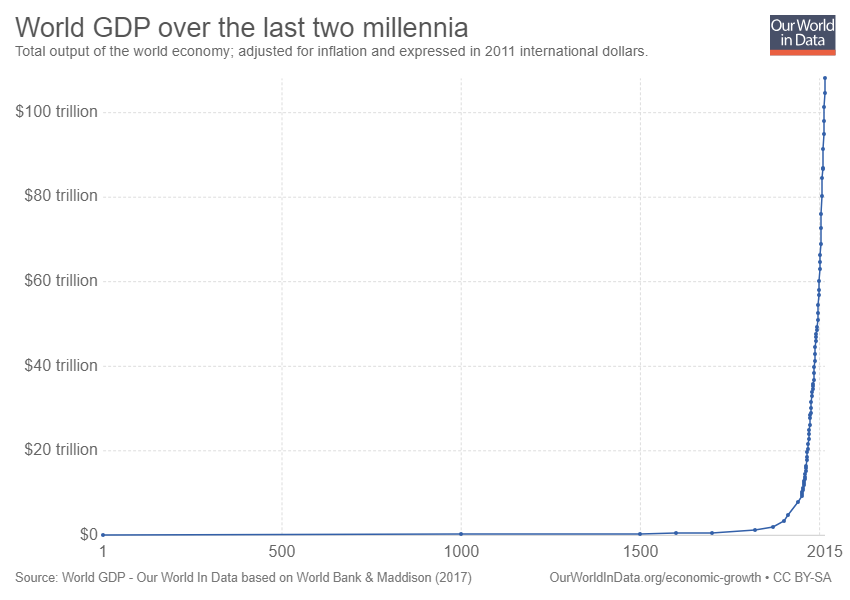
The cooperative social norms that make mass prosperity possible are completely unnatural, Goldberg argues. They are also the best thing that ever happened to humanity, as both argue. The current populist trend is a primal yawp from our baser instincts. It is also the biggest danger the Miracle faces, as Goldberg terms the post-1800 wealth explosion. The average person has gone from three dollars a day to more than 100 dollars a day, at least in countries that more or less adopted Enlightenment values and institutions.

If you doubt the degree of human betterment that has happened over the last two centuries, and how tightly intertwined they are with liberal values and institutions (liberal in the correct, classical sense), even a cursory skim of the first 345 pages of Pinker will show you in great detail. It really is a Miracle, and the most important development in human history since the invention of fire.

Readers who focus on the authors’ criticisms of President Trump are missing the bigger picture. The populist mindset, or rather emotion-set, and not this or that politician, is the biggest threat facing the modern Miracle. President Trump and his analogues in Italy, Mexico, Venezuela, Brazil, and elsewhere are temporary. But the gut-level impulses that make them electable are part of human nature. That is the concern here, not a president who will evanesce from the political scene after a term or two.

Populism is not a left or right phenomenon. It is an anti-Enlightenment worldview based on the immediate, the concrete, and the emotional. A lot of people feel that living standards are declining, and that people aren’t getting a fair shake. The data say otherwise, but a lot of people just feel that way, and form their beliefs accordingly. As Goldberg puts it:

Populist movements do tend to be coalitions of losers. I do not mean that in a perjorative sense but an analytical one. Populist movements almost by definition don’t spring up among people who think everything is going great and they’re getting a fair shake. (p.367)

For many people, their reptile brains override the more analytical parts. If you want to see populist emoting in action, a typical political argument on Twitter, Facebook, or cable news will do. Confirmation bias is rampant, contrary evidence is dismissed, language gets strident, and sometimes things get personal. The flames are as hot as they are shallow, whether they blow from the left or the right. But people still get sucked right in. We’re wired to behave that way.

Populism is having a moment right now, just as it did during the Progressive Era in the early twentieth century, and in the German romanticist movement in the century before that (though that movement was redeemed by some beautiful art and literature). Populism will have more moments in the future. The question is if its latest yawp is merely a blip, or a longer-run rejection of the ideas that make progress and modernity possible.

Like populism, Enlightenment thought works outside of a left-right framework. But unlike populism, it operates on a longer, more cool-headed time horizon. This type of liberalism—again, in the correct sense of the word—is more concerned with abstract cultural values and long-term institutional structures. Having the right long-term process matters more than immediately getting the right immediate results.

Pinker and Goldberg both argue that this patient, abstract approach also explains classical liberalism’s limited appeal. Even when our heads often know better, our hearts are still in hunter-gatherer mode.

It is hard to write news stories about the long-term trends the Enlightenment approach emphasizes. A struggling hometown business with a dozen employees is more emotionally compelling than the fact that worldwide, 137,000 people climbed out of absolute poverty today. One of these stories is rather more important than the other. But it doesn’t fire up people’s reptile brains, so it flies under the radar. Pinker illustrates this phenomenon with graph after graph on a relentless array of policy issues, and Goldberg shows how this affects the quality of both political debate and the politicians in that debate.

Goldberg and Pinker are not alone. Matt Ridley’s The Rational Optimist and Michael Shermer’s The Moral Arc are other quality entries in the genre. Both authors, especially Goldberg, acknowledge the influence of CEI Julian Simon Award winner Deirdre N. McCloskey and her Bourgeois trilogy.

Readers interested in primary sources will find some of the best Enlightenment thought in Adam SmithDavid HumeThomas JeffersonF.A. Hayek, and James Buchanan. Populists, knowingly or not, draw from sources ranging from Jean-Jacques RousseauGoethe, and Nietzsche up to twentieth century progressives such as Louis Brandeis and Ralph Nader, as well as right-wing populists such as Pat Buchanan and Steve Bannon. Pinker argues that President Trump’s world view is, probably unknowingly, eerily similarly to Nietzsche and Rousseau. Understanding them imparts a better understanding of what makes the current administration tick.

If you don’t have the time to read both books, Reason’s Nick Gillespie had an enlightening conversation with Goldberg in June, and Pinker gave a lecture at the Cato Institute in March. There is some overlap between the two books, but they are far from redundant. The authors’ different personalities and different emphases make for two different, complementary, and important works.

Jagdish Bhagwati – In Defense of Globalization

Jagdish Bhagwati – In Defense of Globalization

Bhagwati’s most famous book, published in 2004. A general-level look at globalization. He very clearly explains that the remedy to many global social ills—from child labor to intellectual property theft—is not with trade sanctions. For example, 95 percent of the products of child labor never leave their country of origin, so trade embargoes would do almost nothing to make child labor less profitable. In fact, by slowing growth and reducing other opportunities, such measures make child labor rates worse, not better.

The economic prosperity made possible by globalization and free trade is what allows parents able to afford to send their children to school instead of putting them to work in the farm or factory. Free trade improves lives; trade barriers are at best virtue signaling, and hurt the very people they intend to help.

Bhagwati applies a similar approach to issues across the spectrum, from environmental quality to corporate governance. The book is starting to show its age a bit at this point, but it remains highly relevant.

Best Books of 2018: Factfulness

Re-posted from cei.org.

Review of Factfulness: Ten Reasons We’re Wrong About the World-and Why Things Are Better Than You Think (Flatiron Books, 2018) by Hans Rosling with Ola Rosling and Anna Rosling Rönnlund.

Think Julian Simon, Matt Ridley, and Steven Pinker’s data-driven optimism, mixed with Michael Shermer and Bryan Caplan’s awareness of human cognitive biases, as told by a kindly, avuncular Norwegian. The book reads easily, is visually savvy, and has a friendly, non-polemic tone.

Rosling, who passed away of cancer while writing this book, wanted it to be his last, grand statement. He wants people to simultaneously believe two things: that the state of the world can be both bad and getting better. Hundreds of millions of people still live in absolute poverty. But for the first time in history, the global absolute poverty rate is now below 10 percent. Improvement is coming so fast that the number of people in poverty is going down even as population increases.

Most people think in binaries—left and right, good and bad, and so on. Rosling encourages nuance. Rather than a simple binary of rich and poor countries, Rosling uses a four-level framework. Level one is absolute poverty—subsistence farming, little or no electricity, crude sanitation, high disease rates, and low life expectancy. Level four is where the rich countries are—the Anglosphere, most of Europe, and the Asian tigers. When people think of rich and poor countries, they tend to think of either level one or level four countries. As it turns out, most people in the world are middle class—they live in level two and level three countries. In varying degrees, these countries offer better health and sanitation than level one countries, along with some industrial development, education for children instead of labor, some degree of political and lifestyle freedom, and so on.

One thing I especially like about Rosling’s framework is that countries can level up. Prosperity is a process, not an on/off switch. And the number of levels is theoretically infinite. Rosling chose to use four levels, but a more granular analyst can use as many levels as they want. More importantly, it may well be that what Rosling describes as a level four country today will be startlingly poor a century from now. Most of the world will have leveled up to the equivalent of level five or higher.

Rosling also provides an important public service in teaching people how to look at data. The most important example is the lonely number fallacy:

Never believe that one number on its own can be meaningful. If you are offered one number, always ask for at least one more. Something to compare it with. Be especially careful about big numbers. (p. 130)

I used this advice in my review of Trump economic advisor Peter Navarro’s coauthored book with Greg Autry, Death by China. The data won’t allow Navarro and Autry to make the case they want, so they have to resort to trickery:

Navarro and Autry give just such a lonely number when they argue that, “On [President George W.] Bush’s watch alone, the United States surrendered millions of jobs to China.” (p. 10) Let’s give that large, lonely number some company. In January 2001, when Bush took office, the U.S. labor force was 143.8 million people. When his term expired in January 2009, it was 154.2 million people, despite the economy being in recession. The data are here.

So even if “the United States surrendered millions of jobs to China,” those losses were outweighed by gains elsewhere, most of which have nothing to do with trade policy.

Keep this in mind whenever you see a scary number in a news story—if it doesn’t come with company or context, it’s analytically useless at best.

Rosling’s book has been warmly received by a politically diverse audience, and rightfully so. Rosling’s optimism is based on widely available data, not his ideological priors. In areas where the world is not improving, he is quick to point to them as a reform priorities.

More importantly, the data show that the world’s arrows are almost all pointing up. Few people realize this—as Rosling humorously shows, most people perform worse than chimpanzees on a simple multiple choice quiz about human well-being. The errors are not random—they are overly pessimistic in participants across countries and in every demographic category.

Rosling was as effective as anyone in trying to correct pessimistic bias with facts, not least through his easy-to-understand bubble charts. Rosling’s son, Ola Rosling, and daughter-in-law, Anna Rosling Rönnlund, are carrying on his work with their group Gapminder—see, for example, their tour of Dollar Street that shows the various gradations between countries in levels one through four.

Things are bad in many places, but getting better. In fact, for most people in most places, living standards today are the best they’ve ever been. It is up to us to see that the process continues. To do that, we need to be aware of both the facts on the ground and our inborn cognitive biases that prevent us from seeing those facts clearly. From there, action. Use your head, not just your heart. You need both.

Jagdish Bhagwati – Free Trade Today

Jagdish Bhagwati – Free Trade Today

Another lecture collection, and a sequel of sorts to Protectionism. His arguments against two current fashions in protectionism—adding trade-unrelated labor and environmental standards to trade agreements, and weaponizing trade barriers to advance other trade-unrelated causes—are needed now more than ever now that a protectionist administration is in power. And his caution against the complexity of today’s thicket of preferential trade agreements has proven prophetic.

Jagdish Bhagwati – Protectionism

Jagdish Bhagwati – Protectionism

A collection of lectures on trade Bhagwati gave in Sweden in the late 1980s. Besides the occasional flash of wit, Bhagwati points out protectionism’s ill fit for a modernizing world economy. Thirty years later, his insights still ring true.

William J. Bernstein – A Splendid Exchange: How Trade Shaped the World

William J. Bernstein – A Splendid Exchange: How Trade Shaped the World

Probably the best book of its kind. A global history of trade from ourearliest hunter-gatherer days until the present. Bernstein tells some good stories,  and knows his economics. He calls out bad actors, such as the Spanish, Dutch, and especially the Portuguese and Belgians. Unlike some other scholars, he doesn’t obsess over them, preferring to attempt to understand than to preach.

Bernstein also highlights the importance of non-human factors such as disease in the story of trade; people have exchanged more than just goods, ideas, and soldiers over the years. Bernstein has a general ethos of kindness and openness, but doesn’t come across as particularly ideological. Pairs well with Douglas Irwin’s Against the Tide, which is an intellectual history of trade, rather than Bernstein’s cultural and narrative history.

Gary Becker – Economic Theory, Second Edition

Gary Becker – Economic Theory, Second Edition

The book version of the late Nobel laureate Becker’s graduate level intro to microeconomics course at the University of Chicago. A little heavy on geometric and algebraic analysis for my taste, but still a valuable brush-up on fundamentals. As a non-academic, I don’t keep my chops sharp through teaching, so books like this are very useful. Even just thinking through the exercise questions for each chapter are a good intellectual workout.

Becker is best known for his work on the economics of discrimination, crime and punishment, and other non-traditional areas, and was one of the founders of the economics imperialist movement, which applies economic thinking and methodology to other disciplines. Other leading “imperialists” include Gordon Tullock, Levitt and Dubner of Freakonomics fame, and my former professor Peter Leeson, author of, among other books, The Invisible Hook: The Hidden Economics of Pirates, and the more wide-ranging WTF?!: An Economic Tour of the Weird.

A personal note: I briefly met Becker at an American Economic Association annual meeting in the mid-2000s. Milton Friedman had recently passed away, and Becker was chairing a panel to honor Friedman and his accomplishments.

I was standing near the door handing out flyers for a new Cato Institute book about Friedman’s education reform ideas (I was at the conference to help work Cato’s booth) when Becker walked up to me and asked what the room’s capacity was. Directly behind him was a sign that said in large lettering, “Room Capacity: 647” or so. I told him the number without mentioning the sign, and he thanked me and went on his way. I didn’t let on that I recognized him, since he was obviously busy. But to Becker’s credit, he didn’t act like a big shot. And that is how I accidentally met a Nobel-winning economist.

An Antitrust Analogy

One of the biggest problems with antitrust regulation is that the statutes are so vague it can be difficult to tell what is legal and what isn’t. From p. 28 of Robert Bork’s 1978 book The Antitrust Paradox: A Policy at War with Itself:

To put the matter roughly, lawyers forming a partnership could lawfully agree on fields of exclusive specialization (which is market division) and the fees each should charge (price fixing), while the same lawyers, if they were not in a partnership, could not do these things lawfully.

The same logic applies to anything a company does in-house. Hiring an in-house accountant instead of using an outside firm is a form of vertical merger. So is hiring cleaning or cafeteria staff instead of using contractors. More than a century of case law has not settled the matter, at least for companies above a certain size (which also hasn’t been defined). The uncertainty can make companies hesitant to make efficiency-enhancing decisions that might benefit consumers.

Unemployment, Taxes, and Spending

Alongside Charles W. Baird, whose writing I have enjoyed since my high school and college days in FEE’s The Freeman magazine (then called Ideas on Liberty), I am quoted in a Heartland Institute piece on unemployment and how to keep it low.