Category Archives: Economics

Deficit Hits $1,400,000,000,000

bush-obama
President Bush’s $400 billion budget deficits were the largest in history. He deserved every bit of criticism he got for his big-spending ways.

Now comes news that the budget gap is up to $1.4 trillion. President Obama has broken Bush’s record by a trillion dollars. It took him less than a year.

A trillion.

Wow.

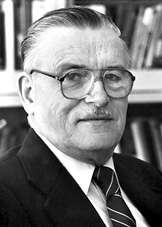
Happy 90th Birthday to Nobel Laureate James Buchanan

buchanan

James Buchanan was one of the founding fathers of public choice theory, along with Gordon Tullock and some others (Bill Niskanen, Mancur Olson, et al). Public choice, despite the obscure name, is quite simple. It says that market behavior does not end where government begins. Politicians and other government actors are not angels. They are just as self-interested as you or I. Public choices are subject to the same incentives as private choices.

Buchanan’s simple, powerful insight won him the economics Nobel in 1986. Don Boudreaux made some brief remarks at Buchanan’s recent 90th birthday celebration. They’re worth reading, especially if you aren’t familiar with Buchanan and his very distinguished place in the history of economic thought. Also worth reading is his Nobel lecture.

Goldman Sachs and Crony Capitalism

Over at NPR, George Mason professor Russ Roberts looks at why Goldman Sachs prospers as Bear Stearns and Lehman Brothers die, despite following more or less similar business practices. Key point:

[C]apitalism is a profit and loss system. The profits encourage risk-taking. The losses encourage prudence. If the taxpayer almost always eats the losses for the losers, you don’t have capitalism. You have crony capitalism.

The content deserves close study. So does the delivery; Russ is one of the clearest economics writers there is.

Robert Reich Gets It

robert_reich

Some of the consequences of increasing government’s role in health care are easy to predict. One is that cutting costs requires cutting the amount of care. That means rationing. People judged not deserving of care would be denied it.

Another is that if government uses its increased bargaining power to lower drug prices, there will be less money for R&D. That means less innovation. That could well mean the end of increasing life expectancies.

Some people see these consequences and oppose more government in health care (I refuse to call President Obama and Congress’ proposal a reform; that word implies improvement). Others see those same consequences as reasons for supporting proposed legislation.

Today’s issue of OpinionJournal’s Political Diary (requires paid subscription) shows that Robert Reich, who supports government-run health care, realizes its effects on rationing and innovation, supports it anyway, and said so in a public speech at UC Berkeley in 2007.

Mr. Reich told the Berkeley youngsters: “You — particularly you young people, particularly you young healthy people — you’re going to have to pay more. And by the way, if you’re very old, we’re not going to give you all that technology and all those drugs for the last couple of years of your life to keep you maybe going for another couple of months. It’s too expensive . . . so we’re going to let you die'”

Reich goes on:

“I’m going to use the bargaining leverage of the federal government in terms of Medicare, Medicaid — we already have a lot of bargaining leverage — to force drug companies and insurance companies and medical suppliers to reduce their costs. What that means, less innovation and that means less new products and less new drugs on the market which means you are probably not going to live much longer than your parents.”

Whether you support more government in health care or not is up to you. But it is not disputable that those consequences exist. They should be factored into your opinion. Supporters of proposed legislation should acknowledge the effects of their ideas. Instead, they usually run away from them.

Kudos to Robert Reich for the intellectual honesty he displayed in his speech. More, please.

Regulation of the Day 61: Big Screen TVs – Mankind’s Doom!

bi screen tv

On November 4, California regulators may vote to ban big-screen televisions. The large sets use more energy than they would prefer.

Commissioner Julia Levin claims the ban “will actually save consumers money and help the California economy grow and create new clean, sustainable jobs.”

It is easy to imagine the ban costing tv manufacturing jobs; less so the jobs that would take their place.

Fortunately, the ban isn’t terribly enforceable. Consumers can just drive to Arizona, Nevada, or Oregon to get the kind of tv they want.

A final point on semantics: what does “sustainable” even mean, anyway? It is a meaningless buzz term, right up there with “synergy” and “paradigm.” This decade’s equivalent of “social justice.”

If anything, use of the word “sustainable” signals that a person knows not of what they speak. If you’re unable to defend a proposal on the merits, just use fashionable buzz words that poll well.

In Which My Colleague Drew Tidwell Hits a Home Run

“The increase in the world’s population represents our victory against death.”
-Julian Simon

Eloquently expressed in a minute and change.

Regulation of the Day 59: Pharmacy Interns in Colorado

pharmacist
It is illegal to intern for a pharmacist in Colorado without a license. You can apply for one here.

Markets and Special Interests

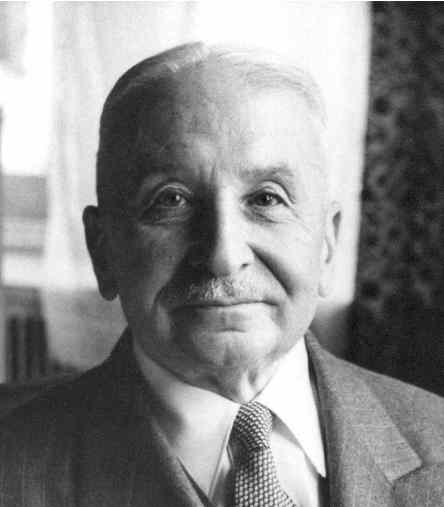
ludwig-von-mises
Detractors of capitalism decry that it caters to special interests. The opposite is actually true. Just look at what’s happened in the last year.

Most of Wall Street came to government asking for a bailout when the government-created housing bubble popped.

The Big Three automakers also went to Washington for largesse when their customers came to prefer Toyotas and Hondas.

Health insurance companies stand to make a killing if Obamacare passes.

T. Boone Pickens and Al Gore would make millions from environmental legislation.

Ludwig von Mises explained the reason for all of this corrupt behavior with a single sentence back in 1949: “It is precisely the fact that the market does not respect vested interests that makes the people concerned ask for government interference.”
Human Action, 4th Edition, p. 337.

This Year’s Economics Nobel Winners

ostrom

Congratulations to Elinor Ostrom and Oliver Williamson. Both are highly deserving.

Ostrom’s work shows that market behavior emerges in settings not usually thought of as markets (condo associations, within government  etc.).

Williamson has made brilliant contributions to the New Institutional Economics (NIE), which says that changing the rules of the game (the existing institutions) will alter the behavior of the people affected. Williamson’s work applies the economic way of thinking to deduce exactly how, with an emphasis on how transaction costs affect the interplay between individuals and firms.

President Obama Wins Nobel Peace Prize

obama-smile_1107663i

It is ironic that the winner of the Nobel Peace Prize wants to send more troops to Afghanistan. Even so, President Obama is in a prime position to work wonders for the cause of peace. He can institute free trade in America.

Trade is the ultimate act of peace. If someone has something you covet, you are faced with a choice. You could take it from him by force. Or you could trade for it. The first option is the root of all war. The second is the root of all peace.

Trading with people instead of stealing from them is a sign of respect. It says you honor their rights as an individual. It says you reject the use of force. It says you choose persuasion over coercion.

If he wants to earn the prize he has been given, President Obama should scrap those tire tariffs against China. Publicly retract his blustery campaign statements about renegotiating NAFTA. Repeal every tariff, every antidumping duty, and every last restraint on trade in the books.

Nothing promotes peace and civility more than commerce. After all, killing the customer is very bad for business.