Category Archives: Economics

Regulation of the Day 69: Owning More than Three Cats

Crazy_Cat_Lady

A new ordinance in Dudley, Massachusetts makes it illegal to own more than three cats without government consent. (Hat tip: Drudge)

Having solved all of the community’s other problems, regulators now have the time to turn their attention to what is apparently a spat between neighbors. One resident is upset that the 15 cats (!) owned by a neighboring woman have been sullying his yard.

I might suggest that Coaseian bargaining might be a better solution than a law.

A fiat decision in favor of one party will leave at least one disputant dissatisfied. In this case, the cat lady is looking to move to a different town. Why not treat both parties as equals with rights to need to be respected? That approach is far more likely to generate an outcome everyone is happy with.

Presumably the offended neighbor is willing to pay some amount to keep the cats off of his yard. The cat lady is also willing to pay some price to keep her cats. Let them bargain, then. Maybe they can split the cost of building a fence. Whatever they agree on. The point is that there is a missing market here.

Allowing the parties to bargain creates that missing market. It allows the neighbors to come to a peaceful, mutually agreeable solution. Passing a law favoring one over the other is simply unfair.

Why We Don’t Know What We Don’t Know

Here’s one theory, courtesy of my recent Steven Landsburg kick:

Steven Pinker points out that understanding the origin of the universe is not a terribly useful skill; it confers no reproductive advantage, so there’s no reason we should have evolved brains capable of thinking about such a question. Nature is too good an economist to invest in such frivolities.

-Steven Landsburg, More Sex Is Safer Sex: The Unconventional Wisdom of Economics, p.190.

I think there’s something to it. Though our ignorance of the answer to the question probably has more to do with its sheer magnitude.

Regulation of the Day 68: Ironing Tables

ironing table

Regulation begets rent-seeking. When government assumes the power to regulate imports, domestic firms will lobby to use that fact to their advantage.

Case in point: Home Products International (HPI), an American company, makes ironing tables. So does Hardware, a Chinese company. I personally have no idea which firm makes the better ironing table. That’s for consumers to decide.

Or at least it should be for consumers to decide. But it doesn’t always work that way in practice. HPI seems to have already made that decision for us.

At HPI’s request, the International Trade Administration will continue to add anti-dumping duties to the price of the Chinese-made ironing tables. That way HPI doesn’t have to worry as much about competing. Sorry, consumers.

Is this fair? Of course not. But all too often, it is how regulation works.

Lomborg Strikes Again

malaria_special

Some people want to cure malaria by reducing carbon emissions. Others want to cure it with mosquito nets, better health care and sanitation. Which is a more effective use of our limited resources? The answer is important; malaria kills about one million people every year. Getting it wrong costs lives.

According to Bjørn Lomborg, “For the money it takes to save one life with carbon cuts, smarter policies could save 78,000 lives. ”

Let’s pursue those smarter policies, then.

Taxes without Borders

stock_pile-of-coins

This month’s issue of Info Tech & Telecom News contains an article by yours truly on certain states’ attempts to collect sales taxes from out-of-state businesses. Key point:

Economists have known for a long time that when you tax something, you get less of it. Apparently some state legislators want less commerce in their states.

Washington and Wall Street: Best Kept Separate

Russ Roberts’ testimony in front of the House Committee on Oversight and Government Reform is superb. Read it (it’s short). Wall Street deserves plenty of blame for the financial crisis. But Washington deserves more:

When your teenager drives drunk and wrecks the car, and you keep giving him a do-over—
repairing the car and handing him back the keys—he’s going to keep driving
drunk. Washington keeps giving the bad banks and Wall Street firms a do-over. Here are
the keys. Keep driving. The story always ends with a crash.

I’m mad at Wall Street. But I’m a lot madder at the people who gave them the keys to
drive our economy off the cliff.

Regulation of the Day 65: Weighing Animals

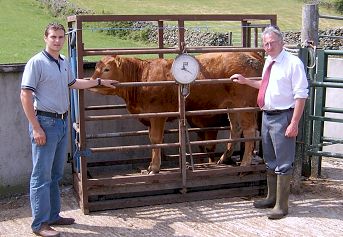
weighing_calves

If you sell poultry or livestock, it’s a good idea to weigh them first. Makes it easier for buyer and seller to agree on a fair price.

For some reason, seven sections of the Code of Federal Regulations (see here, here, here, here, here, here, and here) deal with the use and maintenance of the scales used to weigh the animals, the people operating them, proper procedure, and finally, weighing the animals again.

Is this really a federal matter? If so, what isn’t?

Regulation of the Day 64: Starting a Business in Sacramento, California

assembly-line
Sit back and think for a minute about what man has the potential to create. Think about the magnitude of our achievements in just the last century. Life expectancy has doubled. Population has sextupled. For the first time in history, famine is primarily a political phenomenon, not a natural one. The human mind is capable of creating limitless, endless wealth.

Unfortunately, the human mind is nearly as adept at preventing that wealth from being created. Sacramento, California is home to some of the experts.

Katy Grimes researched what it would take to open a small factory there. “By the time I discovered that 22 government agencies would be involved in permitting and licensing, I realized that Sacramento is not an easy place to do business,” she writes.

She’s right. And when doing business is difficult, there is less of it. That means less wealth is created. Opportunities vanish into thin air. One of the tragedies of over-regulation is the amount of wealth, opportunity, and prosperity that never come to pass. Think of how many plants are never opened because of over-regulation. How many jobs are never created. How many products are never invented.

Supporters of strict business regulations say the rules keep people safe. Maybe that’s true. Maybe it isn’t. But they do keep us poorer.

What Does Protectionism Protect?

Classic reductio ad absurdum.

Modern technology could easily grow oranges and grapes in hothouses in the arctic and subarctic countries. Everybody would call such a venture lunacy. But it is essentially the same to preserve the growing of cereals in rocky mountain valleys by tariffs and other devices of protectionism while elsewhere there is plenty of fallow fertile land. The difference is merely one of degree.

Ludwig von Mises, Human Action, p. 395.

Is Cognitive Dissonance an Insured Condition?

brain-scan_530
Rep. Diana DeGette is, without any apparent cognitive dissonance or trace of irony, proposing:

1) Require, by law, that people buy health insurance.

2) Remove health insurers’ antitrust exemption. But only after legally requiring everyone to buy their product.

You figure it out. Insurers are set to receive one of the largest coroporate welfare grants in history. No wonder so many firms are salivating over this year’s health care legislation. But they may pay an antitrust price for their legally mandated windfall.

Perhaps this is a warped Washington version of what one hand giveth, the other taketh away.