Category Archives: Books

Advice for Legislators – and Economists

Wise words:

“Whether one is made happy or unhappy by the conclusions of economics does not affect the validity of these conclusions. And these scientific conclusions should not be presented in a manner that might suggest that they did make the economist happy (or otherwise).”

-Israel Kirzner, Ludwig von Mises: The Man and His Economics, p. 165.

J.B. Bury on Freedom of Thought

A noble sentiment:

“If the history of civilization has any lesson to teach it is this: there is one supreme condition of mental and moral progress which it is completely within the power of man himself to secure, and that is perfect liberty of thought and discussion. The establishment of this liberty may be considered the most valuable achievement of modern civilization, and as a condition of social progress it should be deemed fundamental.”

-J.B. Bury, A History of Freedom of Thought, p. 182.

Tom Palmer on the Arab Spring

This video is well worth the few minutes it takes to watch. Click here if the embedded video below doesn’t work.

Tom also plugs a new book he edited, The Morality of Capitalism. I’m a little over half way through it right now, and it is excellent. You can buy a hard copy here, and download a free electronic version (PDF format) here.

Bourgeois Dignity

Deirdre McCloskey thinks that a shift in rhetoric and public opinion is what made possible what she calls the Great Fact – the tenfold rise in global per-capita GDP from $3 per day in 1800 to around $30 today, and growing. The average person in rich countries make over $100 per day, more than a 30-fold increase. Remember, even the mighty U.S. was once a $3 a day nation. We had to start somewhere.

Sometime around the Enlightenment, public opinion shifted from hostility to entrepreneurship and innovation to at least a grudging acceptance. We liberals need to take great care to keep public opinion tolerant, or else the Great Fact could become a relic of history. Traders can only trade, and inventors can only invent, when people let them. Unfortunately,  the clerisy (McCloskey’s word for the intellectual class that drives long-run public opinion) is strongly anti-commerce, as she points out:

Such antibourgeois people (many of them my good friends) do not believe the bourgeois axiom that a deal between two adults has a strong presumption in its favor, practically and ethically and aesthetically. They deny hotly that allowing such deals and honoring their makers has resulted in the modern enrichment of the poor. They think instead quite against the historical evidence, that governments or trade unions did it.

Deirdre McCloskey, Bourgeois Dignity: Why Economics Can’t Explain the Modern World, p. 397-98.

The liberal’s job, then, is to legitimize the entrepreneur and the innovator, morally, ethically, and aesthetically, as well as economically. That wonderful project we call modernity hinges on it.

New Bastiat Book

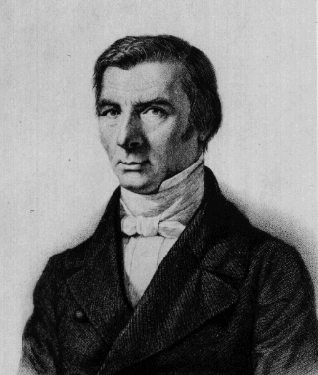
Frederic Bastiat, despite having died in 1850, just came out with a new book. The Man and the Statesman: The Correspondence and Articles on Politics, was just published by Liberty Fund. It’s available in hard copy for Liberty Fund’s typical low price, or for free in PDF format.

A majority of the letters and articles in the book have never before been translated into English.

Bastiat has five more books on the way; Liberty Fund is in the process of publishing his collected works in 6 volumes.

George Will on Liberalism’s Ascendancy

If anything good came out of the Bush years, it’s that they disabused a lot of people of conservatism. George Will, traditionally a solid conservative, is among them. He has always had a latent liberal streak (“liberal” in the word’s original sense). It began surfacing more frequently early in the Bush years as a reaction to that administration’s illiberalism.

Now, during what policy-wise is Bush’s third term, he has this to say in a column about Nick Gillespie and Matt Welch’s new book The Declaration of Independents:

America is moving in the libertarians’ direction not because they have won an argument but because government and the sectors it dominates have made themselves ludicrous. This has, however, opened minds to the libertarians’ argument.

The essence of which is the commonsensical principle that before government interferes with the freedom of the individual, and of individuals making consensual transactions in markets, it ought to have a defensible reason for doing so. It usually does not.

The Believing Brain

Reason‘s Ronald Bailey reviewed Michael Shermer’s excellent The Believing Brain for The Wall Street Journal. If you don’t feel like reading all 340 pages, Bailey summarizes them well:

Superstitions arise as the result of the spurious identification of patterns. Even pigeons are superstitious. In an experiment where food is delivered randomly, pigeons will note what they were doing when the pellet arrived, such as twirling to the left and then pecking a button, and perform the maneuver over and over until the next pellet arrives. A pigeon rain dance. The behavior is not much different than in the case of a baseball player who forgets to shave one morning, hits a home run a few hours later and then makes it a policy never to shave on game days.

It’s surprising how much of human behavior can be explained by what Shermer calls patternicity and agenticity. Like pigeons, we seek patterns and therefore find them. But we also have the ingrained instinct to believe that some kind of agent has to be behind those patterns: god, a politician, somebody, anybody. Every design must have a designer.

No wonder Hayekian spontaneous order polls so poorly, despite having the benefit of being true. Lessons abound.

Nietzsche on Women

I am currently engrossed in William L. Shirer’s The Rise and Fall of the Third Reich. It is a superbly well-written — and chilling — history of one of illiberalism’s purest expressions.

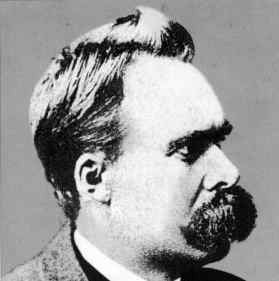
Nietzsche, the unthinking man’s favorite philosopher, had a large influence on Hitler’s thought. He contributed, among other things, to the National Socialists’ less-than-enlightened views on women. Discussing that influence in a footnote on page 100, Shirer gives two Nietzsche quotes worth repeating:

Men shall be trained for war and woman for the procreation of the warrior. All else is folly.

And, from Thus Spake Zarathustra:

Thou goest to woman? Do not forget thy whip!

Bertrand Russell, ever sharp of tongue, and knowing of Nietzsche’s lifelong aversion to the fairer sex, rebutted on p. 730 of his History of Western Philosophy:

[N]ine women out of ten would get the whip away from him, and he knew it, so he kept away from women, and soothed his vanity with unkind remarks.

Game, set, match.

Quotation of the Day

Fortune can bestow no higher benefit upon us, than the discord of our enemies.

-Tacitus, Germania, 33.179

Schumpeter on Why People Are Bad at Arguing

It’s because people rely on ad hominems and straw-man arguments. These leave the opponents’ actual arguments untouched, and resolve nothing.

So true is it that, in science as elsewhere, we fight for and against not men and things as they are, but for and against the caricatures we make of them.

-Joseph Schumpter, History of Economic Analysis, p. 90.