Category Archives: Books

Best Books of 2018: Clashing over Commerce

Re-posted from cei.org.

Review of Clashing over Commerce: A History of U.S. Trade Policy by Douglas Irwin (University of Chicago Press, 2017).

Douglas Irwin’s magnum opus, published at the end of 2017, is already a classic. Given the prominent role trade is playing in politics right now, it is also very timely. At almost 700 pages, “Clashing over Commerce” looks intimidating. But once you start reading, it isn’t. Irwin tells a coherent story that spans generations, showcasing the prominent personalities in the great trade debate, their larger philosophical and economic arguments, and the legislation and policies they fought over. It hits on all levels.

At the same time, Irwin’s chronological structure also makes it easy to focus on one area of interest. So readers, take advantage of the index and the table of contents if you don’t care to read the whole thing.

Interested in how tariffs contributed to the Civil War? Turn to chapter 4. Interested in the Depression-era Smoot-Hawley tariff?  Go to chapter 8 (Irwin also wrote a whole book, “Peddling Protectionism,” on Smoot-Hawley). The World Trade Organization and the bi- and multi-lateral trade agreements in today’s controversies get their due in later chapters.

One of Irwin’s biggest takeaways is that the trade debate’s basic arguments haven’t changed much over the years. President Thomas Jefferson embargoed British trade for both economic and national security reasons, and the policy was a failure. The current administration can learn from the precedent in its ongoing scrap with China.

The industrializing North’s advocacy for tariff protection against foreign competition was one of the 19th century’s biggest rent-seeking stories, and added to North-South tensions both before and after the Civil War. There are important lessons here for tamping back today’s corporate welfare and cultural divisions. The period also spawned the wonderfully-named 1828 Tariff of Abominations.

“Infant industry” protection arguments were as wrong for the 1890s tinplate industry as they are for today’s technology and green-energy industries.

Franklin Roosevelt’s Secretary of State, Cordell Hull, argued that if goods do not cross borders, soldiers will. His words are as wise today as they were when World War II broke out. Cordell’s sentiments also guided a postwar trading system that emphasized peace as much as growth. That system sharply reduced tariffs worldwide until last year. It is an important reason why absolute poverty is now below ten percent of world population for the first time, and war and other forms of violence are continuing their long-run decline.

Irwin identifies another larger theme that applies to issues far beyond trade and tariffs: mission creep. Tariffs were originally intended only to raise revenue. Protective tariffs were strictly forbidden. Of course, a tariff is a tariff, no matter the reason. Alexander Hamilton was one of the first advocates of a national government-directed industrial policy, and tariffs played a major role in his vision.

His proposals were mostly shot down, but as the years went by, more and more people followed Hamilton’s lead. Some were rent-seeking opportunists using Hamilton’s arguments as fig leaves. But other protectionists were sincere, espousing everything from nationalism, anti-foreign sentiment, and economic imperialism to arguments about economic efficiency and saving on transportation costs.

The process continued even after the 16th Amendment passed in 1913, and the new income tax displaced tariffs as the primary federal revenue source. Today, even after Trump’s doubling of tariffs, they raise less than one half of one percent of federal revenue. Tariffs are now strictly for tilting the economic playing field.

Today, the mission creep has gone global. Tariffs have become a brinksmanship tactic—I won’t lower my tariffs unless you lower yours first. This is folly, of course. As the economist Joan Robinson said, if your trading partner dumps rocks in his harbor, the solution is not to dump rocks in yours.

Trade agreements have also become a negotiating tool, and have creeped beyond just tariffs. It is now standard procedure to add trade-unrelated provisions to trade agreements, such as labor, environmental, and regulatory policies. Activists and rent-seekers both find fertile ground here.

In a classic Baptist-and-bootlegger dynamic, labor activists advocate adding expensive labor regulations to trade agreements to hobble foreign competition, though they publicly cite the need to improve foreign working conditions. Environmental activists are often willingly played by rent-seeking green energy producers to advocate for windfall environmental standards and other lucrative non-trade clauses. Steel and other manufacturing industries play to peoples’ nostalgia and patriotism to get their own special favors added to agreements.

All this is a far cry from the original neutral-revenue tariff. This continuing development is why Irwin divides his book into three main eras—revenue, restriction, and reciprocity. Revenue raising became protectionism, and now tariffs are a reciprocal weapon in international negotiations. When the Trump trade war cools down, Irwin will need to add an especially eventful chapter to an updated edition. Hopefully future years will inspire a fourth era—one of openness, peace, and free trade.

Previous posts in the Best Books of 2018 series:

Edmund Burke – Reflections on the Revolution in France

Edmund Burke – Reflections on the Revolution in France

I read this as part of an attempt to understand populism. Burke, an 18thcentury Englishman, favored the American Revolution, but opposed the French Revolution. This seems strange at first glance. But it actually makes quite a bit of sense.

Burke saw the American Revolution as a restoration of traditional British values, such as the rule of law. The French Revolution consciously rejected tradition and tried to create a brand new man from scratch. The result was the rule of the mob, not the rule of law, and the Terror.

The parallels to today’s rise of populism on the left and especially the right during the last few years make Burke quite relevant; suffice it to say that despite, or perhaps because of his conservatism, he would not be a Trump supporter.

Burke overemphasizes tradition in my opinion, and takes a few ugly stances in the book common to his time, especially regarding Jews. But he is a perceptive analyst, and his arguments are as powerful against today’s populist threats as they were against the ones in Burke’s time.

James M. Buchanan – Ideas, Persons, & Events: The Collected Works of James M. Buchanan, Volume 19

James M. Buchanan – Ideas, Persons, & Events: The Collected Works of James M. Buchanan, Volume 19

An essay collection that shows Buchanan’s wide range of interests. Most economists stick to their discipline, rarely wandering outside its comfortable enclosure. Buchanan thought, read, and wrote on a much bigger scale, incorporating political science, philosophy, history, literature, and more into his work. About the only thing Buchanan wasn’t interested in was agrarian poetry, a bizarre allegation of some of his critics. And he was delighted to be at least as influenced by his colleagues as they were by him. Those aspects of this book, and Buchanan’s larger research program, are as valuable as its contents.

Kim Brooks – Small Animals: Parenthood in the Age of Fear

Kim Brooks – Small Animals: Parenthood in the Age of Fear

Brooks’ narrow point is that the type of people who call 911 on mothers for briefly leaving kids in the car while running into a store are not good Samaritans. They are assholes. Such busybodies cause family distress, legal fees and court costs, and can even separate families.  This happened to Brooks, who tells her story in this book, and felt lucky to be allowed to keep her kids.

Her larger point is that much parenting these days is rooted in a mix of fear and competition. This benefits neither parent nor child—what happened to Brooks is a symptom of a much larger problem.

Many parents are scared to leave their kids unsupervised at all for fear of statistically meaningless dangers. The rate of kidnappings is so low, for example, that the average child would have to spend 750,000 years unsupervised in a park in order to reasonably expect an abduction to happen. Moreover, only 3 percent of abductions are by strangers; a child would have to be unsupervised for more than 22 million years to reasonably expect a “stranger danger” abduction.

Total child mortality rates are also half what they used to be forty years ago. Kids have never been safer, yet many parents won’t even let their kids play outside.

This also leads to an unhealthy parental competition; parents signal competence and compassion by scheduling and structuring every waking hour, and advertising that fact to other parents, and judging and shaming parents who don’t follow suit. This unhealthy cultural shift overstresses parents and developmentally stunts children, who have fewer opportunities to learn the skills they need to become independent adults.

Donald J. Boudreaux – Free Trade and How it Enriches Us

Donald J. Boudreaux – Free Trade and How it Enriches Us

This 2018 Institute for Economic Affairs monograph is right in Don’s wheelhouse: a clear and principled primer on the economics of trade, and how it benefits people in ways both big and small. Don focuses on the core areas; specialization, comparative advantage, employment, and the trade deficit. If you have only an afternoon to learn trade policy, this is the place to go. For bite-size daily doses of economic education on trade and other economic issues, Don’s Cafe Hayek blog is one of the best in the business.

Donald J. Boudreaux – Globalization

Donald J. Boudreaux – Globalization

A 2008 book that greatly aided my work on trade during 2018. Highly recommended. Don hits a broad cross-section of trade issues, and plays both offense and defense with impressive skill. One takeaway that similar books don’t offer as clearly is that tradeoffs really are everywhere. Higher trade barriers might benefit some industries, but at the tradeoffs of consumer harm and slower growth. A lower trade deficit means less foreign investment, and less capital for domestic businesses. Don is relentless in consistently applying the economic way of thinking. An excellent example of rigor, clarity, and principle.

Jorge Luis Borges – Collected Fictions

Jorge Luis Borges – Collected Fictions

Beautiful. The Argentine writer’s short stories collected in one volume. The imagery redounds with old architecture, labyrinths, dusty old books and libraries, warm, muggy nights with open windows and overgrown plants, lucid dreams, philosophical conceits, and the people, real and imagined, who personify them. Highlights include the Library of Babel, a method-style rewriting of Don Quixote, and the Aleph, plus a few gaucho Westerns for good measure.

Best Books of 2018: Suicide of the West & Enlightenment Now

Re-posted from cei.org.

Review of Suicide of the West: How the Rebirth of Tribalism, Populism, Nationalism, and Identity Politics Is Destroying American Democracy (Crown Forum, 2018) by Jonah Goldberg and Enlightenment Now: The Case for Reason, Science, Humanism, and Progress (Viking, 2018) by Steven Pinker.

Goldberg’s “Suicide of the West” is a literate, snappily written, and often humorous defense of Enlightenment values and a broadside against populism. Steven Pinker’s “Enlightenment Now” has a similar theme, backed by an astounding collection of empirical data.

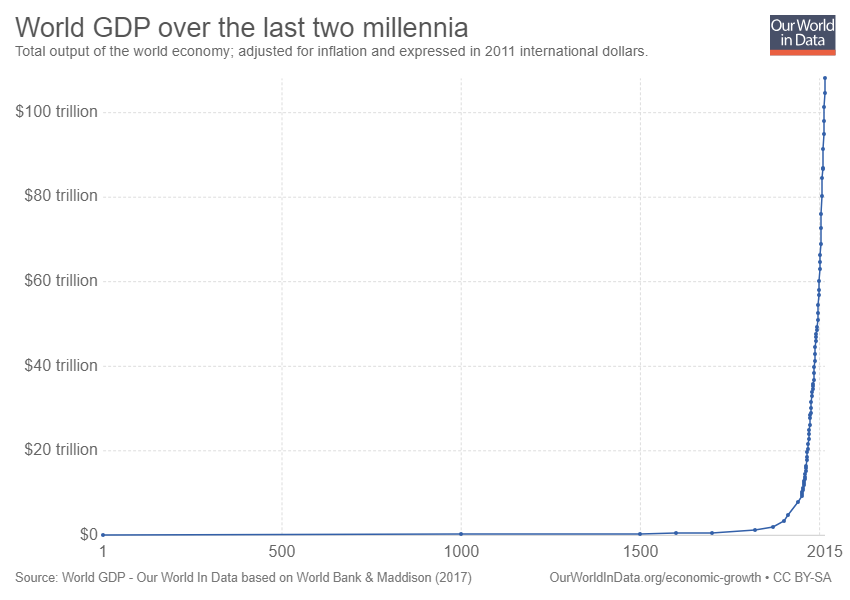
The cooperative social norms that make mass prosperity possible are completely unnatural, Goldberg argues. They are also the best thing that ever happened to humanity, as both argue. The current populist trend is a primal yawp from our baser instincts. It is also the biggest danger the Miracle faces, as Goldberg terms the post-1800 wealth explosion. The average person has gone from three dollars a day to more than 100 dollars a day, at least in countries that more or less adopted Enlightenment values and institutions.

If you doubt the degree of human betterment that has happened over the last two centuries, and how tightly intertwined they are with liberal values and institutions (liberal in the correct, classical sense), even a cursory skim of the first 345 pages of Pinker will show you in great detail. It really is a Miracle, and the most important development in human history since the invention of fire.

Readers who focus on the authors’ criticisms of President Trump are missing the bigger picture. The populist mindset, or rather emotion-set, and not this or that politician, is the biggest threat facing the modern Miracle. President Trump and his analogues in Italy, Mexico, Venezuela, Brazil, and elsewhere are temporary. But the gut-level impulses that make them electable are part of human nature. That is the concern here, not a president who will evanesce from the political scene after a term or two.

Populism is not a left or right phenomenon. It is an anti-Enlightenment worldview based on the immediate, the concrete, and the emotional. A lot of people feel that living standards are declining, and that people aren’t getting a fair shake. The data say otherwise, but a lot of people just feel that way, and form their beliefs accordingly. As Goldberg puts it:

Populist movements do tend to be coalitions of losers. I do not mean that in a perjorative sense but an analytical one. Populist movements almost by definition don’t spring up among people who think everything is going great and they’re getting a fair shake. (p.367)

For many people, their reptile brains override the more analytical parts. If you want to see populist emoting in action, a typical political argument on Twitter, Facebook, or cable news will do. Confirmation bias is rampant, contrary evidence is dismissed, language gets strident, and sometimes things get personal. The flames are as hot as they are shallow, whether they blow from the left or the right. But people still get sucked right in. We’re wired to behave that way.

Populism is having a moment right now, just as it did during the Progressive Era in the early twentieth century, and in the German romanticist movement in the century before that (though that movement was redeemed by some beautiful art and literature). Populism will have more moments in the future. The question is if its latest yawp is merely a blip, or a longer-run rejection of the ideas that make progress and modernity possible.

Like populism, Enlightenment thought works outside of a left-right framework. But unlike populism, it operates on a longer, more cool-headed time horizon. This type of liberalism—again, in the correct sense of the word—is more concerned with abstract cultural values and long-term institutional structures. Having the right long-term process matters more than immediately getting the right immediate results.

Pinker and Goldberg both argue that this patient, abstract approach also explains classical liberalism’s limited appeal. Even when our heads often know better, our hearts are still in hunter-gatherer mode.

It is hard to write news stories about the long-term trends the Enlightenment approach emphasizes. A struggling hometown business with a dozen employees is more emotionally compelling than the fact that worldwide, 137,000 people climbed out of absolute poverty today. One of these stories is rather more important than the other. But it doesn’t fire up people’s reptile brains, so it flies under the radar. Pinker illustrates this phenomenon with graph after graph on a relentless array of policy issues, and Goldberg shows how this affects the quality of both political debate and the politicians in that debate.

Goldberg and Pinker are not alone. Matt Ridley’s The Rational Optimist and Michael Shermer’s The Moral Arc are other quality entries in the genre. Both authors, especially Goldberg, acknowledge the influence of CEI Julian Simon Award winner Deirdre N. McCloskey and her Bourgeois trilogy.

Readers interested in primary sources will find some of the best Enlightenment thought in Adam SmithDavid HumeThomas JeffersonF.A. Hayek, and James Buchanan. Populists, knowingly or not, draw from sources ranging from Jean-Jacques RousseauGoethe, and Nietzsche up to twentieth century progressives such as Louis Brandeis and Ralph Nader, as well as right-wing populists such as Pat Buchanan and Steve Bannon. Pinker argues that President Trump’s world view is, probably unknowingly, eerily similarly to Nietzsche and Rousseau. Understanding them imparts a better understanding of what makes the current administration tick.

If you don’t have the time to read both books, Reason’s Nick Gillespie had an enlightening conversation with Goldberg in June, and Pinker gave a lecture at the Cato Institute in March. There is some overlap between the two books, but they are far from redundant. The authors’ different personalities and different emphases make for two different, complementary, and important works.

Jagdish Bhagwati – In Defense of Globalization

Jagdish Bhagwati – In Defense of Globalization

Bhagwati’s most famous book, published in 2004. A general-level look at globalization. He very clearly explains that the remedy to many global social ills—from child labor to intellectual property theft—is not with trade sanctions. For example, 95 percent of the products of child labor never leave their country of origin, so trade embargoes would do almost nothing to make child labor less profitable. In fact, by slowing growth and reducing other opportunities, such measures make child labor rates worse, not better.

The economic prosperity made possible by globalization and free trade is what allows parents able to afford to send their children to school instead of putting them to work in the farm or factory. Free trade improves lives; trade barriers are at best virtue signaling, and hurt the very people they intend to help.

Bhagwati applies a similar approach to issues across the spectrum, from environmental quality to corporate governance. The book is starting to show its age a bit at this point, but it remains highly relevant.

Best Books of 2018: Factfulness

Re-posted from cei.org.

Review of Factfulness: Ten Reasons We’re Wrong About the World-and Why Things Are Better Than You Think (Flatiron Books, 2018) by Hans Rosling with Ola Rosling and Anna Rosling Rönnlund.

Think Julian Simon, Matt Ridley, and Steven Pinker’s data-driven optimism, mixed with Michael Shermer and Bryan Caplan’s awareness of human cognitive biases, as told by a kindly, avuncular Norwegian. The book reads easily, is visually savvy, and has a friendly, non-polemic tone.

Rosling, who passed away of cancer while writing this book, wanted it to be his last, grand statement. He wants people to simultaneously believe two things: that the state of the world can be both bad and getting better. Hundreds of millions of people still live in absolute poverty. But for the first time in history, the global absolute poverty rate is now below 10 percent. Improvement is coming so fast that the number of people in poverty is going down even as population increases.

Most people think in binaries—left and right, good and bad, and so on. Rosling encourages nuance. Rather than a simple binary of rich and poor countries, Rosling uses a four-level framework. Level one is absolute poverty—subsistence farming, little or no electricity, crude sanitation, high disease rates, and low life expectancy. Level four is where the rich countries are—the Anglosphere, most of Europe, and the Asian tigers. When people think of rich and poor countries, they tend to think of either level one or level four countries. As it turns out, most people in the world are middle class—they live in level two and level three countries. In varying degrees, these countries offer better health and sanitation than level one countries, along with some industrial development, education for children instead of labor, some degree of political and lifestyle freedom, and so on.

One thing I especially like about Rosling’s framework is that countries can level up. Prosperity is a process, not an on/off switch. And the number of levels is theoretically infinite. Rosling chose to use four levels, but a more granular analyst can use as many levels as they want. More importantly, it may well be that what Rosling describes as a level four country today will be startlingly poor a century from now. Most of the world will have leveled up to the equivalent of level five or higher.

Rosling also provides an important public service in teaching people how to look at data. The most important example is the lonely number fallacy:

Never believe that one number on its own can be meaningful. If you are offered one number, always ask for at least one more. Something to compare it with. Be especially careful about big numbers. (p. 130)

I used this advice in my review of Trump economic advisor Peter Navarro’s coauthored book with Greg Autry, Death by China. The data won’t allow Navarro and Autry to make the case they want, so they have to resort to trickery:

Navarro and Autry give just such a lonely number when they argue that, “On [President George W.] Bush’s watch alone, the United States surrendered millions of jobs to China.” (p. 10) Let’s give that large, lonely number some company. In January 2001, when Bush took office, the U.S. labor force was 143.8 million people. When his term expired in January 2009, it was 154.2 million people, despite the economy being in recession. The data are here.

So even if “the United States surrendered millions of jobs to China,” those losses were outweighed by gains elsewhere, most of which have nothing to do with trade policy.

Keep this in mind whenever you see a scary number in a news story—if it doesn’t come with company or context, it’s analytically useless at best.

Rosling’s book has been warmly received by a politically diverse audience, and rightfully so. Rosling’s optimism is based on widely available data, not his ideological priors. In areas where the world is not improving, he is quick to point to them as a reform priorities.

More importantly, the data show that the world’s arrows are almost all pointing up. Few people realize this—as Rosling humorously shows, most people perform worse than chimpanzees on a simple multiple choice quiz about human well-being. The errors are not random—they are overly pessimistic in participants across countries and in every demographic category.

Rosling was as effective as anyone in trying to correct pessimistic bias with facts, not least through his easy-to-understand bubble charts. Rosling’s son, Ola Rosling, and daughter-in-law, Anna Rosling Rönnlund, are carrying on his work with their group Gapminder—see, for example, their tour of Dollar Street that shows the various gradations between countries in levels one through four.

Things are bad in many places, but getting better. In fact, for most people in most places, living standards today are the best they’ve ever been. It is up to us to see that the process continues. To do that, we need to be aware of both the facts on the ground and our inborn cognitive biases that prevent us from seeing those facts clearly. From there, action. Use your head, not just your heart. You need both.