Monthly Archives: October 2013

CEI Podcast for October 17, 2013: Supreme Court to Review EPA Carbon Emission Regulation Lawsuit

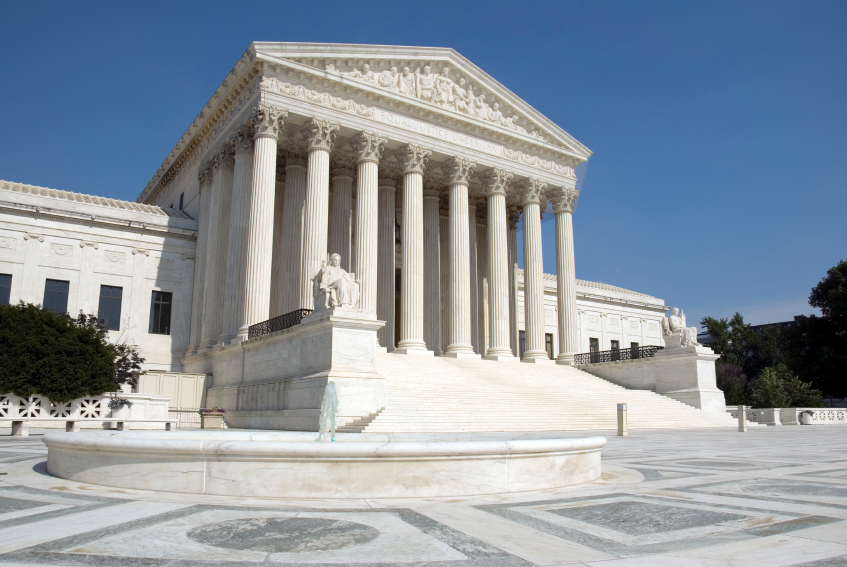
US Supreme Court
Have a listen here.

General Counsel Sam Kazman explains why, in his view, the Clean Air Act does not give the EPA authority to regulate carbon emissions. CEI is a co-petitioner in a lawsuit over those regulations that the Supreme Court has announced it will review during its current term.

The Shutdown Is Over: What Now for Regulation?

mitch-myers-drag-racer
The federal government welcomed back its furloughed workers this morning after Congress and the president reached a deal to raise the debt ceiling. All is back to normal, though one could certainly debate if this is a good thing. As I pointed out here and here, most shutdowns follow a similar script, so far as regulation is concerned.

There was a flux of new rules leading up to the shutdown, as agencies tried to hurry what they could before going on furlough. Once the shutdown hit, new regulations slowed to a trickle. Last week, the first full week, had just 6 new final rules in the Federal Register; a normal week sees 70-80 new regulations. This week has been just as slow, with just 3 new rules through Thursday.

The next day or two will also be slow ones for the Federal Register. But then there will be a flood of new rules as agencies make up for lost time. After the second Gingrich-Clinton showdown ended, there were 82 rules published in a single day. Since this shutdown was about two weeks long, the coming spike could be in the same league. We’ll find out on Monday or Tuesday, depending on how long it takes agencies to rev up their regulatory engines.

Humility in Economics

Economics used to be a humble profession. It lost that humility around the time the discipline became more quantitative. Armed with computers and econometrics, economists went from students of human behavior to saviors of humanity. The discipline’s prevailing mindset used to be akin to biologists, seeking to understand organic, evolving, and interacting processes. Now the engineer’s mentality is more common: tinkering, fixing, and improving. Instead of understanding a process, now the goal is to bring about specific results.

This is certainly the correct approach to building a bridge or designing a car. But economies, or rather the people who comprise them, don’t respond as predictably as concrete or steel. Economies are organic and complicated. Each aspect is too inter-related with too many other moving parts for top-down plans to work as intended. Unlike chess pieces, human beings will move around the board on their own.

Peter Boettke is the rare economist who remains intellectually humble. And that makes this short interview with him worth watching (click here if the embed doesn’t work).

How Is the Shutdown Affecting Regulation?

Short answer: not much. Over at the Daily Caller, I go over some data from this shutdown, as well as the two Gingrich-Clinton showdowns and find that this shutdown will likely have almost no net effect on the amount of new regulations issued. Regulations might be down to a slow trickle right now, but agencies will make up for it when they re-open their doors. But there is an upside to it:

This is not entirely a bad thing. As the late Nobel-winning economist Ronald Coase wrote, “An economist who, by his efforts, is able to postpone by a week a government program which wastes $100 million a year (what I would consider a modest success) has, by his action, earned his salary for the whole of his life.” By that measure, and no other, President Obama and his Republican opponents are turning out to be fine economists.

As so often happens, the hyperbole in the shutdown debate is missing the fact that this shutdown just isn’t particularly impactful, especially on the regulatory front. Read the whole piece here.

CEI’s Battered Business Bureau: The Week in Regulation

bank
Welcome to a special shutdown edition of CEI’s Battered Business Bureau. After setting a yearly high for rules (113) and topping 2,000 pages for just the third time all year, the first full week of the shutdown made for a very bare-bones Federal Register, with just 6 rules and 353 pages.

Remember, this is the 17th shutdown since current budgeting rules were adopted in 1976, so this shutdown is less an anomaly than it is business as usual. The relative peace that lasted from Bill Clinton’s second term until now is the real anomaly.

Most shutdowns follow a similar pattern. So far, this shutdown has, too. First, agencies publish as many rules as they can leading up to the shutdown—hence the inflated rule and page counts in recent weeks. When the shutdown begins, there is typically a two-day lag before the Federal Register slows down its rule and page counts. It then lies near-dormant for the duration of the shutdown, with just a slow trickle of rules until two to three business days after the shutdown ends. Agencies then make up for the lost time with a deluge of regulations. The longer the shutdown, the more intense the flood.

The point is that shutdowns have little, if any, net effect on the amount of regulation. Some rules are published a little earlier than planned, some are published a little bit later, and that’s about it. Something to keep in mind as the shutdown battle continues.

On to the data:

  • Last week, 6 new final regulations were published in the Federal Register. There were 113 new final rules the previous week.
  • That’s the equivalent of a new regulation every 28 hours.
  • All in all, 2,869 final rules have been published in the Federal Register this year.
  • If this keeps up, the total tally for 2013 will be 3,687 new final rules.
  • Last week, 353 new pages were added to the 2013 Federal Register, for a total of 62,090 pages.
  • At its current pace, the 2013 Federal Register will run 78,397 pages, which would be good for fifth all time – keep in mind, though, the light shutdown week artificially lowers this projection. The actual page count will likely be much closer to 80,000. The current record is 81,405 pages, set in 2010.
  • Rules are called “economically significant” if they have costs of $100 million or more in a given year. No such rules were published last week, for a total of 34 so far in 2013.
  • The total estimated compliance costs of this year’s economically significant regulations ranges from $6.53 billion to $11.93 billion.
  • So far, 258 final rules that meet the broader definition of “significant” have been published in 2013.
  • So far this year, 549 final rules affect small business; 75 of them are significant rules.

Instead of the usual highlights from selected final rules, here are all of them, since there were only six:

  • The only significant rule is a big one – 275 pages worth of Basel III bank capital standards implementation. This rule alone counts for 78 percent of this week’s Federal Register page count. The Basel accords determine how much capital banks need to keep in reserve. The mathematical formulas involved are, shall we way, complex. Earlier Basel standards have proven devastatingly ineffective in keeping banks solvent, and the new Basel III will likely be no better.
  • The National Oceanic and Atmospheric Administration issued two rules for Alaskan Pollock fishing. One covers Area 620, the other covers Area 630.
  • The NOAA also issued rules for Gulf king mackerel and snappers and groupers.
  • The Coast Guard issued the week’s only other regulation. It established a temporary safety zone around a bridge in Galveston, Texas while it is being repaired.

For more data, see Ten Thousand Commandments and follow @10KC and @RegoftheDay on Twitter.

The Trouble with Federal Grants

Is summed up perfectly by Gordon Tullock:

In passing, I may note an amusing plaque which, at least some years ago, was set in the cement at the entrance to the Toledo, Ohio, airport. This plaque was a letter from President Eisenhower to the City of Toledo in which he congratulated the city on having built their airport entirely on their own without federal funds. He made it clear that he thought this was a highly meritorious, and even noble, act. In order not to raise any misunderstanding in other parts of the country, however, he then went on to say that, of course, those communities which could not provide their own airport must receive federal aid. I take it that the citizens of Toledo never again found it possible to build their own airport.”

-Gordon Tullock, “Competing for Aid,” Virginia Political Economy: Selected Works, Vol. 1, 205-6.

No Such Thing as Perfect Information

gordon tullockGordon Tullock has a reputation for being rather salty at times. But, more often than not, he is right. This quotation captures both qualities:

[N]o teacher with classroom experience can really believe that everyone is perfectly informed.
-Gordon Tullock,  “Rationality and Revolution,” Virginia Political Economy: Selected Works, Vol. 1, 341

CEI Podcast for October 10, 2013: CEI Files FOIA Requests Over Park Closures

washington-monument-flags
Have a listen here.

During the government shutdown, the National Park Service has barricaded and even closed numerous open-air memorials and parks – including, in some cases, privately owned parks. CEI has filed a series of Freedom of Information Act requests to find out who made the decisions and why. Senior Attorney and Counsel for Special Projects Hans Bader discusses the case.

CEI’s Battered Business Bureau: The Week in Regulation

Delair Railroad Drawbridge
This week in the world of regulation:

Last week, 113 new final regulations were published in the Federal Register. There were 80 new final rules the previous week.

  • That’s the equivalent of a new regulation every 1 hour and 29 minutes — 24 hours a day, seven days a week.
  • All in all, 2,863 final rules have been published in the Federal Register this year.
  • If this keeps up, the total tally for 2013 will be 3,773 new final rules.
  • Last week, 2,159 new pages were added to the 2013 Federal Register, for a total of 61,737 pages.
  • At its current pace, the 2013 Federal Register will run 79,971 pages, which would be good for third all time. The current record is 81,405 pages, set in 2010.
  • Rules are called “economically significant” if they have costs of $100 million or more in a given year. One such rule was published last week, for a total of 34 so far in 2013.
  • The total estimated compliance costs of this year’s economically significant regulations ranges from $6.53 billion to $11.93 billion.
  • So far, 257 final rules that meet the broader definition of “significant” have been published in 2013.
  • So far this year, 549 final rules affect small business; 75 of them are significant rules.

Highlights from final rules published last week:

  • This week’s economically significant rule comes from the Wage and Hour Division. It is expanding the Fair Labor Standards Act to cover domestic employees. It estimates that transfers from employers to employees, familiarization costs, and paperwork will cost between $135,712,508 and $314,712,508.
  • In Wilmington, Delaware, there are several drawbridges that span the Christina river. The federal government regulates when they go up and down.
  • The federal government runs a Blueberry Promotion and Research Program. It is also raising the rates it charges blueberry farmers.
  • The U.S. government declared the blue-throated macaw an endangered species. It lives only in Bolivia.
  • Taylor’s checkerspot butterfly is now listed as endangered, and the streaked horned lark is threatened. They also received a combined 6,000+ acres of critical habitat. If any of that land is private property, we have a possible regulatory taking.
  • The spring pygmy sunfish is now threatened, and the Florida bonneted bat is endangered. Two species of cactus were also classified as endangered, bringing the week’s total of new protected species this week to 7.
  • The Alcohol and Tobacco Tax and Trade Bureau established four newviticultural areas” that winemakers can use to make their labels seem fancier. According to the text of the rules, the agency “designates viticultural areas to allow vintners to better describe the origin of their wines and to allow consumers to better identify wines they may purchase.”

For more data, see Ten Thousand Commandments and follow @10KC and @RegoftheDay on Twitter.

CEI Podcast for October 3, 2013: The Federal Shutdown

washington-united-states-capitol-washington-d-c-dc154
Have a listen here.

For the 17th time since 1976, the federal government has shut down over a partisan fiscal squabble. Vice President for Strategy Iain Murray gives his thoughts on how it happened, what the consequences will be, and what is at stake.