Monthly Archives: January 2013

TSA to Remove Scanners, Except Not

The good news is that the TSA is getting rid of its backscatter full-body scanners. The bad news is it will be replacing them with millimeter-length full-body scanners, which are similarly ineffective (would-be bombers can simply flatten their explosives into a pancake shape on their torso and go through undetected).

In other news, the TSA continues to hire people like Thomas Harkins. A former priest, Harkins was defrocked for sexually abusing two schoolgirls. He then went to work for the TSA. Fortunately, thanks to a promotion some years back, he is no longer patting down passengers.

Regulations Add Up

I’m a bit late getting to this, but earlier this month the Washington Times editorialized on some of the research that Wayne Crews and I have been doing:

Next up on the scale, useless government departments like Commerce force businesses to spend 51 million hours filling out paperwork. By CEI’s estimate, that undertaking wastes about $1.8 billion in private-sector resources. Larger departments like Transportation impose $61.8 billion in costs through rules that dictate how automobiles, trains and airplanes are designed.

Read the whole thing here.

CEI Podcast for January 17, 2013: Fighting Class Action Abuse

Have a listen here.

Lawyers are clever creatures, but they rarely use their powers for good. CEI General Counsel Sam Kazman is an exception to the rule. He is involved in a lawsuit, Kazman v. Frontier Oil, that could set a needed precedent for reining in outrageous attorney fees in groundless class action suits.

Locke’s Labor Theory of Value

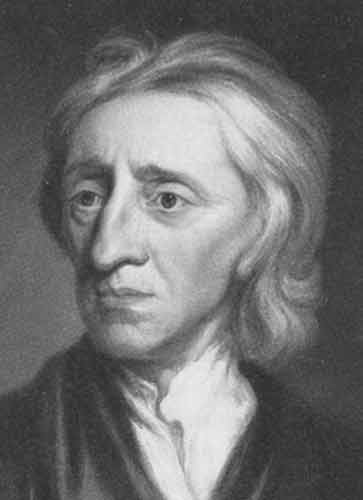
One of Adam Smith’s few deficiencies as a thinker was that he held a labor theory of value. It was the better part of a century after Smith that Carl Menger and others popularized the subjective theory of value that economists use today. As it turns out, John Locke also held to a labor theory of value.

In his discussion of the origin of property rights in chapter 5 of his Second Treatise, Locke argues that land becomes your property when you labor upon it by tilling the soil or otherwise improving it. But then, in section 40 , he goes one step further:

For it is labour indeed that puts the difference of value on every thing; and let any one consider what the difference is between an acre of land planted with tobacco or sugar, sown with wheat or barley, and an acre of the same land lying in common, without any husbandry up on it, and he will find, that the improvement of labour makes the far greater part of the value.

I disagree. Under the subjective theory of value, the whole reason crop-producing labor creates value isn’t because of the labor. It’s because people value the crops, expressed by their willingness to pay for them. This willingness varies from person to person; that is why value is subjective. There is no objective standard.

John Locke, Angry Internet Commenter

john-locke
It isn’t just crazy Internet people who use all-caps to emphasize their points, apparently. John Locke, writing well before the Internet age in 1690, writes early in his Second Treatise of Government (at the end of section 8):

EVERY MAN HATH A RIGHT TO PUNISH THE OFFENDER, AND BE EXECUTIONER OF THE LAW OF NATURE.

At least it’s all-caps in my Kindle edition. The Cambridge edition uses mere italics. Either way, do not mess with this man.

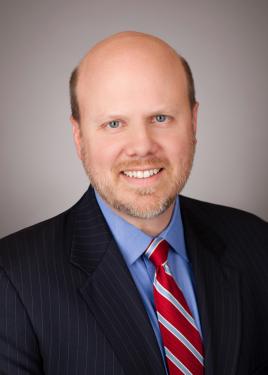
CEI Podcast for January 14, 2013: Meet Lawson Bader

Lawson Bader
Have a listen here.

CEI has a new president, and his name is Lawson Bader. He comes to us from the Mercatus Center at George Mason University, where he was vice president. He is here to introduce himself and talk about what the future holds for CEI.

CEI’s Battered Business Bureau: The Week in Regulation

golden nematodes
This week in the world of regulation:

  • The first full week of 2013 saw 52 new final regulations. This is up from 28 new final rules the previous, holiday-shortened week. This is down from
  • That’s the equivalent of a new regulation precisely every 2 hours and 28 — 24 hours a day, 7 days a week.
  • All in all, 80 final rules have been published in the Federal Register this year.
  • If this keeps up, the total tally for 2013 will be 2,222 new final rules.
  • Last week, 1,760 new pages were added to the 2013 Federal Register, for a total of 2,610 pages.
  • At its current pace, the 2013 Federal Register will run 72,500 pages.
  • Rules are called “economically significant” if they have costs of $100 million or more in a given year. One such rule has been published so far in 2013.
  • So far, 6 final rules that meet the broader definition of “significant” have been published in 2013.
  • So far this year, 23 final rules affect small business; one of them is a significant rule.

Highlights from final rules published last week:

For more data, go to TenThousandCommandments.com.

Mariachi Band Covers Slayer

There is a mariachi band that performs covers of metal songs. They’re called Metalachi. They recently covered Slayer’s “Raining Blood,” and Slayer drummer Dave Lombardo joined them on stage. It’s a bizarre combination, but they sure do look like they were having fun up there. Click here if the embedded video doesn’t work.

Getting Buchanan Wrong

The New York Times obituary for James Buchanan is up. The opening paragraph contains a whopper of an error:

James M. Buchanan, a scholar and author whose analyses of economic and political decision-making won the 1986 Nobel in economic sciences and shaped a generation of conservative thinking about deficits, taxes and the size of government, died on Wednesday in Blacksburg, Va. He was 93.

The author of the piece, Robert McFadden, might be surprised to learn that in 2005 Buchanan wrote a book titled Why I, Too, Am Not a Conservative: The Normative Vision of Classical Liberalism. McFadden also might be surprised to learn that there are more than two political philosophies. Just because someone is not progressive doesn’t mean, therefore, they are conservative. Buchanan self-identified as a classical liberal, which is a philosophy distinct from both progressivism and conservatism, and has roots reaching as far back as ancient Mesopotamia.

The strict binary view of politics held by most journalists might be convenient for creating compelling election campaign stories. But it is sorely incomplete, and does readers no favors as far as imparting any actual understanding of the issues.

James Buchanan, 1919-2013

james buchanan
Economics has lost one of its greats. James Buchanan has passed away at age 93. Born on a Tennessee farm in 1919, he continued working as a farmhand to put himself through college, milking cows twice a day. From there he went on to a long and varied career, culminating in his being awarded the 1986 economics Nobel.

He won that Nobel for his role in developing public choice theory. After the Prize Committee made its announcement, a flock of economically innocent reporters asked him to explain what the heck that was. They were astonished at his simple answer: it is applying the economic way of thinking to politics. It is treating politicians the same as everyone else – self-interested, responsive to incentives, a bit vain, eager to please and be pleased – flesh and blood human beings, basically. The reporters scoffed; why, that’s nothing more than common sense!

Maybe so, he replied. But most economists don’t actually think that way.

It says a lot about the state of the discipline that Buchanan distinguished himself by simply having common sense. Economics since Paul Samuelson has been plagued by physics envy, and Buchanan stuck out like a sore thumb for being more in the mold of Adam Smith, who was more interested in people than disciplinary prestige. Today’s economists are fixated on being quantitative. They want to be scientists and engineers. Leading journals simply will not publish articles that don’t contain regression analysis or at least some sophisticated mathematics. It’s not scientific otherwise.

Buchanan’s most famous book, The Calculus of Consent, has plenty of equations and geometric analysis; he spoke his discipline’s language. But the book wasn’t about appearing scientific. It was about how people behave in the real world. Buchanan rejected the perfect competition model, which sacrifices a great deal of realism to achieve its mathematical elegance. Instead, Buchanan simply applied the economic way of thinking as consistently as possible.

Buchanan also didn’t want to be a savior of humanity, unlike the Galbraiths and Krugmans of the world. “Economics is the art of putting parameters on our utopias,” he said. He was more humble than that. He wanted to be a student of humanity. And he was a good one.

The whole reason Buchanan was wary of over-mathematicization in economics is that the human condition is messy. The clean, elegant models his colleagues were constructing didn’t much resemble real people. And that is a problem; economics is about people. At its core, it is a social science. It is about how people exchange with each other, and the different ways people find to get along (or not) with each other.

Economics is also a way of thinking. What made Buchanan stick out was his dogged consistency in thinking like an economist. That’s what led him to public choice in the first place. Most economists, seeing a market failure, automatically recommend political solutions. Buchanan, knowing that political institutions are subject to all the same foibles as market institutions, was wary of such easy fixes. Buchanan, with typical pith, argued instead for looking at “politics without romance.” The real world is often too complicated for intellectuals’ grand plans to work.

That remarkable consistency led Buchanan to make a lot of contributions besides public choice. Much of Buchanan’s early work had to do with deficit spending. He was against it, which was as unusual in the 1950s as it is today. Even so, his books Democracy in Deficit [PDF] and Public Principles of Public Debt remain influential in today’s spending debate .

He also changed the shape of the ongoing Pigou-Coase debate by inventing the concept of club goods. A club good lies somewhere between a public good and a private good. An apple is a private good because if you eat it, I can’t. It’s gone. National defense is a public good because it is both non-rival – your enjoyment of it doesn’t diminish mine – and non-excludable. The military defends everyone, not just some.

But that dichotomy leaves out a whole host of goods that have some characteristics of both – cinemas, public pools, and cable television come to mind. If one person is in a pool and another person gets in, there’s still plenty of room for both. Their fun is non-rivalrous. But as more and more people get in, everyone’s fun becomes more and more rivalrous, with diminishing returns. The solution to this problem is to set up a club – charge members a fee to join, and build a fence to exclude non-members. Buchanan’s club goods concept has implications not just for pools and theaters, but for communications networks, utilities, and anything that may be subject to a natural monopoly.

Perhaps my favorite bit of Buchananite wisdom is his dichotomy between pre-constitutional analysis and post-constitutional analysis. People respond to incentives, remember. And the rules of the game are what shape those incentives. If you want different results, often you need different rules. A constitution, at heart, is what sets up those rules. What the different branches of government are, what their powers are, how they are elected or appointed, and so on.

Pre-constitutional analysis looks at these different rules and what incentives they provide. It’s more theoretical. Post-constitutional analysis is more empirical – now that these rules are actually in place, how are people behaving? As someone interested in institution-level reform, this way of thinking is invaluable in my own work.

But enough on his intellectual contributions. James Buchanan was a person, too. I only met Buchanan once, and very briefly at that. But even in that brief interaction his kindly Southern genteel manner that charmed friend and foe alike was apparent. He may have been in his 80s at the time, but his eyes and his mind were still sharp, and he was anything but cranky. He worked into his 90s, and age never dulled him. But time wins all battles, and now one of the world’s purest economists is gone. He will be missed.