
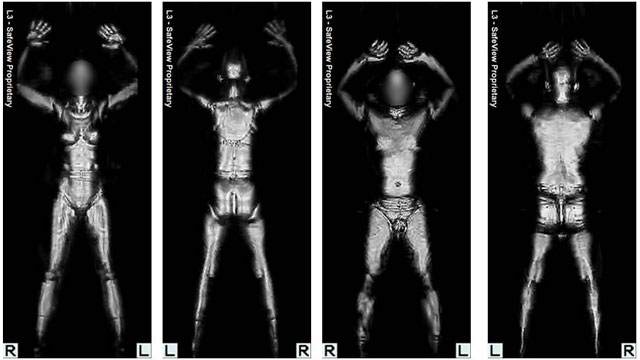
When the TSA installed full-body scanners in airports across the country, it did so illegally. More than a year after a court ordered TSA to open up its full-body scanner policy to public comment, the agency has refused to do so. Land-use and Transportation Policy Analyst Marc Scribner explains how a related lawsuit could force TSA to follow the law, and calls for de-nationalizing airport security.


Ryan Young
Senior fellow at the Competitive Enterprise Institute. All opinions here are my own, and not necessarily CEI’s.
Questions? Comments? Send me an email.
Follow me on Twitter – @RegoftheDay
-
Join 218 other subscribers
Twitter Feed
Tweets by RegoftheDayArchives
Categories
- #NeverNeeded (48)
- Books (531)
- CEI Podcast (197)
- Correspondence (36)
- Economics (1,261)
- Antitrust (117)
- Bailouts (21)
- Business Cycles (42)
- Competition (35)
- Development Economics (13)
- Minimum Wage (37)
- Monetary Theory (50)
- Price and Wage Controls (22)
- Price Gouging (2)
- Public Choice (135)
- Spending (128)
- Stimulus (59)
- Taxation (72)
- The Market Process (40)
- Trade (271)
- education (19)
- Everybody Panic (14)
- Executive Power (12)
- Export-Import Bank (52)
- Financial Regulation (4)
- Free Speech (40)
- Fun with Statistics (10)
- General Foolishness (153)
- Great Thinkers (117)
- Health Care (43)
- History (183)
- Housekeeping (40)
- Immigration (51)
- Inequality (14)
- inflation (6)
- Innovation (44)
- institutions (3)
- International (155)
- labor (26)
- Law (89)
- Literature (58)
- Media (43)
- Media Appearances (174)
- modernity (6)
- Nanny State (118)
- nationalism (5)
- Philosophy (173)
- Argumentation (26)
- Certainty (20)
- Pith (48)
- Political Animals (358)
- Predicting the Future (9)
- prohibition (9)
- Psychology (5)
- Publications (165)
- Reform (25)
- regulation (858)
- Regulation of the Day (235)
- Science (94)
- Security Theater (93)
- Sports (150)
- Technology (89)
- The Arts (26)
- Music (15)
- The New Religion (108)
- Mankind's Doom (24)
- The Old Religion (14)
- The Partisan Mind (64)
- Transparency (2)
- Uncategorized (568)
Blogroll
Al's Ramblings (Brewers Blog)
Radley Balko (The Agitator)
Caleb Brown
Cafe Hayek
Cato Institute Blog
Coordination Problem (Peter Boettke, Pete Leeson, Steve Horwitz, et al)
William Easterly
EconLog (Bryan Caplan, David Henderson, Arnold Kling)
Jacob Grier
Gene Healy
Steven Landsburg
Jeremy Lott
Megan McArdle
Chris Moody
Carl Oberg
Open Market (CEI)
Tom Palmer
Reason Hit & Run
Jason Vines

 Inertia Wins!