Here it is, with a few typos corrected. Otherwise unedited.
8:35 Test
8:37 I am glad that my commute to work, unlike the President’s, is not televised.
8:40 Quote from last year’s State of the Union: “We will continue to go through the budget line by line to eliminate programs that we can’t afford and don’t work.” He did propose and enact repeals of a few billion dollars worth of regulations in 2011, and I’m glad he did. Seeing as the total federal regulatory burden is roughly $1.75 trillion, here’s hoping he does more in 2012.
8:44 Here’s Wayne Crews’ take on regulation and the State of the Union over at Forbes – http://www.forbes.com/sites/waynecrews/2012/01/24/president-obamas-state-of-the-union-hyper-regulated/
8:49 Taxes and spending get all the press. And they are important. But I’m more interested in what he has to say about regulation. It’s a neglected issue that is just as important. Moreso, as far as job creation is concerned.
8:55 The choreography sure is elaborate. Glad I went into policy, and not politics.
8:56 Big round of applause for Rep. Gabrielle Giffords. Best wishes for her continued recovery.
9:01 It’s an election year, and that means even more partisanship than usual. This political independent is curious to see how that affects Obama’s rhetoric tonight.
9:04 I’d be curious to see a public choice-influenced analysis of the State of the Union tradition.
9:05 Here comes the Big Guy.
9:06 Much applause, many hellos. It’ll be a few minutes until the speech.
9:11 Here we go.
9:12 CEI takes no foreign policy positions. Any offered are strictly my own.
9:13 That said, I am glad we are winding down Iraq operations. As a fan of Hayek, I’m not a believer in top-down nation-building.
9:14 He is quick to tout Osama bin-Laden’s death. Can’t say I blame him. I would, too.
9:14 Jobs. Energy independence.
9:16 Class rhetoric.
9:17 Uh, manufacturing output is actually near an all-time high.
9:18 American manufacturing is healthy. Fewer jobs, yes. But those few are doing more with less. That’s how prosperity happens.
9:19 As though the president has much to do with employment levels. Bush had terrible economic policies. But Obama’s are largely the same. They differ in degree, but not in kind.
9:20 Bailouts, wealth transfers from taxpayers to corporations, and other Bush-Obama policies hurt the economy. He should abandon them.
9:21 Defending the GM bailouts again. Much more stridently than before.
9:22 If taking money away from taxpayers and giving it to corporations helped the auto industry, why not do that with the rest of the economy?
9:24 “Bring manufacturing back.” Uh, it never left. Domestic output hit an all-time high in 2008. And it’s still very close to that.
9:24 Great. proposing more corporate welfare.
9:25 And proposing higher corporate taxes for multinationals. Seeing as consumers pay all corporate taxes — businesses pass on their costs — consumers should be up in arms over this.
9:25 Tonight’s rhetoric is astoundingly nationalist. Not cool.
9:26 Touting trade agreements passed during last year. Right on! Let’s see more of them.
9:27 Trade Enforcement Unit. Uh-oh.
9:28 If China takes money away from its people to subsidize American consumers, thank them. It isn’t fair to the Chinese people, but it is polite to thank people when they give us free gifts.
9:29 It also frees up American ingenuity for other pursuits.
9:30 Mispronounced “Louisville.” Badly.
9:30 Proposing still more transfers from taxpayers to businesses. Small ones this time.
9:32 Spend more on education. Check out this graph: http://www.cato.org/pub_display.php?pub_id=12775 The problem lies elsewhere.
9:32 Nice! Get rid of bad teachers, localize curricular choices. The NEA must be livid right now.
9:33 All kids must stay in school until they’re 18. Hmm.
9:34 Transfer more money from taxpayers to students.
9:34 Given that most college students end up relatively wealthy, he’s asking poor taxpayers to subsidize wealthy young people. Regressive.
9:35 Nobody likes sky-high tuition. But federal rules are responsible for much of it. More federal rules aren’t the answer.
9:35 Immigration. Sounds like he’s touting the STAPLE Act, which is something I’m very much on board with.
9:36 Uh, fewer illegal crossings have more to do with tough economic times than the fact that Obama happens to be in office.
9:37 Overall, he sounds fairly welcoming to immigrants. If his policies actually reflected that, the economy really would be in better shape.
9:38 “Take money from taxpayers and give it to small businesses.” This is zero-sum at best. Given the usual politicking, likely much worse.
9:39 ‘Take money from taxpayers and give it to energy companies.”
9:40 Energy independence is a sham.
9:40 Gearing up for renewable rhetoric.
9:40 If it’s viable, it doesn’t need a subsidy. If it’s economically viable, it sure doesn’t need a subsidy.
9:41 Hey, energy companies, drill for more gas. Also, here are more regulations to comply with.
9:43 “I will not walk away from the promise of clean energy.” Nor will I. But it will come from entrepreneurs, not Washington. Witness the ethanol and Solyndra debacles, among others.
9:44 He will flight climate change, apparently.
9:45 “Let’s give more taxpayer dollars to energy corporations.”
9:46 Uh, America’s infrastructure spending is the highest it’s been since the Interstate highway system buildup, as a percent of GDP.
9:47 The money we’re no longer spending at war, eh? Afghanistan? Libya? Also, over $1 trillion in debt?
9:48 He wants to set mortgage rates now? The housing crisis will never end until the bubble is allowed to finally, mercifully, and painfully, pop. But that’s bad politics. So it goes.
9:49 Smart regulations to prevent irresponsible behavior. I’m interested. Go on…
9:49 They make the free market work better…
9:50 ‘I’ve approved fewer regulations in my first three years than Bush did.” Mainly because the first year was slow. He’s exactly the same as Bush on this issue, frankly.
9:50 Touting the EPA milk spill = oil spill rule being repealed. Rightly so, though the laughter was awkward.
9:50 Nice segue to the Gulf oil spill.
9:51 I hope that wasn’t a defense of the EPA’s methylmercury rule. That is the most expensive regulation of all time.
9:51 Wall Street never did play by its own rules. There’s a reason they have all those DC offices.
9:53 Touting Corday. Sounds like fewer people who need them will be able to get loans. So it goes.
9:54 Oh boy, lending really will go down. This is bad for investment, and for job creation.
9:54 Extend the payroll tax cut.
9:55 Some of my colleagues disagree with me, but a tax cut now is a tax increase later — with interest.
9:55 The deficit.
9:55 OK. Extend the payroll tax cut, but increase income taxes?
9:56 Uh, capital gains income is double taxed. People pay income tax, invest some of what’s left, then pay capital gains tax.
9:58 Obama has actively proposed subsidizing millionaires several times tonight. Now he wants to tax them more. Pick one, please.
9:59 Again, Buffett’s capital gains income was subject to the income tax before he invested it and than paid capital gains tx on the investment income. He pays more than his secretary, not less.
9:59 Pardon the typos.
10:01 “Nothing will get done in Washington this year. Or next year.” The problem isn’t the man, or the party. It’s the system. Unless he enacts systematic changes at the institutional level, this will continue.
10:01 Ban insider trading by Congress. Fair enough.
10:01 Then again, prices reflect conditions on the ground. The faster those prices reflect the truth, the better.
10:02 Then again, Congress’ Buffett-like investment acumen is surely not due to chance. That colors their decisionmaking.
10:02 Congress; give me more power.
10:03 Sounds just like his predecessor.
10:04 Of all people to bad-mouth the perpetual campaign…
10:04 Way to call out big-government Republicans! Nice.
10:05 When Congress and the President act together, there is nothing America cannot achieve. He is clearly unfamiliar with public choice theory.
10:06 More foreign policy hornblowing in his closing flourish.
10:06 Comment From FMY
Buffet doesn’t have income, only cap gains which he reinvests to make more cap gains
10:07 Comment From bisek
more trade impediments. good!
10:08 Everyone wants a free and prosperous Middle East. But it can’t happen top-down. It has to come from the bottom up. (My opinion, not CEI’s)
10:08 Comment From Guest
And the $3000 per year that Obama just saved homeowners will be gone in 2-3 weeks when lenders pass the increased fee onto borrowers.
10:09 I am not liking this saber-rattling towards Iran.
10:10 America is a pacific power — uh, we’re at war in multiple countries.
10:11 Amurrica!!!
10:12 Keep an eye out for more power grabs at the Internet, under the guise of national security. I expect CEI analysts will have a lot to say about this.
10:13 More tax credits to corporations.
10:13 Simplify the tax code, please. It’s already 70,000 pages. It should be under 100.
10:14 Comment From FMY
VA spending up because of large war casualties
10:14 Good point, FMY.
10:16 65 minute speech. Wow.
10:17 Here are some more reader comments:
10:17 Comment From Mancur Olson
Small distributional coalitions tend to form over time in countries. Groups like cotton-farmers, steel-producers, and labor unions will have the incentives to form lobby groups and influence policies in their favor. These policies will tend to be protectionist and anti-technology, and will therefore hurt economic growth; but since the benefits of these policies are selective incentives concentrated amongst the few coalitions members, while the costs are diffused throughout the whole population, the logic of collective action dictates that there will be little public resistance to them. Hence as time goes on, and these distributional coalitions accumulate in greater and greater numbers, the nation burdened by them will fall into economic decline.
10:17 Comment From Bruce Arians
Could he bring my job back as offensive coordinator of the Pittsburgh Steelers?
10:17 Comment From Freddy Hayek
The results of the individual’s efforts are necessarily unpredictable, and the question as to whether the resulting distribution of incomes is just has no meaning. There is no point in calling the outcome just or unjust. The principle of distributive justice, once introduced, would not be fulfilled until the whole of society was organized in accordance with it. This would produce a kind of society which in all essential respects would be the opposite of a free society.
10:17 Comment From Paul Krugman
“If there were an Economist’s Creed, it would surely contain the affirmations ‘I understand the Principle of Comparative Advantage’ and ‘I advocate Free Trade’.”
10:18 Comment From Freddy Bastiat
Whence we arrive at this unexpected conclusion: “Society loses the value of things which are uselessly destroyed;” and we must assent to a maxim which will make the hair of protectionists stand on end—To break, to spoil, to waste, is not to encourage national labour; or, more briefly, “destruction is not profit.”
10:18 Comment From Thomas Jefferson
I just sent in a letter describing State of the Union..
10:18 Comment From Guest
Awesome… loosen the underwriting guidelines that are in place to prevent another crisis.
10:22 I’m honored that so many distinguished economists, many of them deceased, are commenting tonight. Keep ’em coming!
10:22 Mitch Daniels’ GOP response coming up.
10:25 Three big themes from tonight are jobs, jobs, and jobs. It is an election year, after all.
10:26 There are also the conflicting themes of giving more to businesses and taking more away.
10:27 Can’t say I care for his isolationism on manufacturing and trade, though he did say good things about the FTAs with Panama, Colombia, and South Korea.
10:28 He didn’t say nearly as much as I would have liked about regulation. He mentioned his minor rollbacks, but the net effect over the last three years has been a Bush-level massive increase.
10:29 Here’s Daniels.
10:29 “I am the loyal opposition.”
10:29 Praise for his education policy rhetoric.
10:30 The State of the Union is grave. Obama has made it even worse. Also, jobs.
10:30 The debt problem is getting worse. Duh.
10:31 Predictable middle class rhetoric.
10:32 I like the line about “haves and soon-to-haves.”
10:32 2012 is emphatically not our last year of opportunity. Too many entrepreneurs are seeing to that.
10:33 Proposals to cut that deficit? Waiting…
10:34 Shot across the bow on the Keystone XL pipeline. Nice.
10:35 Also decries over-regulation. But no specific reform proposals.
10:35 CEI has plenty, by the way.
10:35 Means-test Social Security?
10:36 Timid. Personal accounts would be better. And IRA for everyone.
10:36 *An* IRA for everyone.
10:37 “The other party tends to reject my party’s legislation.” Cuts both ways sir.
10:37 The problem is at the institutional level.
10:38 Here are some institution-level solutions – http://www.amazon.com/Better-Congress-Proposal-Citizens-Legislative/dp/1587332337
10:39 Nice lightbulb-ban reference.
10:40 Comment From FMY
Like the personal responsibility message.
10:40 Ugh. Reagan reference.
10:41 Overall, a timid response to a timid SOTU.
10:45 Light on specifics. Then again, he only had a few minutes. And politicians are generally reluctant to propose reducing their job description.
10:46 He also probably wants to leave platform ideas up to whoever the GOP nominee will be. Since most of them want a bigger federal government, they probably wouldn’t take kindly to Daniels favoring a smaller one.
10:47 And that wraps it up. Thanks for reading, and keep an eye out for more CEI coverage tomorrow!
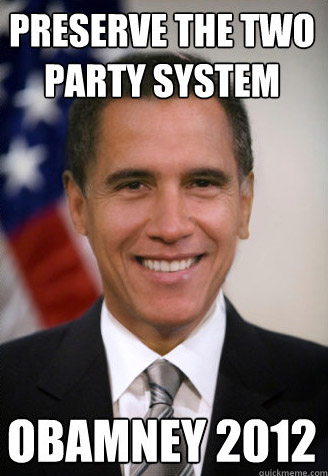


 President Obama correctly pointed out in his State of the Union speech that he passed fewer regulations in his first three years than President Bush. Over at the Daily Caller, Wayne Crews crunched the numbers and found that Bush passed 12,588 regulations to Obama’s 10,810.
 Inertia Wins!