Monthly Archives: August 2010

Expensive Jobs

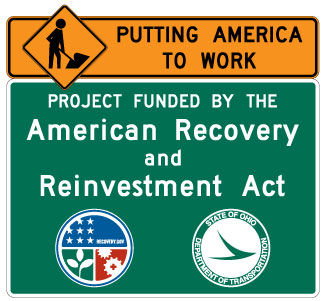
Through June, the government spent about $620 billion of stimulus money. The Obama administration claims that the spending has saved or created 2.3 to 2.8 million jobs.

For the sake of argument, let’s assume those job creation numbers are true. In fact, let’s pick the rosiest number — 2.8 million jobs.

At a price of $620 billion, that comes out to $221,428.57 per job. Startlingly inefficient.

Now consider that that $620 billion had to come from somewhere else. Some of that money came from taxes. That leaves less money left over for consumers and businesses to spend. Some of the stimulus money was borrowed. That leaves less capital for private companies borrow.

The private sector tends to spend less than the government to create a job. Since stimulus spending is spending more money to create fewer jobs than the private sector, it is actually causing net harm to the job market.

In place of the spending stimulus, I humbly offer a deregulatory stimulus. CEI VP Wayne Crews and I offer some specific proposals here.


Money for Nothing

A man collected 12 years of salary and benefits from his government job in Norfolk, Virginia. Nothing unusual about that… except that he “had not reported to work in years.”

Yes, this is an outrage. But maybe the world would be a better place if more government employees took that approach to their jobs.

Odd Google Searches

Last October, this blog switched over to WordPress software. One of the benefits of WordPress is that it shows me which search engine terms direct people to this site. This one from today caught my eye:

how does a 15 year old hores’ teeth look

I’m going to assume that our friendly Googler meant “horse,” not “whore.” The search probably led him or her to this post about horse teeth regulations.

Regulation of the Day 149: Sliced Bagels

In New York State, sliced bagels cost 8 cents more than unsliced bagels. It’s not because they’re more expensive. The marginal cost in labor and equipment is practically nil. Nor is it because bagel shop owners are greedy. Shops in Connecticut and New Jersey don’t charge more for sliced bagels. And there’s nothing about New York consumers that makes them more susceptible to predatory bagel pricing. The reason is government.

Albany’s legislators are in quite the fiscal mess right now. Short of cutting spending, they’re trying everything they can to plug their $8.5 billion budget deficit. The Wall Street Journal explains how this affects bagels:

“In New York, the sale of whole bagels isn’t subject to sales tax. But the tax does apply to “sliced or prepared bagels (with cream cheese or other toppings),” according to the state Department of Taxation and Finance. And if the bagel is eaten in the store, even if it’s never been touched by a knife, it’s also taxed.”

So there you have it. Bruegger’s, a New York bagel chain, put signs in its stores telling customers that “We apologize for this change and share in your frustration on this additional tax.”

Bruegger’s shouldn’t be apologizing to its customers. The state legislature should be apologizing to theirs. If they had been able to keep state spending in check, there would be no need for the tax.

(Via Reason’s Katherine Mangu-Ward)

When TSA Agents Attack

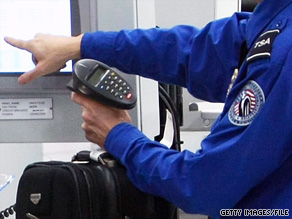
For most people, the TSA is merely an annoyance. We grudgingly play our part in security theater so we can get where we’re going. But for Kathy Parker, the TSA is something far more serious (via Steve Horwitz):

“Everything in my purse was out, including my wallet and my checkbook. I had two prescriptions in there. One was diet pills. This was embarrassing. A TSA officer said, ‘Hey, I’ve always been curious about these. Do they work?’

“I was just so taken aback, I said, ‘Yeah.’ ”

What happened next, she says, was more than embarrassing. It was infuriating.

That same screener started emptying her wallet. “He was taking out the receipts and looking at them,” she said.

“I understand that TSA is tasked with strengthening national security but [it] surely does not need to know what I purchased at Kohl’s or Wal-Mart,” she wrote in her complaint, which she sent me last week.

She says she asked what he was looking for and he replied, “Razor blades.” She wondered, “Wouldn’t that have shown up on the metal detector?”

In a side pocket she had tucked a deposit slip and seven checks made out to her and her husband, worth about $8,000.

Her thought: “Oh, my God, this is none of his business.”

Two Philadelphia police officers joined at least four TSA officers who had gathered around her. After conferring with the TSA screeners, one of the Philadelphia officers told her he was there because her checks were numbered sequentially, which she says they were not.

“It’s an indication you’ve embezzled these checks,” she says the police officer told her. He also told her she appeared nervous. She hadn’t before that moment, she says.

She protested when the officer started to walk away with the checks. “That’s my money,” she remembers saying. The officer’s reply? “It’s not your money.”

Read the whole thing. If the Fourth Amendment had any force anymore, the TSA would have been abolished years ago. It is well past time for President Obama and Congress to consider that step. It would certainly do wonders for them in the polls.

Regulation of the Day 148: Cutting Grass in Cemeteries

In the world of regulation, no good deed goes unpunished. In the UK, an ex-soldier named Derek Evans decided to mow the lawn at the cemetery where his mother is buried. At first, he had intended to tidy up only her grave. But out of kindness, he ended up mowing the entire cemetery.

Regulators quickly put a stop to Mr. Evans’ good deeds. British blog Big Brother Watch reports:

The jobsworths at the Council have told him that as he was without public liability insurance he was banned from carrying on – despite the fact, as Mr Evans points out in stark terms, “the only people I was mowing near are six feet under.”

… There’s just no common sense to decisions like this: they’re so stupid you have to be an “expert” to reach them.

(Via Iain Murray)

Political Pessimism, Human Optimism

Despite my pessimism (realism?) about politics, ever since reading Julian Simon, I have been an optimist when it comes to progress and the human condition. Since the industrial revolution, each generation has lived longer and better than the last. By that measure, the last decade was the best in human history.

This despite the last decade being an unmitigated political disaster, at least in America. President Bush grew government faster than any president since Lyndon Johnson. Between new health care entitlements, massive energy and farm bills, two wars, and more than 30,000 new regulations, the Bush administration was no friend of limited government.

President Obama has so far been no better. If anything, his policies are George W. Bush’s on steroids.

Fortunately, the institutional foundations of the market economy are stronger than any bumbling politician. Wherever there is peace, stability, tolerably low corruption, and secure property rights, people will make their lives better over time, despite meddlesome regulators getting in the way. The pattern is global.

Via Ronald Bailey, a brilliant article in Foreign Policy reinforces that point. Things really are getting better. The last decade was the best in human history. Read the whole thing. If you’re despairing over the state of the world, the data are a wonderful cure for pessimism. Here’s a taste:

Consider that in 1990, roughly half the global population lived on less than $1 a day; by 2007, the proportion had shrunk to 28 percent — and it will be lower still by the close of 2010. That’s because, though the financial crisis briefly stalled progress on income growth, it was just a hiccup in the decade’s relentless GDP climb.

Partisans Believe Strange Things

According to a new poll, 31  percent of Republicans believe that Barack Obama is Muslim. Perhaps they forgot about the (Christian) Rev. Jeremiah Wright controversy?

It’s almost as if partisans ascribe anything they don’t like to the other team, then simply believe it to be so. The problem cuts both ways; Democrats are just as guilty. The partisan mind is an ugly thing.

Besides, the issue of the president’s religion has nothing to do with whether his policies will help the economy or hurt it, or whether they will make America a better place or a worse one. His religion is irrelevant. A non-issue. Treat it that way.

Regulation of the Day 147: Breathing Fire

Jimmy’s Old Town Tavern in Herndon, Virginia, has an unusual attraction: fire-breathing bartenders. That tradition may be coming to an end, according to the Washington Examiner:

Fairfax County fire investigators charged Tegee Rogers, 33, of Herndon, and Justin Fedorchak, 39, of Manassas, with manufacturing an explosive device, setting a fire capable of spreading, and burning or destroying a meeting house. They also were charged with several state fire code misdemeanors.

Both men are looking at as much as 45 years in prison. Fire marshals gave them no warning before pressing criminal charges. They have been breathing fire at Jimmy’s for over a decade without previous incident. Both men were surprised; given that Jimmy’s openly advertises its fire-breathing tradition, fire marshals have had plenty of chances to tell them to stop.

Owner Jimmy Cirrito is sticking up for his employees. He told the Examiner:

“But I don’t think we’ve done anything wrong,” he said. “There’s a lot of fire in restaurants. I’ve been served flaming desserts, I’ve roasted marshmallows on tables, I’ve seen 75 candles and sparklers on cakes, and I’ve seen bartenders perform the tricks coast-to-coast and no one’s been arrested.”

(Via Tim Carney)

Federal Register Hits 50,000 Pages

And it’s on pace to hit a near-record 80,447 pages. Over at the Daily Caller, I crunch some of the numbers and offer up some Ideas for regulatory reform, inspired by Wayne Crews’ 10,000 Commandments.

-The Federal Register’s accelerating pace is due to two things. One is implementation of the health care and financial regulation bills. The other is that, fearing a party change in Congress, lame-duck regulating may have already begun.

-Keeping Federal Register page counts in check is important. Keeping the contents of those pages in check is even more important. Comprehensive regulatory reform involves much, much more.

-Such as five-year sunsets for all new regulations unless specifically reauthorized by Congress.

-And a comprehensive look at the regulatory state in each year’s Economics Report of the President.

-And a bipartisan commission to comb through the books for harmful or obsolete regulations. They would hand their recommendations for repeal to Congress for an up-or-down vote, without amendment.