Monthly Archives: October 2009

Washington and Wall Street: Best Kept Separate

Russ Roberts’ testimony in front of the House Committee on Oversight and Government Reform is superb. Read it (it’s short). Wall Street deserves plenty of blame for the financial crisis. But Washington deserves more:

When your teenager drives drunk and wrecks the car, and you keep giving him a do-over—
repairing the car and handing him back the keys—he’s going to keep driving
drunk. Washington keeps giving the bad banks and Wall Street firms a do-over. Here are
the keys. Keep driving. The story always ends with a crash.

I’m mad at Wall Street. But I’m a lot madder at the people who gave them the keys to
drive our economy off the cliff.

Regulation of the Day 67: Oysters

oysters

My colleague Richard Morrison brought to my attention a new FDA rule that requires oysters harvested between April and October to be sterilized before they are eaten. The goal is to prevent a rare – and sometimes fatal – bacteria from harming anyone.

An unintended consequence is that the state of Louisiana is up in arms. The sterilization rule essentially bans raw oysters, a local delicacy, for seven months every year. Sterilization also affects the flavor of cooked oysters, a common ingredient in Cajun cooking.

Restaurateurs are livid. One describes the rule as “ludicrous.”Another calls it “a nuclear bomb” for the oyster industry. State officials are also upset, and have issued strongly worded statements opposing the rule.

Regulation of the Day 66: Trick or Treating

Trick or Treating

“Supervisors in Dunkard Township say they are taking the steps for safety reasons,” reads a recent news article describing a new regulation. Regulators often cite safety to explain their latest doings. But it might be a bit of a stretch for justifying what Dunkard Township is doing: banning trick-or-treating.

That’s right. Regulators have banned a staple of childhood. Trick-or-treating is dangerous. Far too dangerous for children. Yet some parents were going to let their kids go anyway. Officials were left with no choice.

The government will hold a four-hour Halloween party to make up for it.

Food: Mankind’s Doom

vegetable

In Sweden, food and menu labeling has started to include the estimated carbon footprint of each item.

Don’t read too much into the labels, though. The New York Times notes that “the emissions impact of, say, a carrot, can vary by a factor of 10, depending how and where it is grown.”

With that much imprecision built in, if the labels change consumer behavior as much as supporters hope, it’s entirely possible that eco-concsious diets could result in more carbon emissions, not less. A classic case of leaping before you look.

This new religion is a piece of work. It comes complete with a deity (Gaia), clergy (activists), indulgences (carbon credits), and now, dietary restrictions.

Regulation of the Day 65: Weighing Animals

weighing_calves

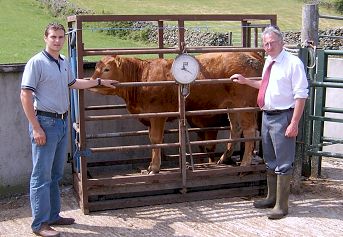
If you sell poultry or livestock, it’s a good idea to weigh them first. Makes it easier for buyer and seller to agree on a fair price.

For some reason, seven sections of the Code of Federal Regulations (see here, here, here, here, here, here, and here) deal with the use and maintenance of the scales used to weigh the animals, the people operating them, proper procedure, and finally, weighing the animals again.

Is this really a federal matter? If so, what isn’t?

Keeping Priorities Straight

vanuatu
Bjørn Lomborg, head of the Copenhagen Consensus, brings some much-needed common sense to the global warming debate. Reporting from Vanuatu, he finds that many of the locals haven’t even heard of global warming.

Torethy Frank is one of them. She has other priorities, such as escaping crushing poverty: “Torethy and her family of six live in a small house made of concrete and brick with no running water. As a toilet, they use a hole dug in the ground. They have no shower and there is no fixed electricity supply.”

You can see why the two degrees of projected warming over the next century are not at the top of her “problems to solve” list. I would argue that ending global poverty should be a little higher on ours. Certainly higher than global warming.

Regulation of the Day 64: Starting a Business in Sacramento, California

assembly-line
Sit back and think for a minute about what man has the potential to create. Think about the magnitude of our achievements in just the last century. Life expectancy has doubled. Population has sextupled. For the first time in history, famine is primarily a political phenomenon, not a natural one. The human mind is capable of creating limitless, endless wealth.

Unfortunately, the human mind is nearly as adept at preventing that wealth from being created. Sacramento, California is home to some of the experts.

Katy Grimes researched what it would take to open a small factory there. “By the time I discovered that 22 government agencies would be involved in permitting and licensing, I realized that Sacramento is not an easy place to do business,” she writes.

She’s right. And when doing business is difficult, there is less of it. That means less wealth is created. Opportunities vanish into thin air. One of the tragedies of over-regulation is the amount of wealth, opportunity, and prosperity that never come to pass. Think of how many plants are never opened because of over-regulation. How many jobs are never created. How many products are never invented.

Supporters of strict business regulations say the rules keep people safe. Maybe that’s true. Maybe it isn’t. But they do keep us poorer.


What Does Protectionism Protect?

Classic reductio ad absurdum.

Modern technology could easily grow oranges and grapes in hothouses in the arctic and subarctic countries. Everybody would call such a venture lunacy. But it is essentially the same to preserve the growing of cereals in rocky mountain valleys by tariffs and other devices of protectionism while elsewhere there is plenty of fallow fertile land. The difference is merely one of degree.

Ludwig von Mises, Human Action, p. 395.

Welcome Back, Ahman Green

Ahman Green is a Packer again. He’s well past his prime, but he should improve a depleted depth chart. Green is also 46 yards away from becoming the team’s all-time leading rusher. Never thought he’d get the chance, after he left Green Bay for Houston in free agency a few years ago.

After two disappointing seasons there, Green was out of the league this year until now. I figured he’d retired, honestly. If he gets his record, it will share some symmetry with Donald Driver, who set the team receptions record last week. Best of luck to him.

Is Cognitive Dissonance an Insured Condition?

brain-scan_530
Rep. Diana DeGette is, without any apparent cognitive dissonance or trace of irony, proposing:

1) Require, by law, that people buy health insurance.

2) Remove health insurers’ antitrust exemption. But only after legally requiring everyone to buy their product.

You figure it out. Insurers are set to receive one of the largest coroporate welfare grants in history. No wonder so many firms are salivating over this year’s health care legislation. But they may pay an antitrust price for their legally mandated windfall.

Perhaps this is a warped Washington version of what one hand giveth, the other taketh away.