Monthly Archives: August 2009

Viking Funeral

Today’s American Spectator Online contains my take on Brett Favre’s comeback.

I think it’s great for Brett. He loves to play, so he might as well. Don’t think it’s good for the rest of the team’s morale. Brett may actually hurt the team despite being a definite upgrade at the quarterback position.

It’ll be interesting to see how those dynamics interact as the season runs its course. I also hear he’ll be playing in tonight’s preseason game.

Regulation of the Day 37: Lemonade Stands

It is illegal for children to sell lemonade in New York City without a permit.

Clementine Lee, 10, was recently fined $50 for selling lemonade in Riverside Park. Fortunately, “A spokesperson for the Parks Department says the agents showed poor judgment and that the ticket will be dismissed.”

This translates roughly to “we were getting too much bad publicity.”

(Hat tip: Reason Daily Brickbats)

New Schumpeter Book

In the tradition of the Reader’s Digest condensation of F.A. Hayek’s The Road to Serfdom, Joseph Schumpeter’s Can Capitalism Survive? Creative Destruction and the Future of the Global Economy is coming out on September 1.

Can Capitalism Survive? is a condensation of Schumpeter’s 431-page masterwork of 1942, Capitalism, Socialism, and Democracy. The timing couldn’t be better. With economic crisis and recession dominating the news, people are as interested in the topic as ever. The trouble is, they don’t understand it very well. This book should help.

In this age of bailouts and cash-for-clunkers, Schumpeter’s theory of creative destruction is crucial for understanding why some policies will work and others will fail.

Putting Schumpeter’s ideas in a more accessible format does not dilute them, as some ivory tower types will no doubt allege. It increases their impact. Economic literacy is a good thing. The economic way of thinking badly needs to be popularized. May many more distillations of major economic works follow this one.

Regulation of the Day 36: Buying American

The $787,000,000,000 stimulus contains a provision requiring the Department of Homeland Security to buy US-made textiles. Basically, that means TSA uniforms will go up in price.

Let’s look at the logic behind this. If DHS would just pay more money for the same product, leaving less money left over for purchasing other goods, we can stimulate the economy. Jobs will be created or saved.

Amazing that some people still think that restricting trade and voluntarily paying higher prices will increase prosperity.

Regulation of the Day 35: Doctors with Borders

In 49 states, it is illegal to practice medicine outside of a state in which you are certified. Tennessee is the lone state with an open market.

Jacob Grier found a news article showing how this closed-shop style of regulation puts a damper on efforts in California to provide free medical care for people who can’t afford it.

Rose Friedman, 1910-2009

Rose Friedman died today at age 98 after a life well lived. Sincerest condolences to her family and friends from all of us at CEI.

The body of work that Milton and Rose Friedman put together over many years was one of the most influential of the 20th century. It continues to resonate in the 21st. From technical works like A Monetary History of the United States to popular works like the Free to Choose book and television series, the Friedmans made valuable contributions to economics, politics, philosophy, and, most importantly, human freedom.

Milton got most of the credit, and the Nobel prize. But even works without Rose’s name next to Milton’s on the cover bear her stamp. They were a team.

I had the opportunity to meet Mrs. Friedman and her husband when I was about 22. I was reading Capitalism and Freedom at the time. Both were kind enough to sign it. The gesture was almost meaningless to them — just a few scribbles on the title page — but not to me. Both of the Friedmans were kind, gracious, and took seriously what an unaccomplished nobody like me had to say, even though they certainly didn’t have to.

The sincere interest the Friedmans took in young people has assured that their ideas will not be forgotten by the next generation. The world could use more people like Rose Friedman. Especially now that the original is lost to us.

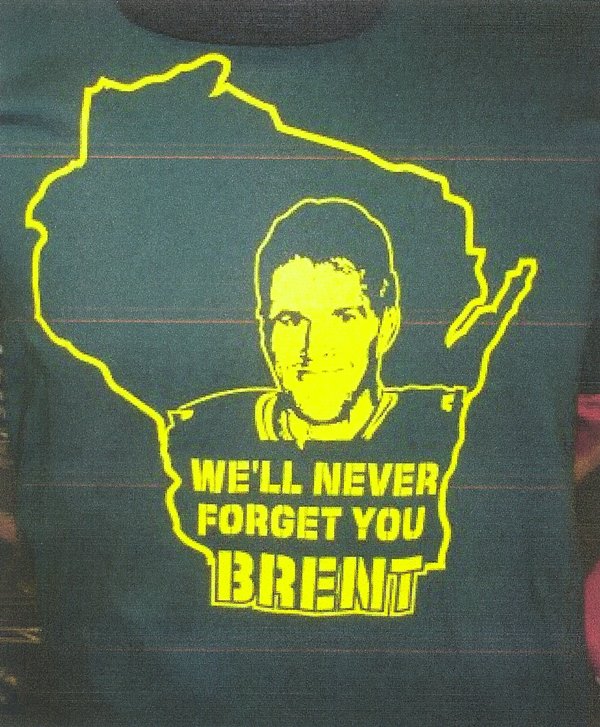
He’s Back

brent-favre

Brett Favre is about to sign a contract with the Vikings.

I’ll always root for Brett. But he’s not making it easy.

Regulation of the Day 34: Diabetic Truckers

Tawnya Benner, 38, would like to drive a truck for a living. She’s qualified to do it, holding a commercial class driver’s license from her home state of Pennsylvania. Unfortunately, she has diabetes, so it’s illegal. There is a federal “prohibition against persons with insulin-treated diabetes mellitus (ITDM) operating commercial motor vehicles (CMVs) in interstate commerce.”

Tawnya is one of 24 people applying for an exemption from the federal ban. Let us wish them all the best of luck as they petition the government for the right to earn a living.

The Long Odds of Voting

A new NBER working paper by Andrew Gelman, Nate Silver, and Aaron Edlin finds that “On average, a voter in America had a 1 in 60 million chance of being decisive in the [2008] presidential election.”

Live in a swing state like Virginia? 1 in 10 million.

Geographical Determinism?

The FT interviews Jared Diamond.